
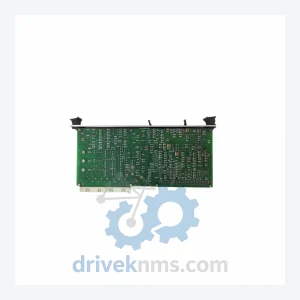
Yokogawa K9634DA-01 TCD Card Modules
Yokogawa K9634DA Series: Comprehensive Module Range and Technical Overview The Yokogawa K9634DA series TCD (Thermocouple/mV Input) cards are field-proven I/O…
Model: S2MMM843-SS1130 S2BN1D-11130
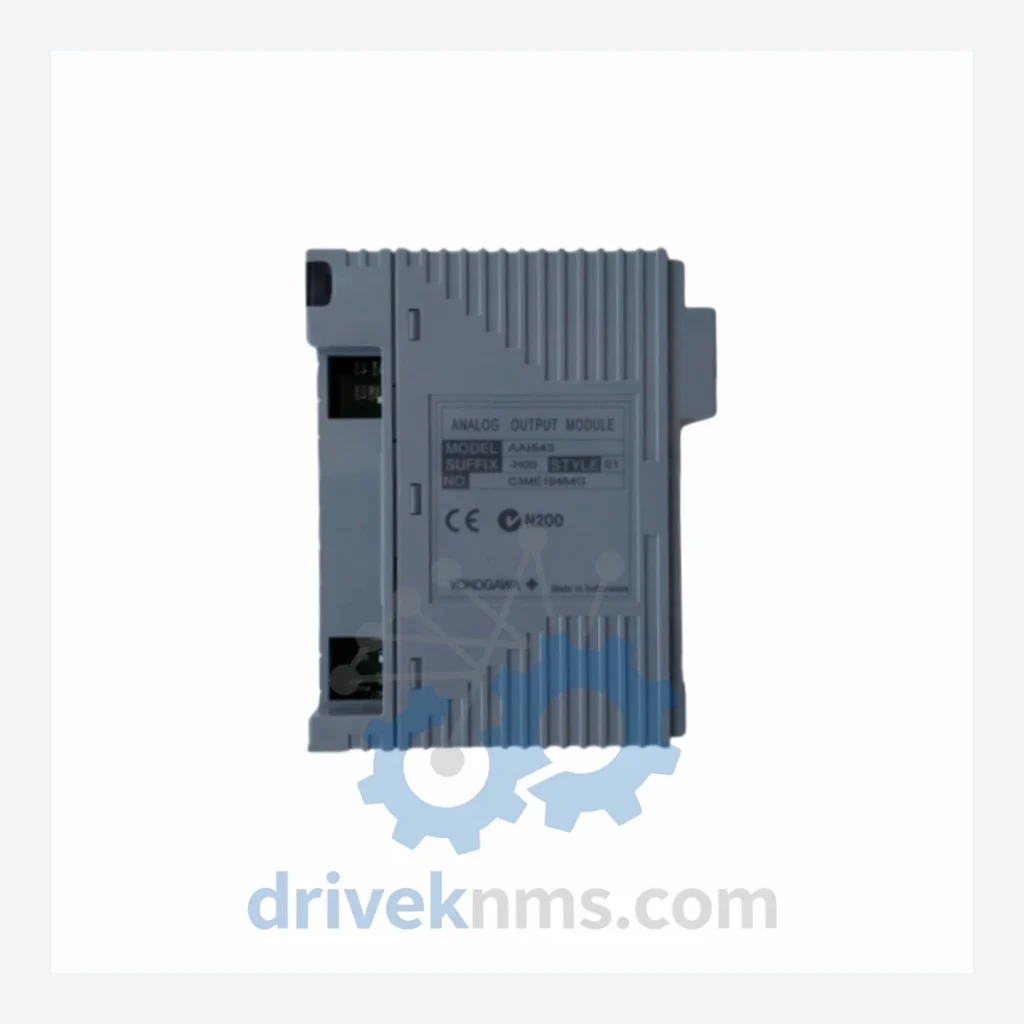
Product Overview
Commercial availability is handled through direct RFQ, model verification and export-oriented follow-up rather than public cart checkout.
Datasheet Preview
Use attached product manuals when available. If the manual is not public yet, request the full file directly through RFQ.
Commercial Path
Product pages on DRIVEKNMS are designed to verify model, brand and series first, then move the buyer into one clean quotation path.
Technical Dossier
The Yokogawa CENTUM CS3000 is a field-proven Distributed Control System (DCS) platform deployed across the global process industries, including petrochemical complexes, nuclear power facilities, LNG terminals, crude oil refineries, and large-scale chemical plants. First introduced in 1998 as the successor to the CENTUM CS, the CS3000 established itself as the dominant DCS architecture in Asia-Pacific and has maintained significant installed base penetration in the Middle East and Europe. Its modular field control station (FCS) architecture — built around the Vnet/IP and ESB bus — supports deterministic real-time control with redundancy at every layer: controller, I/O, power, and network. The S2MMM843-SS1130 and S2BN1D-11130 are hardware components within this ecosystem, representing the type of precision-engineered sub-assemblies that define the CS3000's long operational lifecycle in mission-critical environments.
The CENTUM CS3000 architecture evolved through three distinct phases. The initial release (R1.x–R2.x, 1998–2002) established the dual-redundant Vnet token-ring communication backbone and introduced the first-generation Field Control Stations (FCS): the KFCS (Compact FCS) and LFCS (Large FCS). The second phase (R3.x, 2003–2008) introduced Vnet/IP — migrating the control network from a proprietary token-ring to an Ethernet-based protocol while maintaining backward compatibility with legacy Vnet nodes. This transition created a compatibility boundary: pre-R3 I/O modules and bus couplers are not hot-swappable with R3+ FCS units without firmware alignment. The third phase (R4.x–R5.x, 2009–2018) introduced the PFCS (Process Field Control Station) and expanded the I/O module density. As of 2020, Yokogawa has formally positioned CENTUM VP as the migration target for CS3000 installations, with CS3000 entering its extended lifecycle support phase. This means spare parts — particularly I/O modules, communication adapters, and power supply units — are increasingly sourced from the secondary market rather than OEM channels.
The following SKUs represent verified components within the CENTUM CS3000 hardware ecosystem, organized by functional category:
Controller & CPU Modules
Analog Input (AI) Modules
Analog Output (AO) Modules
Digital Input (DI) / Digital Output (DO) Modules
Communication & Network Adapters
Power Supply Modules
Yokogawa officially transitioned CS3000 to extended lifecycle support status, meaning OEM new-stock availability for many sub-assemblies — including bus couplers, communication interface cards, and first-generation CPU modules — is no longer guaranteed through standard distribution channels. DriveKNMS maintains a dedicated inventory of CS3000 hardware sourced through verified industrial surplus channels, decommissioned plant auctions, and long-term stocking agreements with regional system integrators. For components such as the S2MMM843-SS1130 and S2BN1D-11130, which are nest-level communication and interface modules, DriveKNMS provides: (1) unit-level availability checks against live inventory, (2) cross-reference validation against Yokogawa part revision history to confirm hardware compatibility with the customer's FCS firmware version, and (3) drop-in replacement identification where the original part number has been superseded. Customers operating CS3000 installations beyond 2025 are advised to establish a buffer stock strategy for high-wear and single-point-of-failure modules. DriveKNMS can assist with lifecycle planning and multi-unit procurement for maintenance windows.
CENTUM CS3000 modules present specific quality verification challenges due to their proprietary ESB backplane communication protocol and Vnet/IP stack. DriveKNMS applies a structured inspection protocol for all CS3000 hardware prior to shipment. Physical inspection covers PCB condition, connector pin integrity, conformal coating status, and capacitor health assessment on power-adjacent boards. Functional verification for communication modules such as the S2MMM843-SS1130 includes backplane signal continuity testing using CS3000-compatible nest fixtures. For I/O modules, channel-level signal injection and readback is performed across the full input/output range. Firmware revision is read and documented for all CPU and communication modules to ensure compatibility disclosure. All units are shipped with a test report and a 12-month warranty against functional defects. Units that do not pass functional verification are quarantined and not listed for sale.
For availability inquiries, cross-reference requests, or bulk procurement of CENTUM CS3000 modules:
© 2026 DriveKNMS. All trademarks belong to their respective owners. Specifications are for reference only and subject to change without notice. Verify all parameters against official documentation before installation.
Related Paths
Yokogawa K9634DA Series: Comprehensive Module Range and Technical Overview The Yokogawa K9634DA series TCD (Thermocouple/mV Input) cards are field-proven I/O…
Yokogawa UT350-01 Digital Indicating Controller – Obsolete UT Series Spare Part When a Yokogawa UT350-01 fails on the plant floor,…
YOKOGAWA NFDR Series: Comprehensive Module Range and Technical Overview The YOKOGAWA NFDR series relay output modules are core field control…