
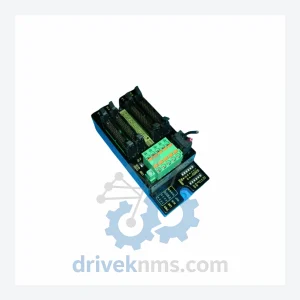
Yokogawa TAHWD32-3PAM Master Module – Obsolete CENTUM CS/CS3000 Spare Part
Yokogawa TAHWD32-3PAM is listed for CENTUM CS/CS3000 RFQ review. Confirm quantity, condition and destination before quotation.
RFQ-ready industrial model
Model: CP134E-16-S1
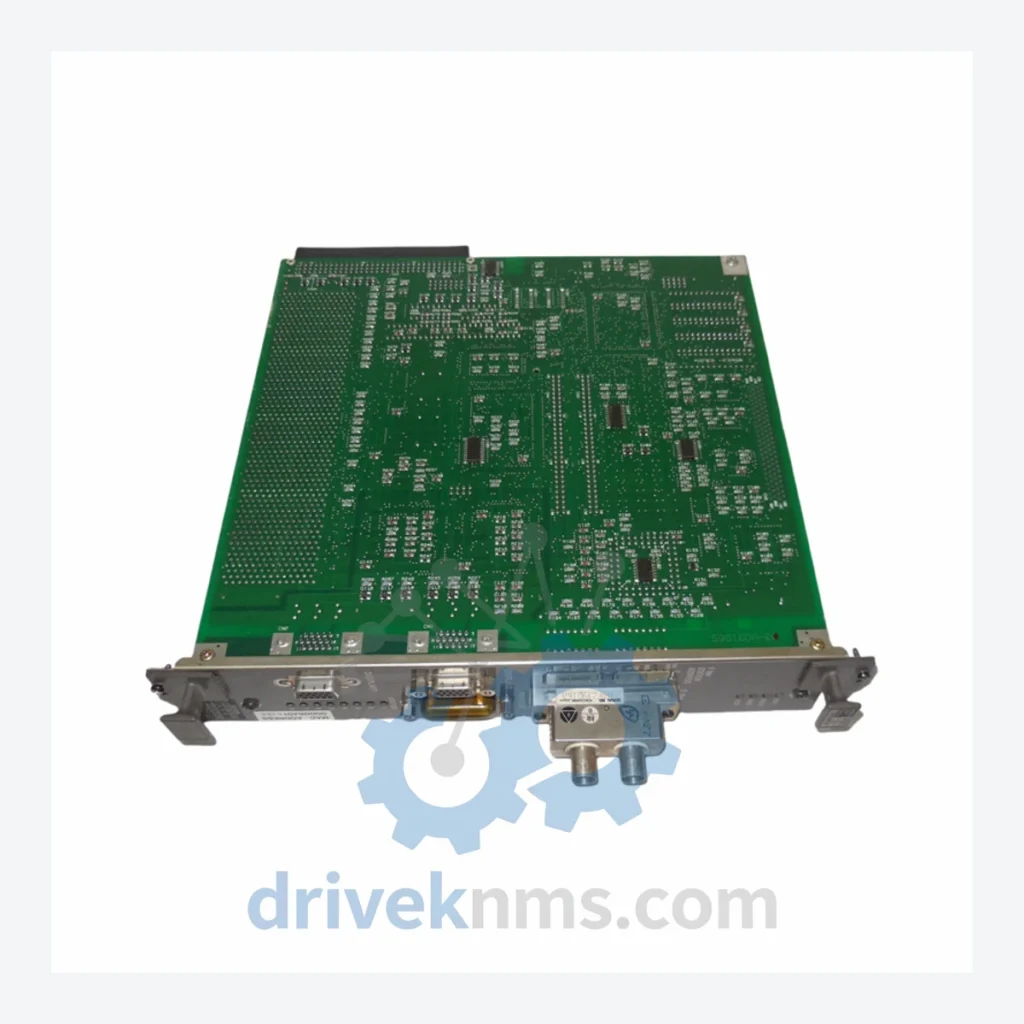
Product Overview
Commercial availability is handled through direct RFQ, model verification and export-oriented follow-up rather than public cart checkout.
Datasheet Preview
Use attached product manuals when available. If the manual is not public yet, request the full file directly through RFQ.
Commercial Path
Product pages on DRIVEKNMS are designed to verify model, brand and series first, then move the buyer into one clean quotation path.
Technical Dossier
When a CP134E-16-S1 CPU board fails in an active CENTUM CS or CS3000 distributed control system, the consequences are not limited to a single loop or subsystem. This module sits at the processing core of the field control station (FCS). Its failure can halt an entire production unit. For facilities running continuous processes—refining, petrochemical, power generation, or specialty chemicals—an unplanned shutdown triggered by an irreplaceable discontinued board can translate directly into millions of dollars in lost output, emergency engineering fees, and forced system migration costs that were never budgeted.
Yokogawa officially discontinued the CP134E-16-S1 as part of the broader CENTUM CS hardware lifecycle. Replacement units are no longer manufactured. The global secondary market supply is finite and shrinking. DriveKNMS maintains RFQ-reviewed sourcing status of this module for facilities that cannot afford to wait.
RFQ support for obsolete parts: Send the model number, required quantity and destination so DriveKNMS can confirm sourcing options before quotation.
| Parameter | Detail |
|---|---|
| Part Number | CP134E-16-S1 |
| Manufacturer | Yokogawa Electric Corporation |
| Module Type | CPU / Processor Board |
| Compatible System | Yokogawa CENTUM CS, CENTUM CS3000 DCS |
| Country of Origin | Japan |
| Product Status | Discontinued / Obsolete – No longer in production |
| Typical Application | Field Control Station (FCS) processing core |
The CENTUM CS and CS3000 platform was deployed extensively across Asia-Pacific, the Middle East, and Europe from the mid-1990s through the 2000s. Many of these installations remain in active service today, managing critical process loops that cannot be interrupted without significant operational and safety consequences.
The CP134E-16-S1 is not a peripheral card that can be bypassed or substituted with a generic alternative. It is the computational engine of the FCS. When this board reaches end of life through component failure, the facility faces a binary choice: locate a verified replacement unit, or commit to a full DCS migration project.
A full CENTUM CS3000 to CENTUM VP migration—or a cross-platform migration to a competing DCS—typically requires 18 to 36 months of engineering planning, factory acceptance testing, site acceptance testing, and process shutdown windows. Total project costs routinely exceed USD 2 million for mid-size process units, and significantly more for complex multi-FCS architectures. A single verified CP134E-16-S1 spare board, properly maintained, can defer that capital expenditure by five to ten years.
For plant managers and reliability engineers operating under capital budget constraints, the arithmetic is straightforward: the cost of sourcing and holding a qualified spare is a fraction of one percent of the migration cost it prevents. The risk of operating without a spare is not theoretical—it is a scheduled failure waiting for the wrong moment.
Facilities that have extended CENTUM CS3000 asset life successfully share a common practice: they treat critical discontinued processor boards as insured assets, not consumable spares. They source verified units while secondary market supply still exists, store them under controlled conditions, and document firmware versions against their running FCS configuration. This approach has allowed numerous facilities to maintain production continuity well beyond the original system lifecycle projections.
DriveKNMS applies a structured 5-step qualification process to all discontinued processor boards before they are offered for sale or dispatch.
Step 1 – Visual and Mechanical Inspection: Full board examination for physical damage, solder joint integrity, connector pin condition, and PCB trace integrity. Boards with evidence of field damage, burn marks, or mechanical stress are rejected at this stage.
Step 2 – Electrolytic Capacitor Assessment: Aged electrolytic capacitors are a primary failure mode in boards manufactured in the 1990s and early 2000s. Each board is assessed for capacitor condition. Where capacitor degradation is identified, the board is either reconditioned by qualified technicians or removed from inventory.
Step 3 – Pin and Connector Corrosion Check: Backplane connectors and I/O pins are inspected under magnification for oxidation and corrosion. Affected contacts are cleaned using approved methods. Boards with structural corrosion on connector bodies are not offered for sale.
Step 4 – Firmware Version Verification: Where firmware version markings are present on the board, these are documented and disclosed to the buyer prior to shipment. Firmware compatibility with the target FCS configuration is the buyer's responsibility to confirm, and we provide all available version information to support that process.
Step 5 – Functional Bench Test (where applicable): Boards that can be powered and tested on available bench equipment are tested prior to dispatch. Test results are documented. Where bench testing is not possible due to system-specific hardware requirements, this is disclosed clearly.
The CP134E-16-S1 is a direct hardware replacement for the same part number within the CENTUM CS and CS3000 FCS architecture. It is not a cross-series substitute or an adapted alternative—it is the same board, designed for the same slot, running the same firmware family.
This means installation does not require re-engineering of the control station configuration, re-wiring of I/O terminations, or modification of the FCS database. The replacement procedure follows standard Yokogawa FCS maintenance protocols. Engineering hours are limited to the swap procedure and post-installation verification, not system redesign.
For facilities that have invested in CENTUM CS3000 operator training, alarm management configuration, and process historian integration, maintaining the existing hardware platform preserves that investment entirely. There is no retraining requirement, no historian reconfiguration, and no risk of introducing new failure modes through unfamiliar hardware.
The cost of a qualified CP134E-16-S1 replacement board is measured in thousands of dollars. The cost of the engineering project it replaces is measured in millions. The operational logic for maintaining a verified spare is not a matter of preference—it is a matter of asset protection.
Q: Should we hold more than one spare unit?
A: For any facility where the CENTUM CS3000 system is expected to remain in service for more than three years, holding a minimum of one cold spare CP134E-16-S1 is a standard reliability practice. For multi-FCS installations or facilities without rapid access to secondary market sourcing, two units is a more defensible position. Secondary market availability of this part will continue to decline as installed base units age out of service.
Q: Can you supply other CENTUM CS3000 discontinued modules?
A: Yes. DriveKNMS maintains inventory across a range of discontinued Yokogawa CENTUM CS and CS3000 hardware. Contact us with your full bill of materials for a consolidated availability check.
Continue The Model Path
Move from this exact model into the matching system hub, brand archive, model-family archive or lifecycle sourcing route before sending a final RFQ list.
Related Paths
Yokogawa TAHWD32-3PAM is listed for CENTUM CS/CS3000 RFQ review. Confirm quantity, condition and destination before quotation.
Yokogawa AAR145-S50 is listed for CENTUM CS/CS3000 RFQ review. Confirm quantity, condition and destination before quotation.
Yokogawa SCP461-E1 S2 is listed for CENTUM CS/CS3000 RFQ review. Confirm quantity, condition and destination before quotation.