
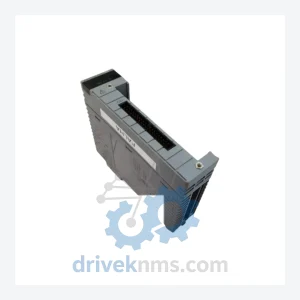
Yokogawa AAI135-H50 S3 Analog Input Module – Obsolete CENTUM CS 3000 Spare Part
Yokogawa AAI135-H50 S3 is listed for CENTUM CS RFQ review. Confirm quantity, condition and destination before quotation.
RFQ-ready industrial model
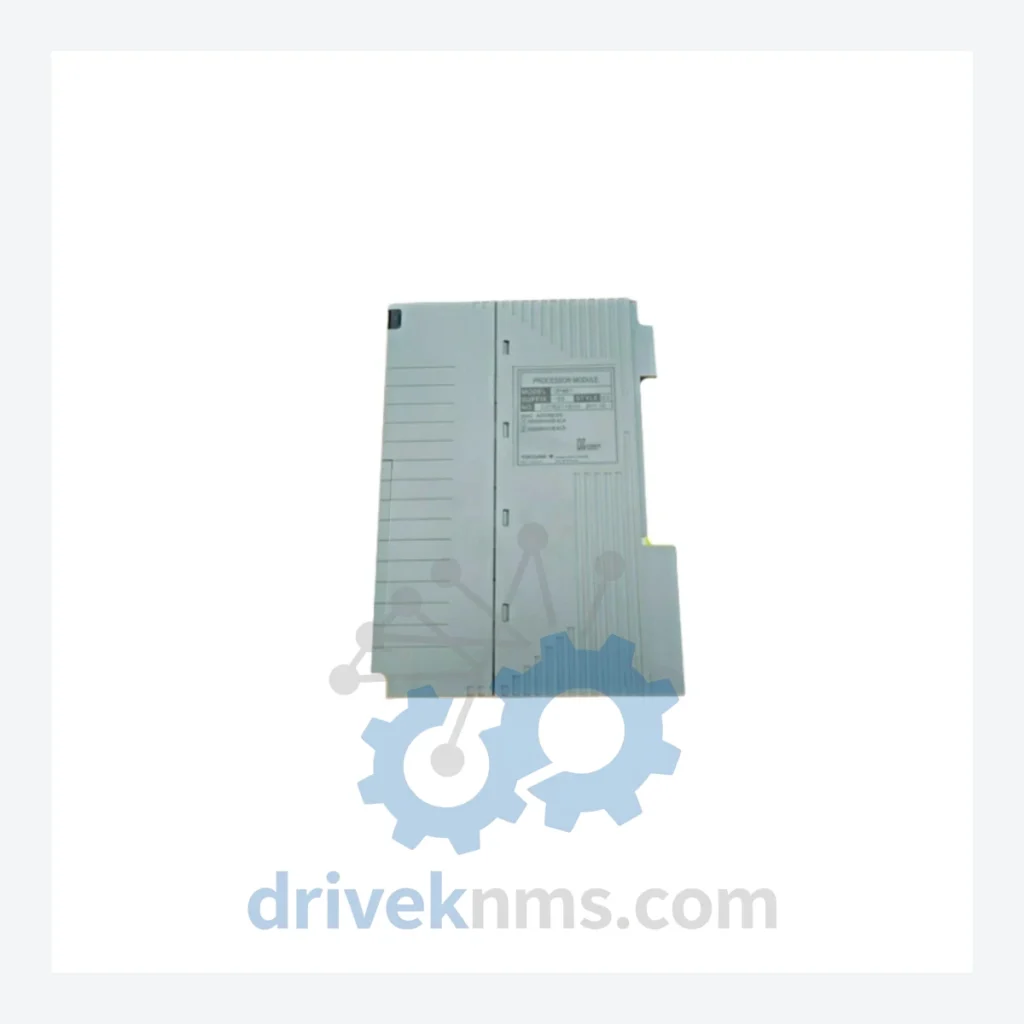
Model: CP461-50 S2
Product Overview
Commercial availability is handled through direct RFQ, model verification and export-oriented follow-up rather than public cart checkout.
Datasheet Preview
Use attached product manuals when available. If the manual is not public yet, request the full file directly through RFQ.
Commercial Path
Product pages on DRIVEKNMS are designed to verify model, brand and series first, then move the buyer into one clean quotation path.
Technical Dossier
The Yokogawa CENTUM CS 3000 is a field-proven Distributed Control System (DCS) platform deployed across the global heavy process industries, including petrochemical complexes, oil refineries, nuclear power facilities, LNG terminals, and large-scale chemical plants. First introduced in the late 1990s as the successor to the CENTUM CS, the CS 3000 architecture established Yokogawa's dominance in high-availability process automation. Its modular backplane design, redundant controller topology, and Vnet/IP communication backbone made it the reference standard for continuous process control in facilities requiring 99.99% uptime. Installed base estimates exceed tens of thousands of systems worldwide, with a significant concentration in Asia-Pacific, the Middle East, and Europe. The CP461-50 S2 is a central processor module within this platform, responsible for executing control logic, managing I/O bus communication, and coordinating inter-module data exchange across the field control station (FCS).
The CENTUM platform traces its lineage from the original CENTUM (1975) — one of the world's first commercially deployed DCS systems — through CENTUM XL, CENTUM CS, and into the CS 3000 generation released circa 1998. The CS 3000 introduced a 100 Mbps Ethernet-based Vnet/IP control bus, replacing the earlier proprietary Vnet token-ring topology. This transition enabled larger node counts, faster scan rates, and improved diagnostics. The CP461 processor family within CS 3000 spans multiple hardware revisions (S1, S2, S3), each iteration improving CPU clock speed, memory capacity, and firmware compatibility. The S2 revision of the CP461-50 introduced enhanced memory addressing and improved compatibility with R3.xx firmware releases. Compatibility between S1 and S2 hardware requires firmware alignment; cross-revision substitution without firmware verification is not supported. The CS 3000 platform entered its mature/end-of-active-development phase circa 2015 with the introduction of CENTUM VP, its direct successor. However, the installed base remains extensive, and Yokogawa continues to provide limited OEM support. Third-party lifecycle extension providers such as DriveKNMS supply tested surplus and refurbished modules to bridge the gap between OEM discontinuation and plant decommissioning cycles, which typically span 20–30 years in heavy industry.
The following SKUs represent verified, commonly stocked modules within the CENTUM CS 3000 platform, organized by functional category:
Processor / Controller Modules (CPU)
CP461-50 S2: Field Control Station processor, 50-node capacity, S2 hardware revision, Vnet/IP compatible.
CP461-50 S3: Field Control Station processor, 50-node capacity, S3 hardware revision, enhanced diagnostics firmware.
CP461-10: Field Control Station processor, 10-node capacity, entry-level FCS configuration.
CP451-10: Compact FCS processor for small-scale CS 3000 installations, single-redundancy configuration.
CP451-50: Compact FCS processor, 50-node, dual-redundancy capable, widely deployed in mid-size plants.
Analog Input Modules (AI)
AAI141-S00: 16-channel analog input, 4–20 mA, HART-compatible, single-ended configuration.
AAI143-S00: 16-channel analog input, 4–20 mA, HART-compatible, differential input configuration.
AAI841-S00: 8-channel analog input with HART pass-through, high-density field wiring terminal.
AAI135-S00: 16-channel analog input, thermocouple/RTD multi-type, cold junction compensation integrated.
Analog Output Modules (AO)
AAO141-S00: 8-channel analog output, 4–20 mA, HART-compatible, loop-powered field devices.
AAO841-S00: 8-channel analog output, high-density terminal, HART revision 5/6/7 support.
Digital Input Modules (DI)
ADV151-P00: 32-channel digital input, 24 VDC, contact/voltage input, high-density marshalling.
ADV157-P00: 32-channel digital input, 100–120 VAC, optically isolated, plant-side voltage compatible.
Digital Output Modules (DO)
ADV551-P00: 16-channel digital output, 24 VDC transistor, source-type, relay-free solid-state switching.
ADV557-P00: 16-channel digital output, 100–240 VAC triac, optically isolated, motor starter interface.
Communication / Bus Modules
ACM11: Vnet/IP communication module, dual-port Ethernet, redundant bus interface for FCS nodes.
ALR111: FOUNDATION Fieldbus H1 interface module, 4-segment, intrinsically safe barrier compatible.
AIP829: PROFIBUS DP master interface module, V1 class, up to 125 slave devices per segment.
Power Supply Modules
PW481: 24 VDC power supply module, 40W output, redundancy-capable, hot-swap supported in FCS chassis.
PW482: 24 VDC power supply module, 80W output, high-load FCS configurations with dense I/O population.
As the CENTUM CS 3000 platform has transitioned into its post-active-support lifecycle, OEM availability for specific hardware revisions — particularly S1 and S2 processor modules, legacy communication cards, and first-generation I/O modules — has become constrained. Yokogawa's official spare parts program prioritizes CENTUM VP and successor platforms, leaving CS 3000 operators dependent on the secondary market for like-for-like hardware replacements.
CENTUM CS 3000 modules present specific test challenges due to their integrated backplane bus architecture and Vnet/IP communication stack. DriveKNMS applies the following verification protocol to all CS 3000 units prior to dispatch:
Visual and mechanical inspection: PCB examination for corrosion, capacitor degradation, connector pin integrity, and conformal coating condition. Backplane edge connectors are cleaned and inspected under magnification.
Power-on functional test: Each module is energized in a compatible CS 3000 test chassis. Processor modules are verified to complete POST (Power-On Self-Test) and achieve RUN state without fault codes.
Vnet/IP bus communication test: CP461-series processor modules are tested for active Vnet/IP node participation, confirming bus arbitration and data exchange with a reference FCS node.
I/O channel verification: Analog and digital I/O modules undergo per-channel signal injection and measurement. AI modules are tested against calibrated 4–20 mA sources; AO modules are loaded with precision resistive loads and output measured against specification.
Firmware revision logging: Processor and communication modules are logged with their detected firmware version, enabling pre-shipment compatibility confirmation against the customer's system revision.
Continue The Model Path
Move from this exact model into the matching system hub, brand archive, model-family archive or lifecycle sourcing route before sending a final RFQ list.
Related Paths
Yokogawa AAI135-H50 S3 is listed for CENTUM CS RFQ review. Confirm quantity, condition and destination before quotation.
Yokogawa NFDV151-P10 is listed for CENTUM CS RFQ review. Confirm quantity, condition and destination before quotation.
Yokogawa CP471-00 S1 is listed for CENTUM CS RFQ review. Confirm quantity, condition and destination before quotation.