
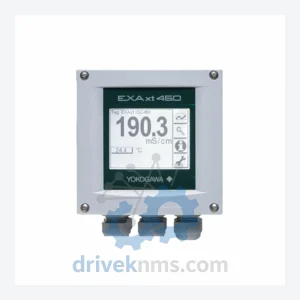
Yokogawa SC450G-A-A
Yokogawa SC450G-A-A is listed for Monitoring Systems RFQ review. Confirm quantity, condition and destination before quotation.
RFQ-ready industrial model
Model: F3NC12-1N
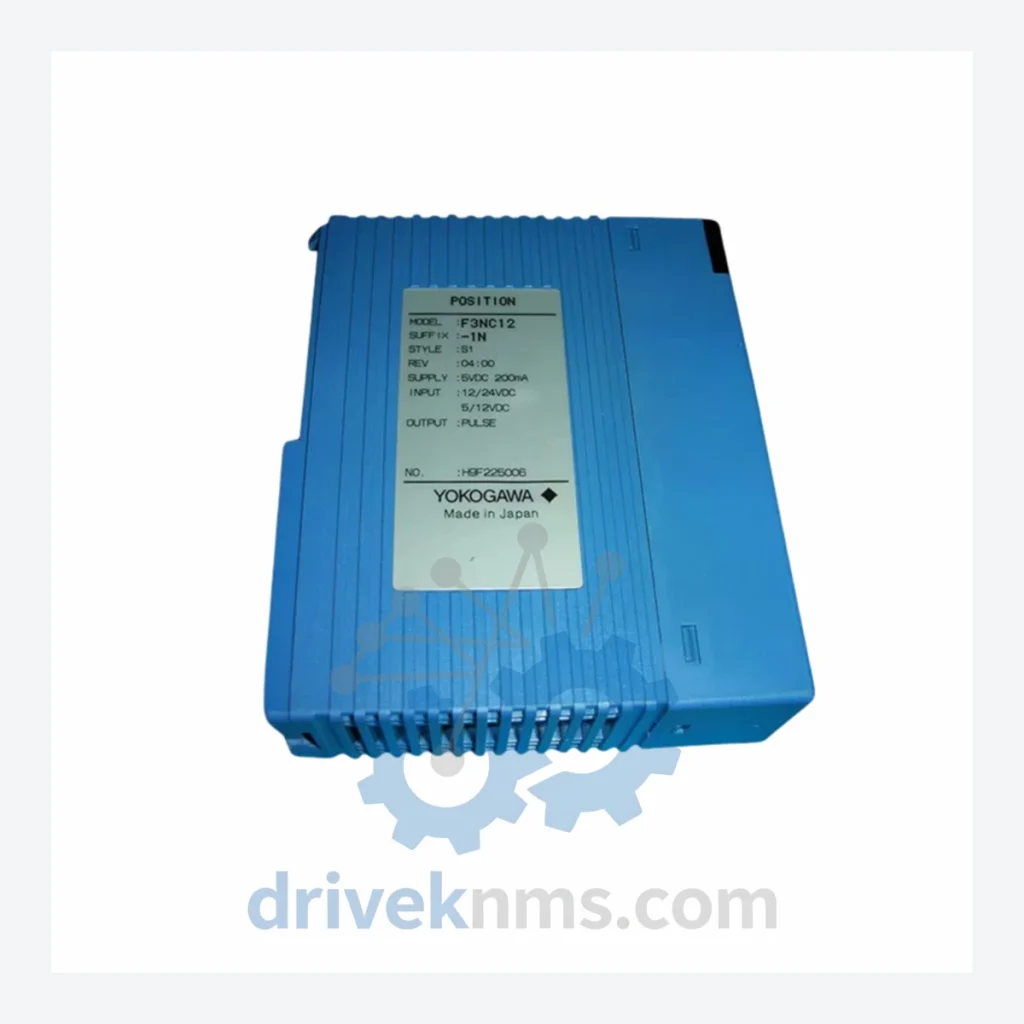
Product Overview
Commercial availability is handled through direct RFQ, model verification and export-oriented follow-up rather than public cart checkout.
Datasheet Preview
Use attached product manuals when available. If the manual is not public yet, request the full file directly through RFQ.
Commercial Path
Product pages on DRIVEKNMS are designed to verify model, brand and series first, then move the buyer into one clean quotation path.
Technical Dossier
The FA-M3 platform launched with a modular backplane architecture supporting up to 16 I/O slots per base unit, with the F3SP series handling CPU functions and the F3N series dedicated to specialized motion tasks. Early F3N modules (circa 1996–2002) used proprietary Yokogawa ASICs for pulse interpolation and communicated over the internal FA bus at fixed scan rates. The F3NC series introduced in the early 2000s added support for linear encoder interfaces and multi-axis synchronization, making it the dominant choice for machine tool and semiconductor handling applications in Asia-Pacific facilities.
By 2010, Yokogawa began transitioning customers toward the STARDOM FCN/FCJ platform and the ProSafe-RS safety system for new projects, effectively placing the FA-M3 F3N series into a maintenance-only lifecycle. Firmware updates ceased for most F3N variants by 2015. The practical consequence for plant engineers is a frozen hardware environment: any replacement module must match the original firmware revision to maintain compatibility with existing ladder logic and function block programs. Cross-generation substitution between F3NC and F3NP sub-families is not always possible without engineering rework.
The following SKUs represent confirmed members of the Yokogawa FA-M3 F3N position and motion control module family. Each entry reflects a distinct hardware configuration.
Position Control Modules (F3NC Sub-family)
High-Speed Counter Modules (F3NC / F3NP Sub-family)
Encoder / Resolver Interface Modules
Cam / Synchronization Modules
For customers managing multi-year maintenance contracts on FA-M3 installations, DriveKNMS offers reserved inventory agreements: a defined quantity of critical F3N modules is held under the customer's account for a fixed period, eliminating exposure to spot-market price volatility and availability gaps. This approach is particularly relevant for facilities operating FA-M3 systems in SIL-rated loops where substitution with non-identical hardware would trigger a revalidation cycle.
F3N position control modules present specific test challenges due to their mixed digital/analog signal paths and time-critical pulse generation circuits. DriveKNMS applies the following verification steps to all F3N modules prior to dispatch:
Continue The Model Path
Move from this exact model into the matching system hub, brand archive, model-family archive or lifecycle sourcing route before sending a final RFQ list.
Related Paths
Yokogawa SC450G-A-A is listed for Monitoring Systems RFQ review. Confirm quantity, condition and destination before quotation.
Yokogawa SC4AJ-S-AD-09 is listed for SC4AJ Series Conductivity RFQ review. Confirm quantity, condition and destination before quotation.
Yokogawa SDV541-S23 S3 is listed for SDV500 Series Output RFQ review. Confirm quantity, condition and destination before quotation.