Products / Yokogawa / H63 S1 Signal Conditioner
Yokogawa H63 S1 Signal Conditioner

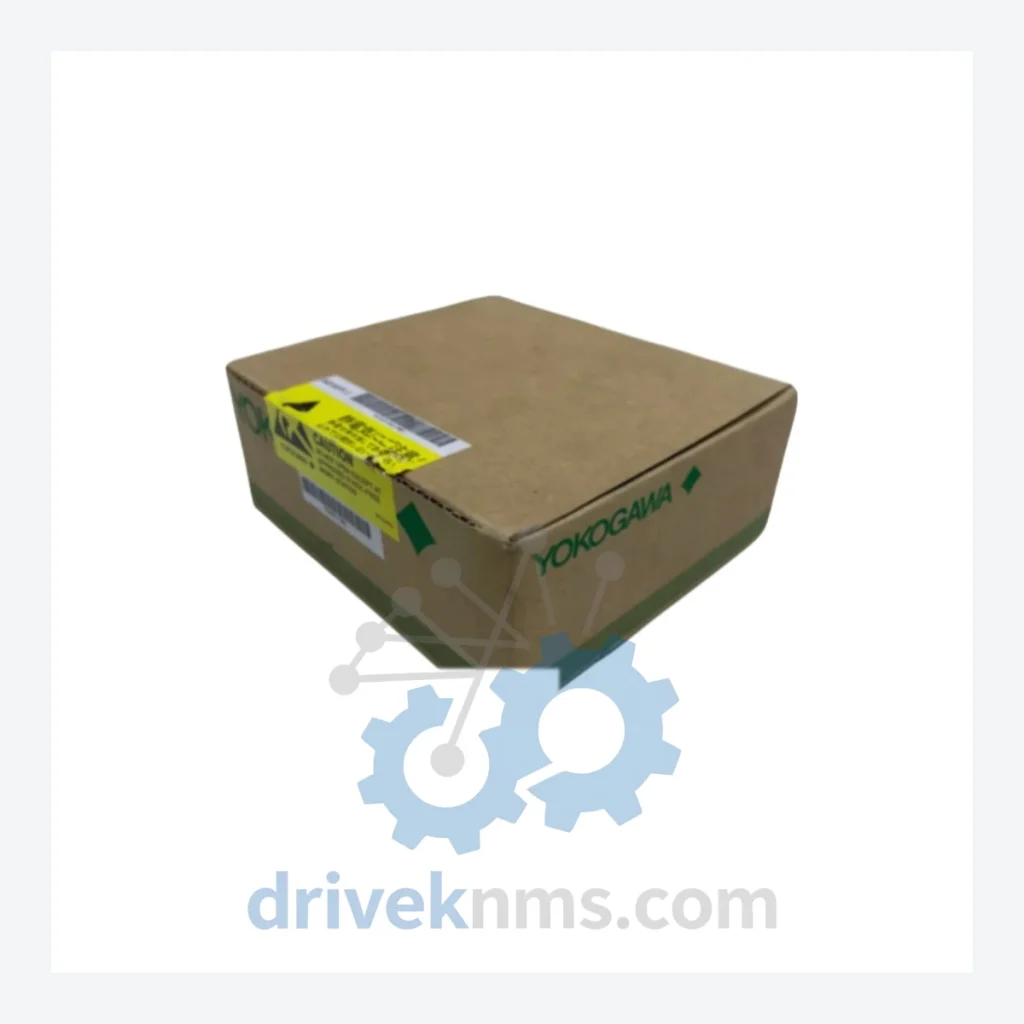
Yokogawa SAI533-H63 S1 Signal Conditioner – Obsolete CENTUM Series Spare Part

Model: SAI533-H63 S1

Brand Yokogawa
Series H63 S1 Signal Conditioner
Model SAI533-H63 S1
RFQ-ready model route Obsolete and surplus sourcing Export follow-up by model list

Product Overview

Commercial availability is handled through direct RFQ, model verification and export-oriented follow-up rather than public cart checkout.

Datasheet Preview

Datasheet Preview

Use attached product manuals when available. If the manual is not public yet, request the full file directly through RFQ.

Request Full Manual

Commercial Path

Use This Page To Confirm The Model, Then Move To RFQ

Product pages on DRIVEKNMS are designed to verify model, brand and series first, then move the buyer into one clean quotation path.

Technical Dossier

Product Details And Specifications

Yokogawa SAI533-H63 S1 Signal Conditioner – Obsolete CENTUM Series Spare Part

When a signal conditioner module like the SAI533-H63 S1 fails in a running CENTUM-based distributed control system, the consequences extend far beyond a single I/O card. A forced migration to a current-generation DCS platform—driven by a single unavailable spare—routinely carries engineering, commissioning, and production-loss costs measured in the millions. DriveKNMS maintains sourced inventory of discontinued Yokogawa modules specifically to prevent that scenario. This is not a commodity listing; it is a documented asset-protection option for facilities that have chosen to operate proven infrastructure rather than absorb the risk and capital expenditure of premature system retirement.

Technical Specifications

Parameter Detail
Manufacturer Yokogawa Electric Corporation
Part Number SAI533-H63 S1
Module Type Signal Conditioner / Analog Input
Compatible Platform Yokogawa CENTUM Series DCS (CENTUM CS, CENTUM CS 1000, CENTUM CS 3000)
Country of Origin Japan
Discontinuation Status Discontinued – No longer manufactured or supported by Yokogawa OEM channels
Condition Available New Old Stock (NOS) / Professionally Refurbished

Note: Electrical parameters such as input range, isolation voltage, and power consumption are model-suffix-dependent. DriveKNMS will confirm exact specifications against your system documentation prior to shipment. No parameters are assumed or fabricated.

Solving the Discontinued Hardware Crisis

The Yokogawa CENTUM platform has a decades-long installed base across refining, petrochemical, power generation, and pharmaceutical facilities. The SAI533-H63 S1 signal conditioner occupies a defined slot in that architecture—handling analog signal conditioning between field instruments and the controller bus. There is no generic substitute. Replacing it with a non-OEM module requires re-engineering the I/O mapping, re-validating the loop, and in regulated industries, re-qualifying the change through a formal management-of-change process. That process alone can consume weeks of engineering time and trigger a partial plant shutdown.

The economic argument for sourcing an original spare is straightforward: the cost of this module is a fraction of one day of lost production on a mid-sized process unit. Facilities that maintain a documented critical-spare inventory for their CENTUM systems consistently defer full DCS migration by five to ten years without compromising process reliability. The strategy requires identifying the ten to fifteen module types with the longest mean-time-to-failure and the lowest OEM availability, then securing a buffer stock before those modules become impossible to source. The SAI533-H63 S1 is precisely the type of module that belongs on that list.

DriveKNMS operates a global sourcing network focused exclusively on discontinued industrial automation components. When OEM channels close, we maintain access to verified surplus, decommissioned-plant inventory, and authorized secondary-market stock. Each unit passes through a documented inspection process before it leaves our facility.

Condition & Reliability Assurance

Discontinued modules carry age-related failure modes that differ from new production parts. Our five-step QA process addresses the specific degradation patterns relevant to signal conditioner hardware of this generation:

  • Step 1 – Electrolytic Capacitor Assessment: Capacitors in modules of this era are the primary failure point after extended storage or field use. Each unit is inspected for capacitor bulging, electrolyte leakage, and ESR deviation. Units with marginal capacitors are recapped with equivalent-specification components before release.
  • Step 2 – Firmware Version Verification: Where applicable, firmware revision is confirmed against the compatibility matrix for the target CENTUM platform version. Mismatched firmware is a known source of intermittent faults that are difficult to diagnose in the field.
  • Step 3 – Pin and Connector Inspection: Backplane connectors and field-wiring terminals are inspected under magnification for oxidation, corrosion, and mechanical deformation. Contact surfaces are cleaned and treated where required.
  • Step 4 – Functional Bench Test: Modules are powered and tested for basic operational response. Analog input modules are verified for signal pass-through integrity across the relevant input range.
  • Step 5 – Packaging and ESD Protection: Units are packaged in anti-static bags with desiccant and labeled with inspection date and technician ID. Storage conditions are documented.

Key Features for System Maintenance

  • Drop-in replacement: The SAI533-H63 S1 installs directly into the existing CENTUM chassis slot. No hardware modification to the cabinet or backplane is required.
  • No reprogramming required: The module operates within the existing I/O configuration. Engineering intervention is limited to standard hot-swap or cold-swap procedures per Yokogawa maintenance documentation.
  • Avoids engineering reconstruction costs: Using an OEM-equivalent spare eliminates the need for loop re-engineering, re-validation, and change-management documentation that a non-equivalent substitution would trigger.
  • Extends asset service life: A single verified spare can sustain a CENTUM system through an additional maintenance cycle, deferring a capital-intensive migration project by years.
  • Documented chain of custody: Each unit shipped by DriveKNMS includes inspection records, supporting your internal maintenance documentation and audit requirements.

FAQ

What warranty applies to a discontinued module?
DriveKNMS provides a 90-day functional warranty on all refurbished units and a 30-day warranty on new old stock, covering failure under normal operating conditions. Warranty claims are handled directly by our technical team.

How do I confirm the unit is genuine and not counterfeit?
All units are sourced from traceable channels—decommissioned plant inventory, authorized surplus dealers, or verified secondary market. Physical markings, PCB revision, and component date codes are cross-checked during inspection. We do not source from unverified brokers.

Should I purchase more than one unit?
For any module that is no longer manufactured, holding a minimum of two spares is standard practice. The first covers an immediate failure; the second covers the period required to source a replacement after the first is consumed. For critical loops, three units is a defensible position. DriveKNMS can discuss volume pricing for facilities building a structured critical-spare buffer.

Can you confirm compatibility with my specific CENTUM version before I order?
Yes. Provide your CENTUM platform version and existing module suffix, and our technical team will confirm compatibility before the order is placed.

WhatsApp Prefilled Inquiry Email [email protected] Phone +86 18359293191 Top Back To Top