
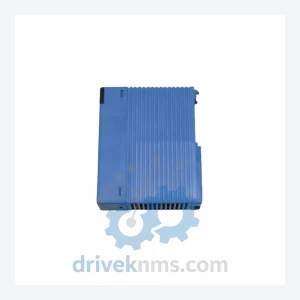
YOKOGAWA F3NC01-0N Power Supply Module – STARDOM Series
Yokogawa F3NC01-0N F3NC01-ON is listed for STARDOM RFQ review. Confirm quantity, condition and destination before quotation.
RFQ-ready industrial model
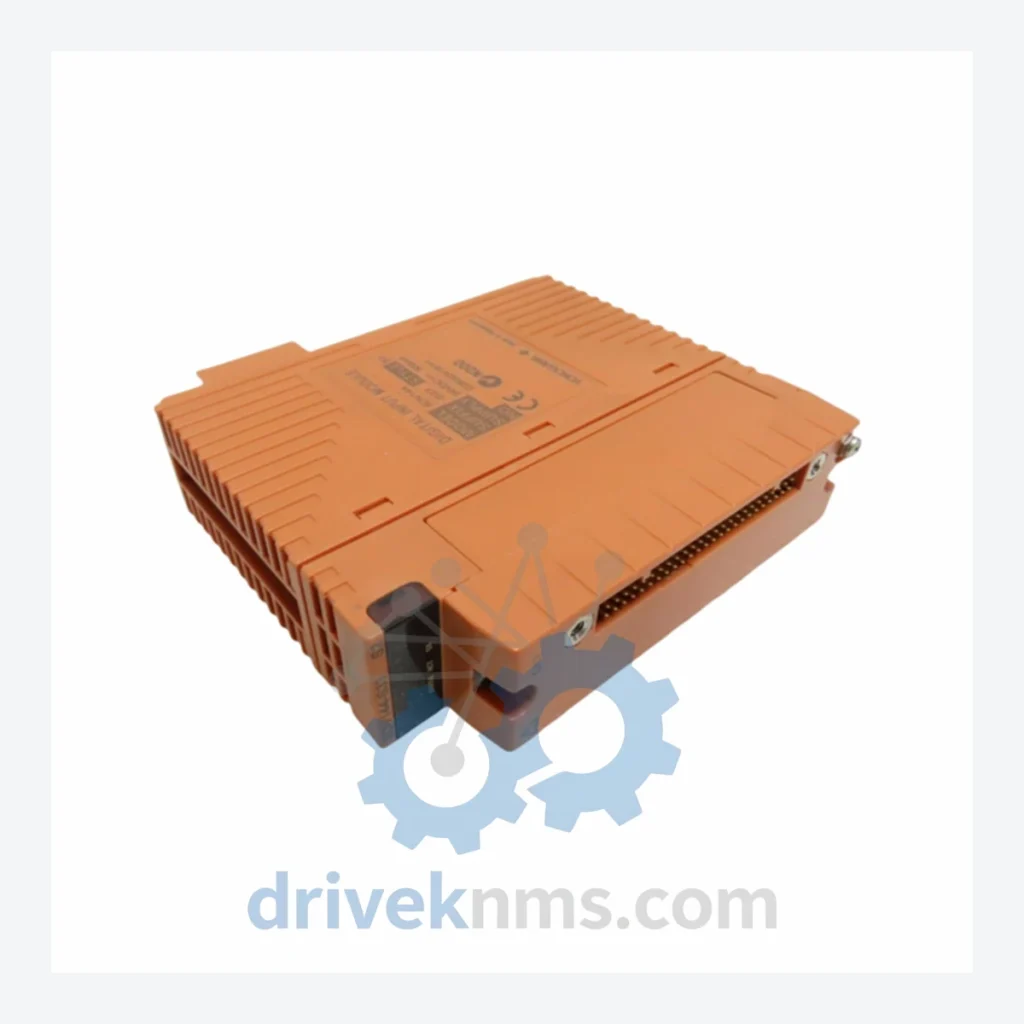
Model: SDV144-S33 S2
Product Overview
Commercial availability is handled through direct RFQ, model verification and export-oriented follow-up rather than public cart checkout.
Datasheet Preview
Use attached product manuals when available. If the manual is not public yet, request the full file directly through RFQ.
Commercial Path
Product pages on DRIVEKNMS are designed to verify model, brand and series first, then move the buyer into one clean quotation path.
Technical Dossier
RFQ support for obsolete parts: Send the model number, required quantity and destination so DriveKNMS can confirm sourcing options before quotation.
| Attribute | Detail |
|---|---|
| Manufacturer | Yokogawa Electric Corporation |
| Part Number | SDV144-S33 S2 |
| Module Type | Digital Input Module |
| Compatible Platform | Yokogawa STARDOM FCN/FCJ Autonomous Controller |
| Country of Origin | Japan |
| Product Status | Discontinued / Obsolete |
| Condition Available | New surplus / Professionally refurbished |
Note: Electrical parameters such as input voltage range, channel count, and isolation specifications are not published here to prevent inaccurate data from being used in safety-critical decisions. Contact us for the original Yokogawa datasheet.
The Yokogawa STARDOM platform—built around the FCN and FCJ autonomous controllers—was widely deployed in oil & gas, water treatment, and discrete manufacturing facilities throughout the 2000s and 2010s. Its modular I/O architecture, including the SDV144-S33 S2 Digital Input Module, was engineered for long service life. The problem is not the hardware's reliability; it is the supply chain reality that follows end-of-life announcements.
Holding a qualified spare of the SDV144-S33 S2 is not a procurement convenience—it is a risk management decision. A single verified module on the shelf can defer a multi-million-dollar capital project by five to ten years, buying time for a planned, budget-controlled transition rather than an emergency one.
Facilities running legacy Yokogawa STARDOM systems are not operating irresponsibly. They are managing capital assets with proven process performance. The following framework is used by maintenance engineers who have successfully extended STARDOM system life well beyond the manufacturer's support window:
1. Conduct a Critical Spares Audit. Map every I/O module, power supply, and communication card in the system. Cross-reference each part number against Yokogawa's end-of-life notices. Identify which modules have no available replacement path within the existing architecture.
3. Source from Verified Surplus Channels. Not all surplus inventory is equal. Modules must be inspected for electrolytic capacitor degradation, firmware version compatibility, and connector pin corrosion before being placed in a critical spare pool. DriveKNMS applies a structured QA process to every unit before it leaves our facility.
4. Document Firmware and Configuration Baselines. Before any module swap, capture the full configuration backup. STARDOM FCN/FCJ controllers store I/O mapping parameters that must be preserved across hardware replacements. A documented baseline eliminates re-commissioning risk.
Every SDV144-S33 S2 unit processed by DriveKNMS passes a five-stage inspection protocol before it is offered for sale:
Step 1 – Visual and Mechanical Inspection: Board-level examination for physical damage, burnt components, and connector pin corrosion. Units with compromised connectors are rejected at this stage.
Step 2 – Electrolytic Capacitor Assessment: Capacitor aging is the primary failure mode in modules stored beyond five years. We measure capacitance and ESR values against manufacturer tolerances. Degraded capacitors are replaced with rated equivalents before the unit proceeds.
Step 3 – Firmware Version Verification: The firmware revision is read and documented. Compatibility with the target FCN/FCJ controller firmware is confirmed before dispatch review. Mismatched firmware versions are a known source of intermittent faults in STARDOM I/O expansions.
Step 4 – Functional Bench Test: Where test fixtures are available, the module is powered and input channels are exercised to verify signal integrity and response.
Step 5 – Anti-Static Packaging and Documentation: Units are packaged in ESD-safe materials. A condition report and inspection record accompany each shipment.
The SDV144-S33 S2 is a direct hardware replacement for the same part number within the STARDOM FCN/FCJ I/O expansion architecture. No re-engineering of the control logic is required. Specific maintenance advantages include:
Drop-in Replacement: The module slots into the existing backplane without mechanical modification. Field wiring terminations remain unchanged.
No Reprogramming Required: Digital input channel assignments and scaling parameters are stored in the FCN/FCJ controller, not in the module itself. A hardware swap does not require re-entry of process parameters.
Avoids Engineering Rework Costs: Substituting a non-native module or migrating to a different I/O platform requires loop drawings revision, safety function re-validation, and in some cases, P&ID updates. A like-for-like replacement eliminates all of that cost.
Preserves Operator Familiarity: Control room displays, alarm setpoints, and historian tags remain unaffected. There is no retraining burden on operations staff.
Continue The Model Path
Move from this exact model into the matching system hub, brand archive, model-family archive or lifecycle sourcing route before sending a final RFQ list.
Related Paths
Yokogawa F3NC01-0N F3NC01-ON is listed for STARDOM RFQ review. Confirm quantity, condition and destination before quotation.
Yokogawa F3SP53-4S is listed for STARDOM RFQ review. Confirm quantity, condition and destination before quotation.
Yokogawa F3YD08-6A is listed for STARDOM RFQ review. Confirm quantity, condition and destination before quotation.