Products / Yokogawa / 13 S1 Signal Isolator
Yokogawa 13 S1 Signal Isolator

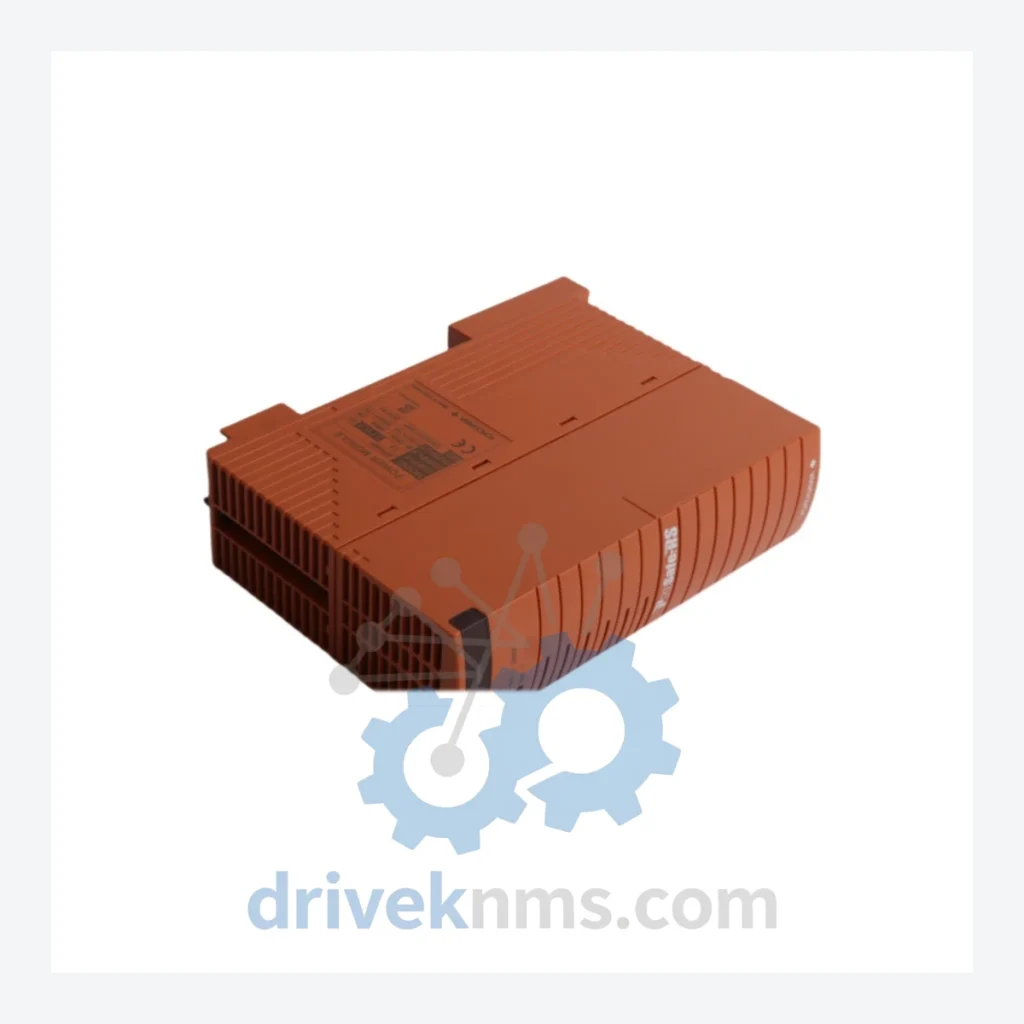
Yokogawa SPW481-13 S1 Signal Isolator – Obsolete CENTUM Series Spare Part

Model: SPW481-13 S1

Brand Yokogawa
Series 13 S1 Signal Isolator
Model SPW481-13 S1
RFQ-ready model route Obsolete and surplus sourcing Export follow-up by model list

Product Overview

Commercial availability is handled through direct RFQ, model verification and export-oriented follow-up rather than public cart checkout.

Datasheet Preview

Datasheet Preview

Use attached product manuals when available. If the manual is not public yet, request the full file directly through RFQ.

Request Full Manual

Commercial Path

Use This Page To Confirm The Model, Then Move To RFQ

Product pages on DRIVEKNMS are designed to verify model, brand and series first, then move the buyer into one clean quotation path.

Technical Dossier

Product Details And Specifications

Yokogawa SPW481-13 S1 Signal Isolator – Obsolete CENTUM Series Spare Part

When a signal isolator module fails inside a legacy Yokogawa CENTUM distributed control system, the consequences extend far beyond a single I/O channel. A full-line shutdown pending a replacement can cost a process plant anywhere from $50,000 to several million dollars per day in lost production. Sourcing a certified replacement for a discontinued module like the SPW481-13 S1 is not a procurement task — it is an asset protection decision. DriveKNMS maintains verified stock of hard-to-find Yokogawa modules specifically to protect facilities from that forced-upgrade scenario.

Technical Specifications

Parameter Detail
Part Number SPW481-13 S1
Manufacturer Yokogawa Electric Corporation
Function Signal Isolator Module
Compatible Platform Yokogawa CENTUM DCS Series (CENTUM CS, CENTUM CS 1000, CENTUM CS 3000)
Country of Origin Japan
Lifecycle Status Discontinued / Obsolete – No longer manufactured by Yokogawa
Condition Available New Old Stock (NOS) / Professionally Refurbished

Note: Electrical parameters such as input/output signal range, isolation voltage, and power consumption are model-specific. DriveKNMS will provide verified datasheet documentation upon inquiry. No parameters are published here without factory-confirmed data.

Solving the Discontinued Hardware Crisis

The Yokogawa CENTUM platform has been the backbone of process control in refining, petrochemical, and power generation facilities across Asia, the Middle East, and Europe for over two decades. The SPW481-13 S1 signal isolator sits at a critical junction in these architectures — it conditions and galvanically isolates field signals before they reach the controller bus, protecting both the field instruments and the I/O cards from ground loops and transient damage.

Yokogawa officially discontinued this module as part of its migration push toward the CENTUM VP platform. For facilities still operating on CENTUM CS or CS 3000, that discontinuation creates a structural vulnerability: a single failed isolator card can take an entire I/O cluster offline. Migrating to CENTUM VP to resolve one failed module requires engineering re-scoping, new I/O marshalling, software migration, and operator retraining — a project that routinely runs $500,000 to $2,000,000 USD before the first new tag is commissioned.

The rational alternative is a verified drop-in replacement. Facilities that maintain a strategic buffer stock of two to four SPW481-13 S1 units can absorb module failures without any system-level disruption, extending the productive life of their existing CENTUM infrastructure by five to ten years at a fraction of the upgrade cost.

How to extend your automation asset life by 5–10 years with targeted spare parts management:

  • Conduct a criticality audit. Map every module in your CENTUM rack that is discontinued or approaching end-of-support. Prioritize I/O isolators, power supply modules, and communication cards — these carry the highest single-point-of-failure risk.
  • Establish a minimum buffer stock. For a module like the SPW481-13 S1, a minimum of two units per production line is a defensible engineering standard. The carrying cost is negligible against the cost of an unplanned outage.
  • Negotiate long-term supply agreements. Distributors with verified obsolete inventory can often reserve units against a multi-year purchase commitment, locking in availability and price before global stock is exhausted.
  • Document firmware and configuration baselines. Before any module swap, capture the full configuration state. For CENTUM systems, this means archiving the builder files and I/O assignment tables so a replacement can be commissioned in hours, not days.
  • Schedule proactive replacement cycles. Electrolytic capacitors in signal conditioning modules have a finite service life. Modules that have been in continuous service for 15 or more years should be treated as candidates for proactive replacement during planned shutdowns, not reactive replacement after failure.

Condition & Reliability Assurance

Every SPW481-13 S1 unit shipped by DriveKNMS passes a five-stage quality verification process before dispatch:

  1. Visual and mechanical inspection: Full examination of PCB surfaces, connector pins, and housing for corrosion, mechanical damage, or evidence of prior field failure.
  2. Electrolytic capacitor assessment: Capacitors are the primary age-related failure point in legacy signal conditioning hardware. Each unit is evaluated for capacitor bulge, leakage, and ESR deviation from specification.
  3. Pin and connector integrity check: All edge connectors and backplane pins are inspected for oxidation, fretting corrosion, and mechanical deformation that could cause intermittent contact faults in service.
  4. Firmware version verification: Where applicable, the firmware revision is confirmed against Yokogawa's published compatibility matrix for the target CENTUM platform version.
  5. Functional power-on test: Units are powered and verified for basic operational response prior to packaging.

Units are shipped in anti-static packaging with individual test records available upon request.

Key Features for System Maintenance

  • Drop-in replacement: The SPW481-13 S1 installs directly into the existing CENTUM rack slot with no mechanical modification required.
  • No reprogramming required: Signal isolator modules in the CENTUM architecture are hardware-configured. Replacement does not require software changes, tag reassignment, or controller download.
  • No engineering re-scoping: Unlike a platform migration, a module-level replacement is a maintenance activity, not a capital project. It can be executed by in-house instrument technicians during a planned or unplanned outage window.
  • Preserves existing operator interface: All upstream HMI displays, historian tags, and alarm configurations remain intact. There is no operator retraining burden.
  • Protects capital already deployed: Every year of extended CENTUM operation defers a migration capital expenditure and allows facilities to align system upgrades with planned turnaround cycles rather than emergency timelines.

FAQ

Q: What warranty applies to an obsolete module like the SPW481-13 S1?
A: DriveKNMS provides a 90-day warranty on all refurbished units and a 12-month warranty on verified New Old Stock units. Warranty terms cover functional failure under normal operating conditions and are documented in writing with each shipment.

Q: How do I confirm the unit is genuine Yokogawa and not a counterfeit?
A: All units are sourced through traceable supply channels. DriveKNMS provides photographic documentation of the physical unit, including label, PCB markings, and date codes, prior to shipment confirmation. Customers may request pre-shipment inspection reports.

Q: Should I buy one unit or establish a buffer stock?
A: For any discontinued module in a production-critical system, a single spare is a minimum — not a strategy. DriveKNMS recommends a buffer of two to four units per active CENTUM installation. Global stock of the SPW481-13 S1 is finite and diminishing. Procurement decisions deferred today will face higher prices and lower availability within 12 to 24 months.

Q: Can DriveKNMS source other discontinued Yokogawa CENTUM modules?
A: Yes. DriveKNMS specializes in obsolete and hard-to-find industrial automation components across Yokogawa, Honeywell, ABB, Siemens, and other major DCS and PLC platforms. Submit your full BOM for a consolidated availability check.

© 2026 DriveKNMS. Status: DRAFT

WhatsApp Prefilled Inquiry Email [email protected] Phone +86 18359293191 Top Back To Top