
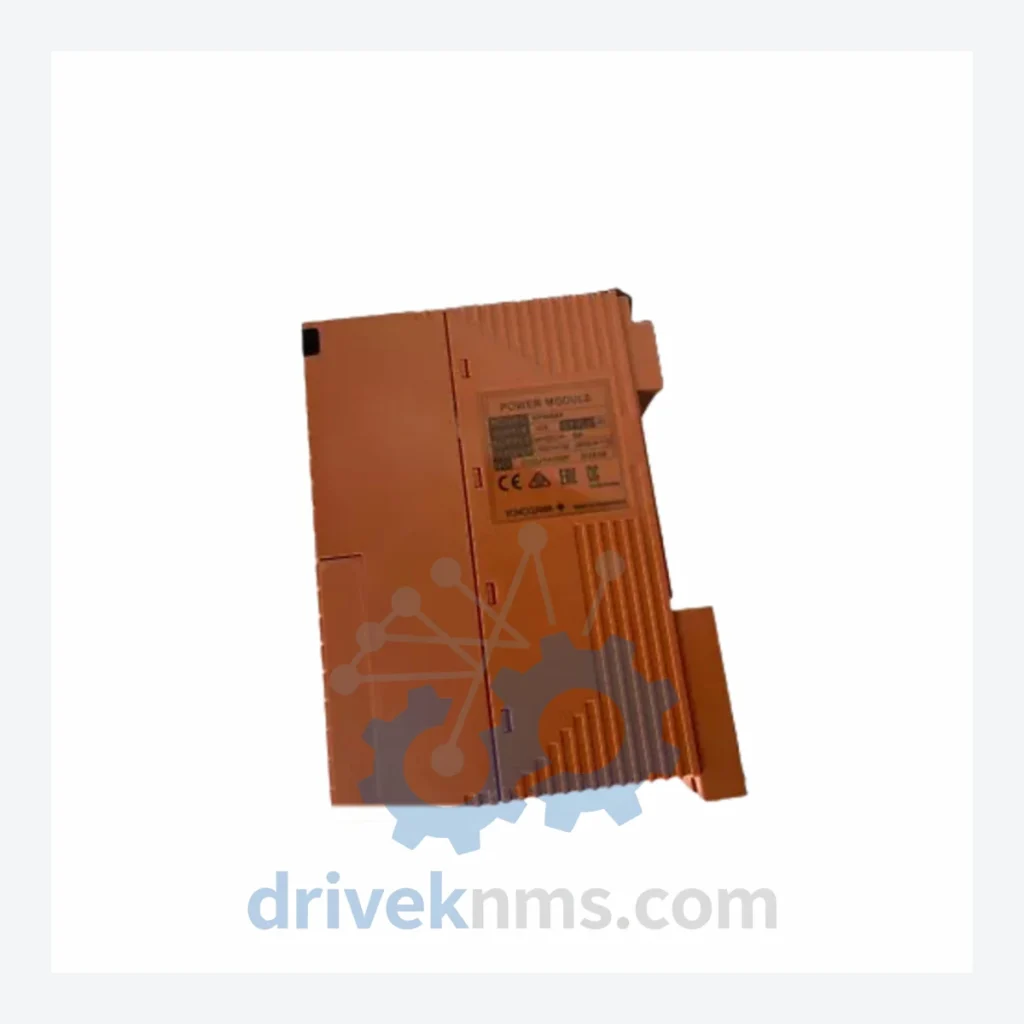
YOKOGAWA SPW482-50 Power Supply Module – Obsolete CENTUM Series Spare Part
Yokogawa spw482-50 is listed for Power Supplies RFQ review. Confirm quantity, condition and destination before quotation.
RFQ-ready industrial model
Model: Spw484-53
Product Overview
Commercial availability is handled through direct RFQ, model verification and export-oriented follow-up rather than public cart checkout.
Datasheet Preview
Use attached product manuals when available. If the manual is not public yet, request the full file directly through RFQ.
Commercial Path
Product pages on DRIVEKNMS are designed to verify model, brand and series first, then move the buyer into one clean quotation path.
Technical Dossier
The SPW484 lineage traces directly to the power distribution philosophy established in YOKOGAWA's CENTUM-XL and CENTUM CS platforms of the 1990s. Early CENTUM power supply modules used discrete linear regulation stages with limited bus monitoring. The transition to CENTUM CS 3000 introduced switch-mode conversion topologies, improving efficiency and reducing thermal load inside cabinets. The SPW484 series, introduced alongside CENTUM VP (released 2008), represents the mature iteration of this architecture: it incorporates active power factor correction (PFC), dual-redundant output capability, and real-time diagnostics accessible via the CENTUM VP engineering workstation.
The SPW484-53 specifically targets 24 VDC output applications with a nominal input range of 100–240 VAC, making it the most universally deployed variant across geographically diverse installations. Compatibility is maintained with CENTUM VP R4.xx through R6.xx firmware revisions. Backward integration into CS 3000 cabinets is mechanically possible but requires bus adapter verification. As CENTUM VP has entered its extended lifecycle phase (post-2022 mainstream support), the SPW484 series is now primarily a maintenance and spare parts item rather than a new-build specification component. YOKOGAWA's successor platform, CENTUM VP R6 with Exaopc OPC-UA integration, uses updated power architecture; however, SPW484 modules remain fully supported under YOKOGAWA's Long-Term Maintenance (LTM) program through at least 2030.
The following SKUs represent verified models within the SPW484 and directly associated CENTUM VP power supply ecosystem. Each entry reflects a distinct functional specification.
SPW484-53: 24 VDC output, 100–240 VAC input, standard non-redundant power supply for FCS cabinets.
SPW484-51: 24 VDC output, 100–120 VAC input only, single-phase North American market variant.
SPW484-52: 24 VDC output, 200–240 VAC input only, single-phase European/Asian market variant.
SPW484-54: Redundant-capable 24 VDC output module with active load-sharing bus for N+1 configurations.
SPW484-55: High-capacity 24 VDC / 20 A output for expanded I/O nest assemblies requiring elevated current budget.
SPW481-51: 5 VDC logic bus supply module, paired with SPW484 in dual-rail cabinet configurations.
SPW481-52: 5 VDC / 15 VDC dual-output module for mixed-logic and analog signal conditioning rails.
SPW482-51: 48 VDC output power supply for FOUNDATION Fieldbus H1 segment power conditioning.
SPW483-51: 24 VDC DIN-rail mount variant for remote I/O node (RIO) enclosures outside main FCS cabinet.
SPW484-56: Extended temperature range (-20°C to +70°C) variant for outdoor or non-climate-controlled enclosures.
SPW484-57: CE-marked, ATEX-compliant variant for Zone 2 hazardous area auxiliary power distribution.
SPW484-58: UL 508-listed variant for North American industrial control panel certification requirements.
SPW485-51: Next-generation successor module with enhanced diagnostics and HART pass-through monitoring bus.
SPW486-51: High-efficiency (≥92%) switch-mode supply for CENTUM VP R6 green-field installations.
SPW484-53/K: Factory-configured kit variant including mounting hardware, terminal block covers, and commissioning checklist documentation.
PW481-50: Legacy CENTUM CS 3000 power supply, cross-referenced as functional predecessor to SPW484-53 in retrofit projects.
PW482-50: Dual-output legacy supply (5 VDC + 24 VDC) from CENTUM CS 3000 era, commonly replaced by SPW484-54 in upgrade scopes.
All SPW484 units offered by DriveKNMS are accompanied by full traceability documentation including acquisition source records, incoming inspection reports, and test bench validation data. For plants operating under ISO 55000 asset management frameworks or IEC 61511 functional safety management systems, DriveKNMS can provide the documentation package required for maintenance of change (MOC) approval workflows. Minimum order quantity is one unit; emergency urgent RFQ handling is available for items reviewed through RFQ upon order confirmation before 14:00 CST.
YOKOGAWA SPW484 modules incorporate a multi-layer internal bus: a primary AC input stage, PFC correction stage, isolated DC-DC conversion stage, and output filter/monitoring stage. DriveKNMS applies a four-phase test protocol to all SPW484 units prior to dispatch.
Phase 1 — Visual and Mechanical Inspection: Board-level examination under 10× magnification for capacitor bulge, solder joint fatigue, conformal coating delamination, and connector pin corrosion. Phase 2 — Powered Bench Test: Unit is energized at rated input voltage. Output voltage regulation is measured at 0%, 50%, and 100% of rated load using calibrated electronic load equipment. Ripple and noise are measured per IEC 61000-4-6 methodology. Phase 3 — Redundancy Bus Simulation: For SPW484-54 and SPW484-55 variants, the active load-sharing bus is exercised by simulating primary supply dropout and verifying seamless transfer to secondary unit within the specified 20 ms switchover window. Phase 4 — Thermal Soak: Unit operates at full rated load for 4 hours minimum. Thermal imaging confirms no hotspot anomalies on switching transistors, output inductors, or electrolytic capacitor banks. Units that pass all four phases are re-labeled with a DriveKNMS QC pass sticker, serial number log entry, and test date. Failed units are quarantined and not offered for sale.
Continue The Model Path
Move from this exact model into the matching system hub, brand archive, model-family archive or lifecycle sourcing route before sending a final RFQ list.
Related Paths
Yokogawa spw482-50 is listed for Power Supplies RFQ review. Confirm quantity, condition and destination before quotation.
Yokogawa NFPW442-10 is listed for Power Supplies RFQ review. Confirm quantity, condition and destination before quotation.
Yokogawa NFPW442-51 is listed for Power Supplies RFQ review. Confirm quantity, condition and destination before quotation.