
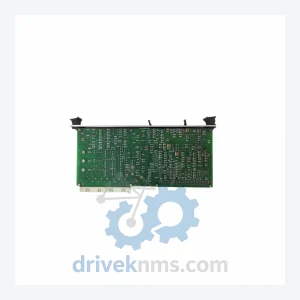
Yokogawa K9634DA-01 TCD Card Modules
Yokogawa K9634DA-01 is listed for Servo Drives RFQ review. Confirm quantity, condition and destination before quotation.
RFQ-ready industrial model
Model: TAHYD16-3EAM
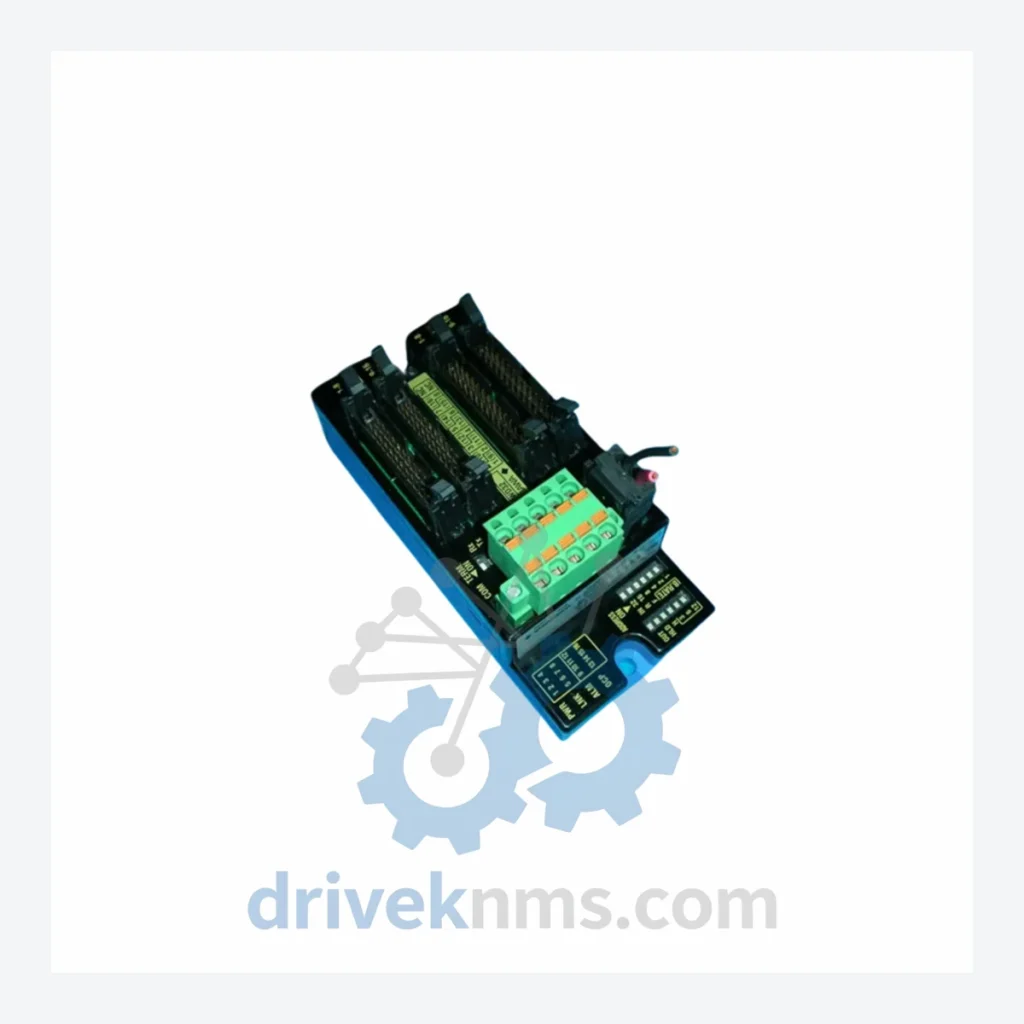
Product Overview
Commercial availability is handled through direct RFQ, model verification and export-oriented follow-up rather than public cart checkout.
Datasheet Preview
Use attached product manuals when available. If the manual is not public yet, request the full file directly through RFQ.
Commercial Path
Product pages on DRIVEKNMS are designed to verify model, brand and series first, then move the buyer into one clean quotation path.
Technical Dossier
RFQ support for obsolete parts: Send the model number, required quantity and destination so DriveKNMS can confirm sourcing options before quotation.
| Parameter | Detail |
|---|---|
| Part Number | TAHYD16-3EAM |
| Manufacturer | Yokogawa Electric Corporation |
| Product Series | CENTUM (CS/CS3000/VP legacy lineage) |
| Module Function | Master Module / Communication Controller |
| Country of Origin | Japan |
| Discontinuation Status | Confirmed Obsolete – No longer manufactured or supported by OEM |
| Compatibility | Yokogawa CENTUM legacy DCS architectures |
| Condition Available | New surplus / Professionally refurbished (see QA section) |
Note: Electrical parameters such as supply voltage, bus speed, and I/O count are architecture-dependent and vary by system configuration. Confirmed specifications are provided upon request with system details.
The TAHYD16-3EAM occupies a master communication role within its host CENTUM rack. In this architecture, the master module is not a peripheral — it is the coordination point through which field I/O data is aggregated and passed to the supervisory layer. There is no software patch, no firmware workaround, and no cross-brand substitute that replicates its function without a full system redesign.
Yokogawa's CENTUM platform has an installed base spanning refineries, chemical plants, and power generation facilities across Asia, the Middle East, and Europe. Many of these installations were commissioned in the 1990s and early 2000s under 20-to-30-year asset plans. The OEM has since migrated its product roadmap to CENTUM VP and beyond, leaving operators of earlier-generation systems without a factory supply channel for modules like the TAHYD16-3EAM.
Plant managers operating legacy DCS infrastructure face a structural challenge: OEM support windows close, but production targets do not. The following approach has been applied successfully across facilities that have extended CENTUM and similar legacy system service life well beyond original OEM support timelines.
1. Conduct a single-point-of-failure audit. Identify every module in your DCS for which no verified spare exists on-site. Prioritize by criticality — master modules, power supplies, and communication controllers carry the highest replacement urgency because their failure halts the entire control loop, not just a single field device.
3. Document firmware and hardware revision levels. Yokogawa CENTUM modules were released across multiple hardware revisions. Before procurement, confirm the revision level your system requires. DriveKNMS can assist with revision matching based on your system's existing module markings.
4. Schedule proactive replacement cycles. Electrolytic capacitors in modules manufactured before 2005 have a finite service life. Rather than waiting for failure, schedule inspection and replacement of high-risk modules during planned turnarounds. A refurbished TAHYD16-3EAM with recapped capacitors and verified firmware is a lower-risk installation than an aged original that has been in continuous service for two decades.
Every TAHYD16-3EAM unit shipped by DriveKNMS passes a five-stage inspection protocol before dispatch. This process was developed specifically for discontinued industrial control hardware, where the consequences of a latent defect are measured in production hours, not product returns.
Step 1 – Electrolytic Capacitor Assessment: All electrolytic capacitors are inspected for ESR drift, physical bulging, and electrolyte leakage. Units with capacitors showing end-of-life characteristics are recapped with equivalent-specification components before any functional testing begins.
Step 2 – Firmware Version Verification: The module's firmware revision is read and documented. Customers are informed of the exact revision prior to shipment so compatibility with the target system can be confirmed.
Step 3 – Pin and Connector Inspection: All backplane connector pins are examined under magnification for oxidation, mechanical deformation, and corrosion. Affected pins are cleaned or the unit is rejected from the serviceable inventory.
Step 4 – Functional Bench Test: Where test fixtures are available for the module type, a powered functional test is conducted to verify communication response and basic operational status.
Step 5 – Packaging for Long-Term Storage: Units are packed in anti-static bags with desiccant and sealed in rigid packaging suitable for warehouse storage. Each unit is labeled with inspection date, firmware revision, and condition grade.
The TAHYD16-3EAM is a direct hardware replacement for the same part number within its host CENTUM rack. Installation does not require reprogramming of the supervisory layer, reconfiguration of field I/O assignments, or modification of existing loop tuning parameters. The module slots into the existing backplane position and resumes its communication role upon system restart.
This drop-in replacement characteristic is the defining economic argument for sourcing a verified spare rather than pursuing a system upgrade. An engineering migration project requires months of planning, a dedicated project team, and a scheduled production outage. A verified TAHYD16-3EAM replacement requires a maintenance technician and a controlled restart window. The cost differential is not marginal — it is structural.
Should I buy more than one unit?
For any confirmed obsolete module that is critical to continuous process operation, holding a minimum of two units is the standard recommendation. The secondary market supply for TAHYD16-3EAM is not replenished — every unit sold reduces the available pool. Procurement decisions made today determine your options during the next unplanned failure event.
Continue The Model Path
Move from this exact model into the matching system hub, brand archive, model-family archive or lifecycle sourcing route before sending a final RFQ list.
Related Paths
Yokogawa K9634DA-01 is listed for Servo Drives RFQ review. Confirm quantity, condition and destination before quotation.
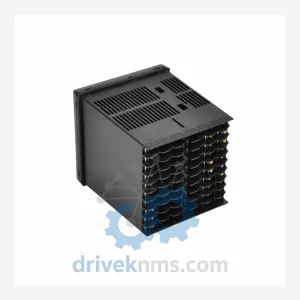
Yokogawa UT350 UT350-01 is listed for Servo Drives RFQ review. Confirm quantity, condition and destination before quotation.
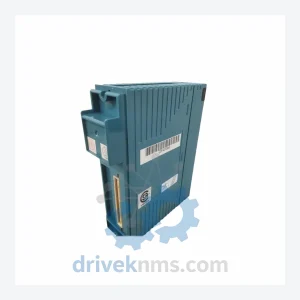
Yokogawa NFDR541-P00 S2 is listed for Servo Drives RFQ review. Confirm quantity, condition and destination before quotation.