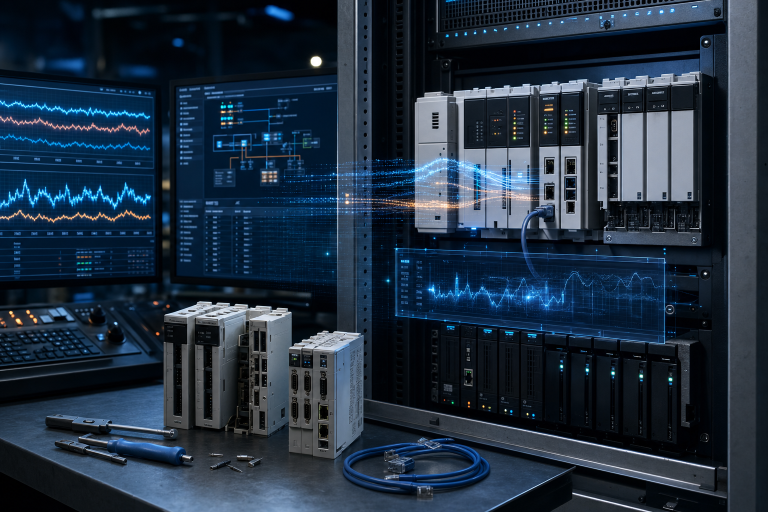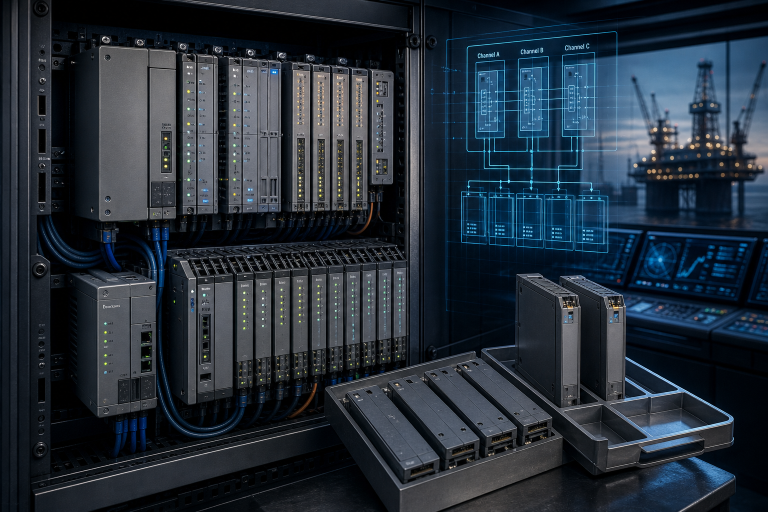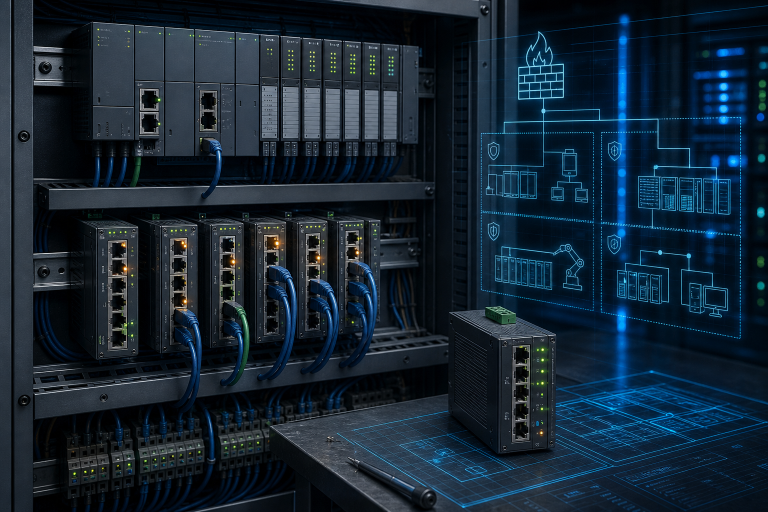
In the vast landscape of industrial automation, few platforms command as much respect and real estate as the Allen-Bradley ControlLogix series. For over a decade, the 1756-L7 family—spanning the L71 to the high-performance L75—has been the “Gold Standard” for multidiscipline control. However, as we move through the second quarter of 2026, the L7 platform is facing a unique set of challenges that are forcing maintenance managers to rethink their long-term spare parts strategy.
The headline for 2026 isn’t just about the shift to the L8 (5580) or the newly released 5590 series. The real story is the “Foundry Squeeze” affecting the legacy nodes required to manufacture the L7’s specialized processing architecture. While Rockwell Automation continues to support the platform, the global semiconductor prioritization toward AI and high-end automotive chips has left industrial “Classic” components in a supply deficit. For a plant running a dozen 1756-L73 controllers, the reality of 2026 is that a single processor failure can now trigger a lead-time crisis that jeopardizes months of production.
The Foundry Squeeze: Why the 1756-L7 Lead Times are Surging
The 1756-L7 controllers rely on a specific class of industrial silicon that is increasingly competing for space in global foundries. As chip manufacturers decommission older 45nm and 65nm lines to make way for high-volume consumer nodes, the “Lifecycle Lead Time” for industrial mainstays is ballooning. In May 2026, we are seeing lead times for new-from-factory 1756-L75 units exceed 24 weeks in several major markets.
As a DCS and PLC consultant who has seen these cycles before, I can tell you that this isn’t a temporary blip. It is a fundamental realignment of the hardware market. When the OEM focuses its limited silicon allocations on the flagship L8 and L9 lines, the “Classic” L7 users are left to fend for themselves in a tightening secondary market. Building a strategic reserve of PLC and DCS modules is no longer just a recommendation; it is a critical requirement for “Hardware Sovereignty” in 2026.
The ‘Trusted Slot’ Security Audit: Beyond the Firmware Patch
Beyond supply chain issues, the 1756-L7 platform has been the subject of intensive security scrutiny. The 2024/2025 disclosure of vulnerabilities regarding the “Trusted Slot” feature (such as ICSA-24-214-09) has become a major audit point in 2026. This vulnerability allowed threat actors to bypass security configurations by exploiting how the controller handled identity in specific chassis slots.
While Rockwell released firmware updates (v27 and beyond) to mitigate these risks, many facilities find that their older applications are “Locked” to specific firmware versions that cannot be easily upgraded without extensive re-validation. This creates a “Security Debt” where the hardware remains vulnerable because the software can’t move. In 2026, resilience means ensuring that your spare parts inventory isn’t just about quantity, but about having the correct hardware revisions that can support the latest security mandates. At DriveKNMS, we specialize in sourcing brand and model specific spares that meet these exacting technical and security requirements.
Hardware Sovereignty: Why the ‘Rip and Replace’ Isn’t Always the Answer
The OEM’s solution to L7 scarcity and security is often a full upgrade to the ControlLogix 5580 (L8). While the L8 is a superior machine in terms of gigabit Ethernet and integrated security, the “Rip and Replace” strategy is a massive undertaking. It involves cabinet re-design, software conversion, and—most importantly—unplanned downtime.
For many plants, the most rational 2026 strategy is to “Freeze and Fortify.” This means keeping the 1756-L7 environment stable but fortifying it with an audited, high-quality inventory of spare processors and communication cards (like the 1756-EN2T or EN3TR). By securing your own stock of verified 1756-L71, L72, or L75 controllers, you decouple your plant’s uptime from the OEM’s lifecycle roadmap and the global chip shortage. You gain the freedom to migrate on your schedule, not the foundry’s.
The 2026 Rockwell ControlLogix Audit Checklist:
- Firmware Mapping: Identify which of your L7 controllers are “firmware-locked” and cannot be patched for the ‘Trusted Slot’ vulnerability.
- Criticality Audit: Do you have 100% redundancy for every L7 processor in your mission-critical racks?
- Revision Check: Are your spares Series B or later? Older Series A modules may face different obsolescence challenges.
- Supply Chain Backup: Have you established a relationship with an independent supplier for emergency Rockwell Automation spares?
Conclusion: Control Your Continuity
The Rockwell 1756-L7 series has been a workhorse for the industrial world, and it remains a highly capable platform in 2026. However, the external pressures of semiconductor scarcity and cybersecurity mandates mean that passive maintenance is no longer enough. By taking a proactive approach to your hardware inventory today, you ensure that your facility remains operational, secure, and resilient throughout the decade.
Frequently Asked Questions (FAQ)
1. Can I use a 1756-L75 spare in a rack that currently uses an L71?
Yes, provided the firmware and software versions are compatible. The L75 offers more memory and faster processing, making it a “Super-Set” spare that can often cover for smaller L7x processors in an emergency. However, you must verify the Studio 5000 project settings before swapping.
2. Is the 1756-L7 series ‘End of Life’ in 2026?
Rockwell has not declared the L7 as “End of Life,” but many modules are in the “Active Mature” stage. This means that while they are available, lead times are longer, prices are higher, and the OEM is actively encouraging migration to the L8/L9 series.
3. How does the ‘Trusted Slot’ vulnerability affect my air-gapped system?
Even air-gapped systems are at risk from “Insider Threats” or infected maintenance laptops. If an actor gains physical or local network access to the chassis, the ‘Trusted Slot’ bypass can allow them to modify controller logic or exfiltrate data. Auditing your hardware revisions is a key defense-in-depth step.
4. What is the most common failure point in a ControlLogix L7 controller?
Beyond external I/O issues, the internal energy storage modules (the replacement for the old lithium batteries) can eventually reach the end of their duty cycle. Additionally, the Ethernet communication ports are susceptible to thermal stress over years of 24/7 operation. Audited spares from DriveKNMS are tested for these specific wear patterns.
Need to secure your Rockwell 1756-L7 inventory?
Don’t let the foundry squeeze or security audits catch you off guard. Contact DriveKNMS today for a technical consultation and immediate quote on audited Allen-Bradley ControlLogix processors and communication modules.
Email: sale@driveknms.com | WhatsApp: +86 18359293191
Official Website: Request a Quote Directly
© 2026 DriveKNMS. All rights reserved. Official Website: https://driveknms.com Inquiry: sale@driveknms.com | WhatsApp/Tel: +86 18359293191