
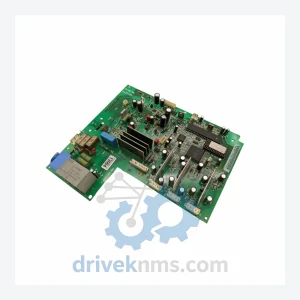
ABB SNAT-7120 Circuit Board – SNAZ7120J Series
ABB SNAT-7120 / SNAZ7120J Circuit Board: Sourcing Strategy & Asset Return Value in a Constrained Global Supply Chain The ABB…
Model: PDD405A101
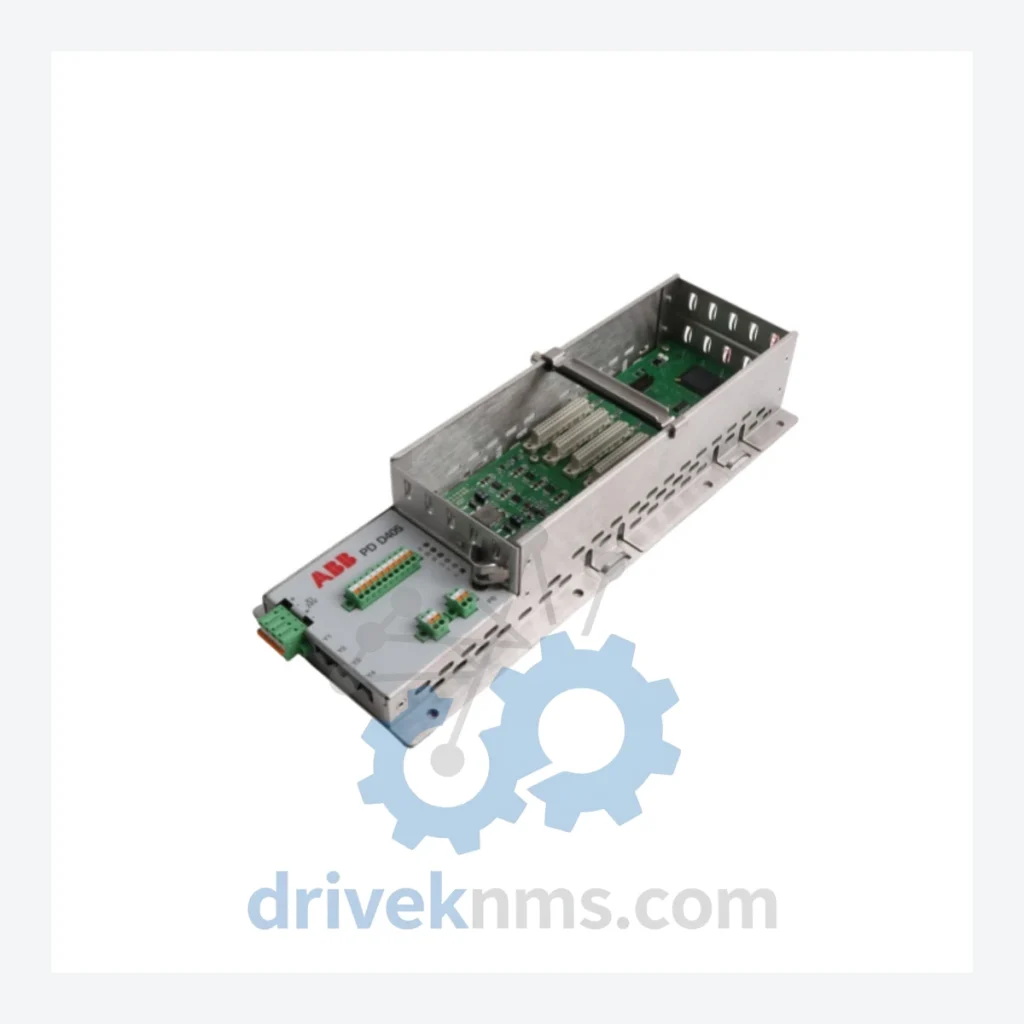
Product Overview
Commercial availability is handled through direct RFQ, model verification and export-oriented follow-up rather than public cart checkout.
Datasheet Preview
Use attached product manuals when available. If the manual is not public yet, request the full file directly through RFQ.
Commercial Path
Product pages on DRIVEKNMS are designed to verify model, brand and series first, then move the buyer into one clean quotation path.
Technical Dossier
When a critical control module fails on a production line built around legacy ABB architecture, the choice is rarely simple. A full system migration — new hardware, new engineering hours, new commissioning, new operator retraining — routinely runs into the hundreds of thousands, often millions, of dollars. The ABB 3BHE041626R0101 (PDD405A101) is a discontinued PLC module that sits at the heart of older ABB automation platforms. Its failure does not just stop a machine; it can force a capital expenditure decision that was never budgeted for this fiscal year.
DriveKNMS maintains verified physical stock of this module. For plant managers and maintenance engineers who need to protect existing automation assets without triggering a full system overhaul, this is a direct path to restoring production without the engineering disruption.
| Parameter | Detail |
|---|---|
| Manufacturer | ABB |
| Part Number | 3BHE041626R0101 |
| Model / Ordering Code | PDD405A101 |
| Product Series | PDD405A |
| Product Type | PLC / DCS Control Module |
| Country of Origin | Germany |
| Discontinuation Status | Discontinued / Obsolete – No longer in ABB active production |
| Compatible Systems | ABB legacy DCS/PLC platforms utilizing PDD405A series modules (verify against your system BOM before ordering) |
| Condition Available | New surplus / Professionally refurbished |
Note: Electrical parameters not independently verified by DriveKNMS. Buyers should cross-reference against original ABB documentation or system BOM. No parameters have been assumed or fabricated.
ABB's PDD405A series modules were deployed across a generation of industrial automation projects spanning process manufacturing, power generation, and heavy industry. Many of those installations remain in service today — not because the technology is new, but because the cost and risk of replacing a functioning control architecture outweigh any theoretical benefit of modernization.
The 3BHE041626R0101 is not a commodity item. It is a purpose-built module integrated into a specific hardware and firmware ecosystem. When ABB discontinued this line, it did not provide a plug-compatible successor. That means any facility still running this hardware faces a binary choice upon module failure: source the original part, or commit to a system-wide migration.
System migrations in legacy DCS/PLC environments are not software updates. They involve hardware replacement across multiple racks, re-engineering of I/O mapping, re-validation of safety interlocks, and extended production downtime during commissioning. For a mid-sized process plant, this work routinely takes 6–18 months and carries significant execution risk. Sourcing a verified replacement module eliminates that risk entirely — at a fraction of the cost.
Facilities that have extended the life of their ABB legacy systems by 5–10 years through strategic spare parts procurement consistently report the same outcome: capital expenditure deferred, production continuity maintained, and engineering resources preserved for planned upgrades rather than emergency responses.
The strategy is straightforward. Identify the modules in your system that are discontinued and have no direct successor. Establish a minimum stock level for each — typically one to three units depending on criticality and mean time between failures. Source those units from verified suppliers while stock exists in the secondary market. The window for sourcing obsolete ABB modules narrows every year as existing stocks are consumed and not replenished.
Obsolete modules sourced from the secondary market carry inherent risk if not properly evaluated. DriveKNMS applies a structured 5-step inspection protocol before any unit is offered for sale:
Step 1 – Electrolytic Capacitor Assessment: Aged capacitors are the most common failure point in stored electronics. Each unit is inspected for capacitor bulging, leakage, and ESR degradation. Units with compromised capacitors are either reconditioned or rejected.
Step 2 – Firmware Version Verification: Where accessible, firmware revision is confirmed and documented. Mismatched firmware versions between modules in the same rack can cause communication faults or unpredictable behavior.
Step 3 – Pin and Connector Inspection: Backplane connectors and I/O pins are examined under magnification for oxidation, corrosion, and mechanical deformation. Corroded contacts are cleaned to OEM-equivalent standards or the unit is rejected.
Step 4 – Board-Level Visual Inspection: PCB surfaces are inspected for cold solder joints, cracked traces, burn marks, and component displacement.
Step 5 – Functional Verification (where test fixtures are available): Units are powered and tested against known-good reference behavior where test infrastructure permits.
Units that do not pass all applicable steps are not offered for sale. Condition grade (new surplus or refurbished) is disclosed at point of inquiry.
The 3BHE041626R0101 is a drop-in replacement for the original module position. Installation does not require re-engineering of the control program, re-mapping of I/O addresses, or modification of existing wiring. Maintenance personnel familiar with the original system can execute a module swap during a planned or emergency maintenance window without specialist contractor involvement.
This matters operationally. Every hour of unplanned downtime on a process line carries a direct cost — lost throughput, wasted raw materials, contractual penalties. A verified replacement module that installs without reprogramming converts what could be a multi-week outage into a maintenance event measured in hours.
Avoiding engineering reconstruction also eliminates the validation burden. In regulated industries — pharmaceuticals, food processing, power generation — any modification to a control system triggers a revalidation cycle. A like-for-like module replacement typically falls outside that threshold. A system migration does not.
What warranty applies to obsolete modules?
DriveKNMS provides a 90-day warranty against defects in materials and workmanship on all units sold. Warranty terms for refurbished units are confirmed at point of sale. Given the obsolete nature of this part, buyers are advised to procure at least one additional unit as a long-term spare.
How do I confirm the unit is new or quality-refurbished?
Condition grade is disclosed in writing prior to invoice. New surplus units are original ABB production, unused, sourced from decommissioned projects or excess inventory. Refurbished units have completed the 5-step QA process described above. Documentation is available upon request.
Should I buy more than one unit?
For any discontinued module in an active production system, the answer is almost always yes. The secondary market for obsolete ABB parts is finite. Once existing stocks are exhausted, no further supply exists. Facilities that have experienced a second failure of the same module — after sourcing only one replacement — face the full migration cost they originally avoided. Procuring two to three units as a managed spare inventory is a low-cost insurance policy against that outcome.
Can you source other ABB obsolete modules?
Yes. DriveKNMS specializes in hard-to-find and discontinued industrial automation components across multiple manufacturers. Contact us with your part number for a stock check.
Status: DRAFT
Related Paths
ABB SNAT-7120 / SNAZ7120J Circuit Board: Sourcing Strategy & Asset Return Value in a Constrained Global Supply Chain The ABB…
ABB AC500 Series: Comprehensive Module Range and Technical Overview The ABB AC500 is a scalable modular PLC platform deployed across…
ABB SCDCS-CON-4 Control Board – Obsolete DCS Spare Part When a single control board fails in a legacy distributed control…