
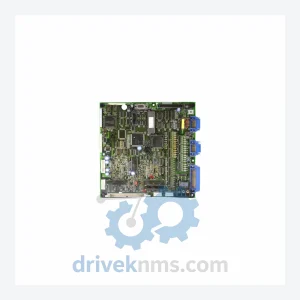
Yaskawa YPHT11014-1A Circuit Board – Obsolete Drive Control Spare Part
Yaskawa YPHT11014-1A Circuit Board – Obsolete Drive Control Spare Part When a Yaskawa YPHT11014-1A circuit board fails in a production…
Model: JAMMC-IO150B
Product Overview
Commercial availability is handled through direct RFQ, model verification and export-oriented follow-up rather than public cart checkout.
Datasheet Preview
Use attached product manuals when available. If the manual is not public yet, request the full file directly through RFQ.
Commercial Path
Product pages on DRIVEKNMS are designed to verify model, brand and series first, then move the buyer into one clean quotation path.
Technical Dossier
When a solenoid valve on a Yaskawa Motoman robot arm fails and the part number is discontinued, the consequences extend far beyond a single component. Plant managers face a binary choice: locate the original part, or commit to a full robot cell upgrade that routinely runs into hundreds of thousands — sometimes millions — of dollars in hardware, integration engineering, revalidation, and lost production time. The JAMMC-IO150B is precisely that kind of component. It is embedded in pneumatic control circuits on legacy Motoman manipulators, and its absence can ground an entire production line.
DriveKNMS maintains verified physical stock of the JAMMC-IO150B. This is not a catalog listing. Inventory is finite and allocated on a first-confirmed basis.
| Part Number | JAMMC-IO150B |
| Manufacturer | Yaskawa Electric Corporation |
| Country of Origin | Japan |
| Component Type | Solenoid Valve |
| Compatible Series | Motoman Robot Series (legacy pneumatic control circuits) |
| Discontinuation Status | Obsolete – No longer in production by Yaskawa |
| Condition Available | New Old Stock (NOS) / Refurbished – see QA section below |
Note: Electrical parameters such as coil voltage, flow rate, and port configuration vary by production batch. DriveKNMS will confirm exact specifications against your unit serial number prior to shipment. No parameters are assumed or fabricated.
Yaskawa Motoman robots deployed in the 2000s and early 2010s remain in active service across automotive body shops, electronics assembly lines, and food packaging facilities worldwide. The pneumatic subsystems on these robots — including solenoid valves in the JAMMC series — were engineered to precise tolerances that later-generation components do not replicate without mechanical modification.
When Yaskawa discontinues a part, the OEM support window closes. Integrators who attempt to substitute a generic solenoid valve frequently encounter port mismatches, coil impedance differences, or response-time deviations that trigger fault codes in the robot controller. The result is not a simple swap — it is an engineering project.
The JAMMC-IO150B, sourced as an original Yaskawa component, eliminates that engineering burden entirely. It restores the pneumatic circuit to factory specification without controller reconfiguration, without revalidation of the robot's safety parameters, and without the downtime associated with a forced upgrade cycle.
Asset life extension strategy for plant managers: Industry maintenance data consistently shows that a well-maintained industrial robot with access to original spare parts can remain productive for 15–20 years from commissioning. For a robot cell that cost $400,000–$800,000 to install, each additional year of productive life represents a direct return on that capital investment. Securing a small buffer stock of critical pneumatic components — solenoid valves, pressure regulators, and associated I/O modules — at current market prices is a straightforward hedge against future scarcity. The cost of holding two or three JAMMC-IO150B units is negligible against the cost of a single unplanned shutdown.
Plants operating Motoman UP series, SK series, or early ES series robots should treat pneumatic valve inventory as a maintenance priority equivalent to servo drive spares. These components are not interchangeable across generations, and the secondary market supply contracts every year as existing stocks are consumed.
DriveKNMS applies a 5-step inspection protocol to all obsolete solenoid valves before shipment:
Step 1 – Electrolytic Capacitor Assessment: Where applicable in associated driver boards, capacitors are tested for ESR and capacitance drift. Units showing degradation beyond manufacturer tolerance are flagged and not shipped.
Step 2 – Coil Continuity and Insulation Resistance: Solenoid coil resistance is measured and compared against documented Yaskawa specifications. Insulation resistance is tested to confirm no internal short or moisture ingress.
Step 3 – Mechanical Valve Function: The valve spool is cycled under controlled pressure to verify full actuation, return spring function, and absence of internal leakage.
Step 4 – Pin and Port Corrosion Inspection: All electrical pins and pneumatic ports are inspected under magnification. Corroded or mechanically compromised units are rejected.
Step 5 – Firmware / Marking Verification: Part markings, date codes, and any embedded identifiers are cross-referenced against Yaskawa documentation to confirm authenticity and correct revision.
Units that pass all five steps are packaged in anti-static, moisture-barrier packaging with desiccant and shipped with an inspection record.
The JAMMC-IO150B is a direct, drop-in replacement for the original installed component. No mechanical adaptation, no controller parameter changes, and no revalidation of robot safety zones are required. This is the defining advantage of sourcing an original Yaskawa part versus attempting a cross-brand substitution.
For maintenance teams operating under ISO 9001 or IATF 16949 quality systems, using an original part number preserves the traceability chain in your maintenance records. A generic substitute introduces a deviation that must be documented, justified, and in some cases approved by your customer or certification body. The JAMMC-IO150B avoids that administrative burden entirely.
Facilities that have standardized on Yaskawa Motoman equipment benefit from a single-source spare parts strategy. DriveKNMS stocks a range of legacy Yaskawa components across servo, pneumatic, and I/O categories, allowing procurement teams to consolidate obsolete part sourcing through one verified supplier.
Q: What warranty applies to an obsolete part like the JAMMC-IO150B?
A: DriveKNMS provides a 90-day functional warranty on all inspected and shipped units. This covers failure under normal operating conditions consistent with the original Yaskawa application. Warranty claims require return of the unit for inspection.
Q: How do I know the unit is genuine Yaskawa and not a counterfeit?
A: All units are inspected for authentic Yaskawa markings, correct part number labeling, and date code consistency. We do not source from unverified brokers. If you require additional documentation, contact us before purchase to discuss available traceability records for the specific unit.
Q: Should I buy more than one unit?
A: For any robot cell running a single JAMMC-IO150B in a critical pneumatic circuit, holding at least one spare unit on-site is standard maintenance practice. Given that this part is discontinued and secondary market supply is finite, procurement of two to three units is a reasonable long-term position for facilities with multiple Motoman robots of the same generation.
Q: Can you ship internationally?
A: Yes. DriveKNMS ships globally. Contact us for freight options, lead time confirmation, and export documentation requirements for your country.
Related Paths
Yaskawa YPHT11014-1A Circuit Board – Obsolete Drive Control Spare Part When a Yaskawa YPHT11014-1A circuit board fails in a production…
Yaskawa YPCT11065-1-3 Circuit Board – Obsolete Varispeed Series Spare Part When a circuit board like the YPCT11065-1-3 fails inside a…
Yaskawa SGMG Series: Comprehensive Module Range and Technical Overview The Yaskawa SGMG series represents one of the most widely deployed…