
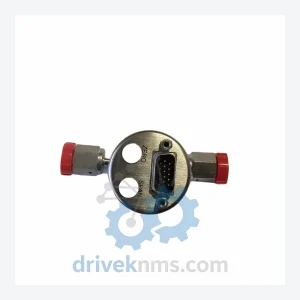
MKS 852B-13384 Baratron Capacitance Manometer – Pressure Transducer
MKS 852B-13384 Baratron Capacitance Manometer: Supply Continuity Strategy for Procurement Managers The MKS 852B-13384 is a high-accuracy Baratron capacitance manometer…
Model: R750B13TCE2GG, 1000TORR 750B13TCE2GG 50412470000 0020-26112
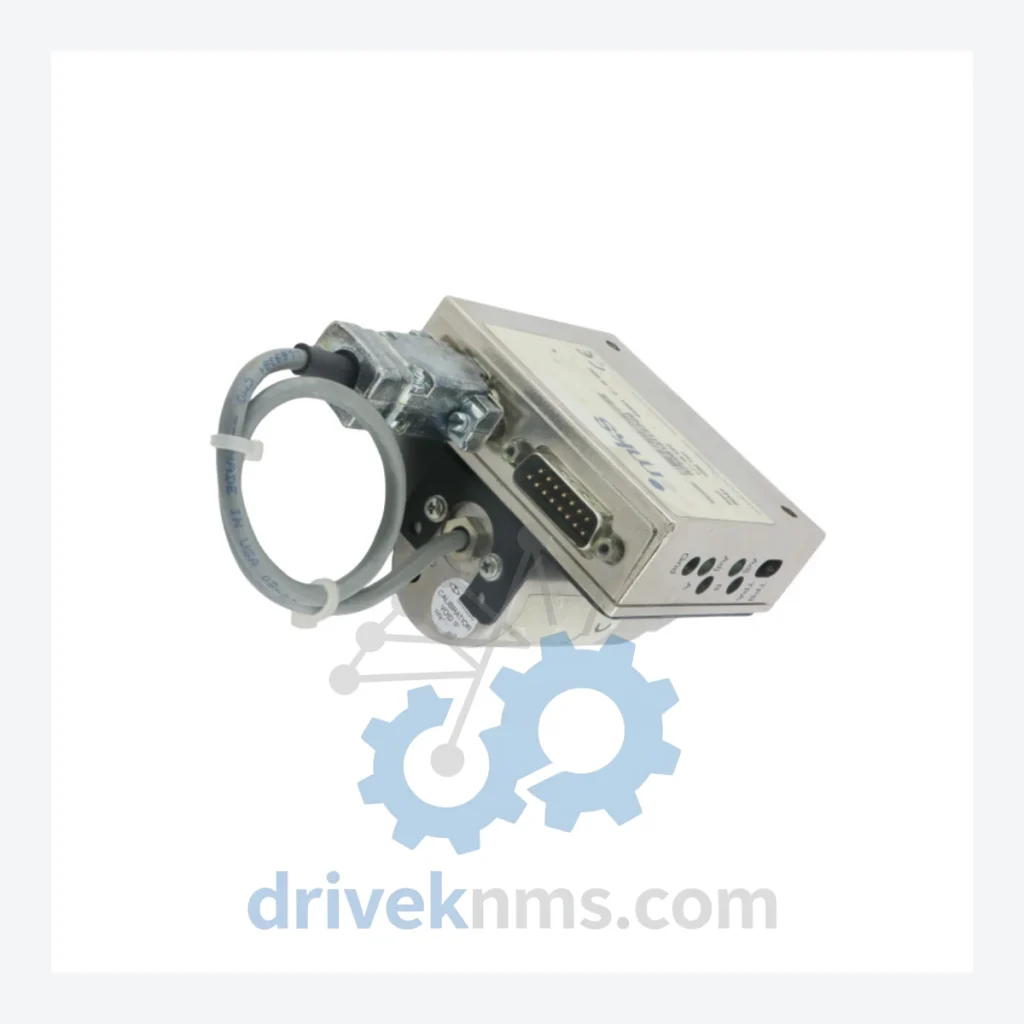
Product Overview
Commercial availability is handled through direct RFQ, model verification and export-oriented follow-up rather than public cart checkout.
Datasheet Preview
Use attached product manuals when available. If the manual is not public yet, request the full file directly through RFQ.
Commercial Path
Product pages on DRIVEKNMS are designed to verify model, brand and series first, then move the buyer into one clean quotation path.
Technical Dossier
When an MKS R750B13TCE2GG fails inside a running process chamber, the decision tree is brutal: locate a replacement within days, or face a forced migration to a new pressure measurement platform. That migration is not a line item — it is an engineering project. Recalibration of process recipes, requalification of chamber performance, procurement of compatible signal conditioning hardware, and potential downtime measured in weeks. Conservative estimates place the total cost of a single unplanned platform upgrade in semiconductor or flat-panel display manufacturing at USD 500,000 to several million dollars, depending on tool criticality and fab utilization rates.
DriveKNMS holds verified physical stock of the MKS R750B13TCE2GG. This is not a catalog listing. Inventory is finite and allocated on a first-confirmed basis.
| Parameter | Value |
|---|---|
| Manufacturer | MKS Instruments |
| Part Number | R750B13TCE2GG |
| Cross Reference | 750B13TCE2GG / 50412470000 / 0020-26112 |
| Series | Baratron® 750 Series |
| Type | Capacitance Manometer (Pressure Transducer) |
| Full Scale Range | 1000 Torr |
| Product Status | Discontinued / Obsolete – No longer manufactured by MKS Instruments |
| Country of Origin | United States |
| Typical Applications | Semiconductor CVD/PVD chambers, vacuum furnaces, flat-panel display process tools, industrial vacuum systems |
Note: Electrical parameters such as output signal type, supply voltage, and connector pinout are not published here to avoid inaccuracy. Please contact us with your system documentation for full compatibility verification.
The MKS Baratron 750 series was a standard pressure measurement solution across a generation of vacuum process equipment. It appeared in tools built by Applied Materials, Lam Research, Tokyo Electron, and numerous OEM integrators throughout the 1990s and 2000s. The 750 series interface — mechanical mounting, electrical connector, and signal protocol — was designed into tool architectures that remain in production today at fabs operating on mature nodes.
MKS Instruments has since transitioned its product line. The R750B13TCE2GG is no longer manufactured. Authorized distribution channels have exhausted their buffer stock. What remains in circulation exists only in secondary market inventories, decommissioned tool lots, and specialist suppliers who actively source end-of-life industrial components.
The consequence for maintenance engineers is straightforward: there is no new-build replacement with a drop-in form factor. Any alternative requires engineering validation. For a facility running 24/7 production on a tool that uses this transducer, that validation window does not exist during an unplanned failure event.
Holding physical spare stock of the R750B13TCE2GG is the only strategy that eliminates this risk entirely.
Plant managers facing system retirement pressure from finance and procurement teams frequently underestimate the cost differential between a targeted spare parts strategy and a full system replacement. The following framework applies directly to vacuum process tools dependent on the MKS Baratron 750 series:
1. Identify the failure-critical components. Not every part on an aging tool is equally difficult to source. Pressure transducers, RF match networks, and proprietary motion controllers are the components most likely to trigger forced retirements. The R750B13TCE2GG falls into this category.
2. Establish a minimum buffer stock. For a tool running in a high-utilization environment, a minimum of two spare transducers per chamber configuration is a defensible position. Mean time between failures on capacitance manometers in process environments varies significantly with gas chemistry exposure, but a 3–5 year service interval is a reasonable planning assumption for clean applications.
3. Calculate the cost of replacement versus the cost of spares. A new vacuum process tool in the same performance class as a legacy CVD or PVD system costs USD 2–8 million. A qualified spare R750B13TCE2GG, sourced now while stock exists, represents a fraction of one percent of that capital expenditure. The return on that inventory investment is not speculative — it is the difference between a scheduled maintenance event and an unplanned capital project.
4. Document the spare parts strategy formally. Maintenance teams that can present a written obsolete parts management plan to plant management and auditors demonstrate operational maturity. This documentation also supports insurance and asset valuation arguments for extending tool depreciation schedules.
5. Source from verified secondary market suppliers. Not all secondary market stock is equivalent. Provenance, storage conditions, and pre-shipment inspection protocols determine whether a spare part performs as expected or introduces a new failure mode. DriveKNMS applies a structured inspection process to all obsolete inventory before shipment.
Obsolete parts sourced from secondary markets carry inherent risk if inspection is treated as a formality. DriveKNMS applies a five-step evaluation protocol to all Baratron and pressure transducer inventory before any unit is offered for sale:
Step 1 – Visual and mechanical inspection. Connector pins, process port threads, and housing integrity are examined for corrosion, mechanical damage, and evidence of prior field repair.
Step 2 – Electrolytic capacitor assessment. Capacitance manometers contain internal signal conditioning electronics. Electrolytic capacitors in units manufactured during the Baratron 750 production era are now at or beyond their rated service life. Units showing evidence of capacitor degradation are quarantined.
Step 3 – Firmware and label verification. Where applicable, firmware revision markings and internal labeling are cross-referenced against known production records to confirm the unit matches the stated part number and revision.
Step 4 – Pin continuity and isolation check. Electrical continuity across signal and power pins is verified. Isolation resistance between signal conductors and housing ground is measured to confirm the unit has not sustained internal dielectric damage.
Step 5 – Packaging and storage review. Units are stored in ESD-safe, humidity-controlled conditions. Shipping packaging is selected to prevent mechanical shock and electrostatic discharge during transit.
Units that do not pass all five steps are not listed for sale.
Q: What warranty applies to obsolete parts?
A: DriveKNMS provides a 90-day warranty against defects identified during our inspection process. Given the nature of end-of-life components, we recommend customers perform incoming inspection upon receipt and contact us immediately if any discrepancy is identified.
Q: How do I confirm the unit is new or quality-refurbished?
A: Each unit is accompanied by an inspection report documenting the condition assessment steps completed prior to shipment. We do not mix new and refurbished stock without explicit disclosure. Condition is stated clearly in the order confirmation.
Q: Should I buy more than one unit?
A: For any tool running in continuous production, holding at least one cold spare is standard practice for components in this obsolescence category. Given that secondary market stock is finite and not replenishable, purchasing a buffer quantity now is a lower-risk position than sourcing reactively after a failure event.
Q: Can you verify compatibility with my specific tool configuration?
A: Yes. Provide your tool OEM, model, and the existing transducer part number or cross-reference from your maintenance documentation. We will confirm compatibility before order confirmation.
Related Paths
MKS 852B-13384 Baratron Capacitance Manometer: Supply Continuity Strategy for Procurement Managers The MKS 852B-13384 is a high-accuracy Baratron capacitance manometer…
MKS MC20A Series: Comprehensive Module Range and Technical Overview The MKS Instruments MC20A series mass flow controllers are precision gas…
MKS 627D11TBC1B Capacitance Manometer: Procurement Strategy & Asset Return Value in a Supply-Constrained Market The MKS 627D11TBC1B is a Baratron®…