
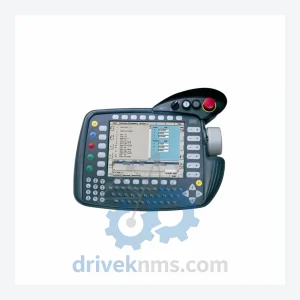
KUKA KCP2 Teach Pendant Modules
KUKA KCP2 Series: Comprehensive Module Range and Technical Overview The KUKA KCP2 (KUKA Control Panel 2) teach pendant is the…
Model: 00-176-037 00-176-037 00-262-652 00-262-652 00-178-888 00-178-888
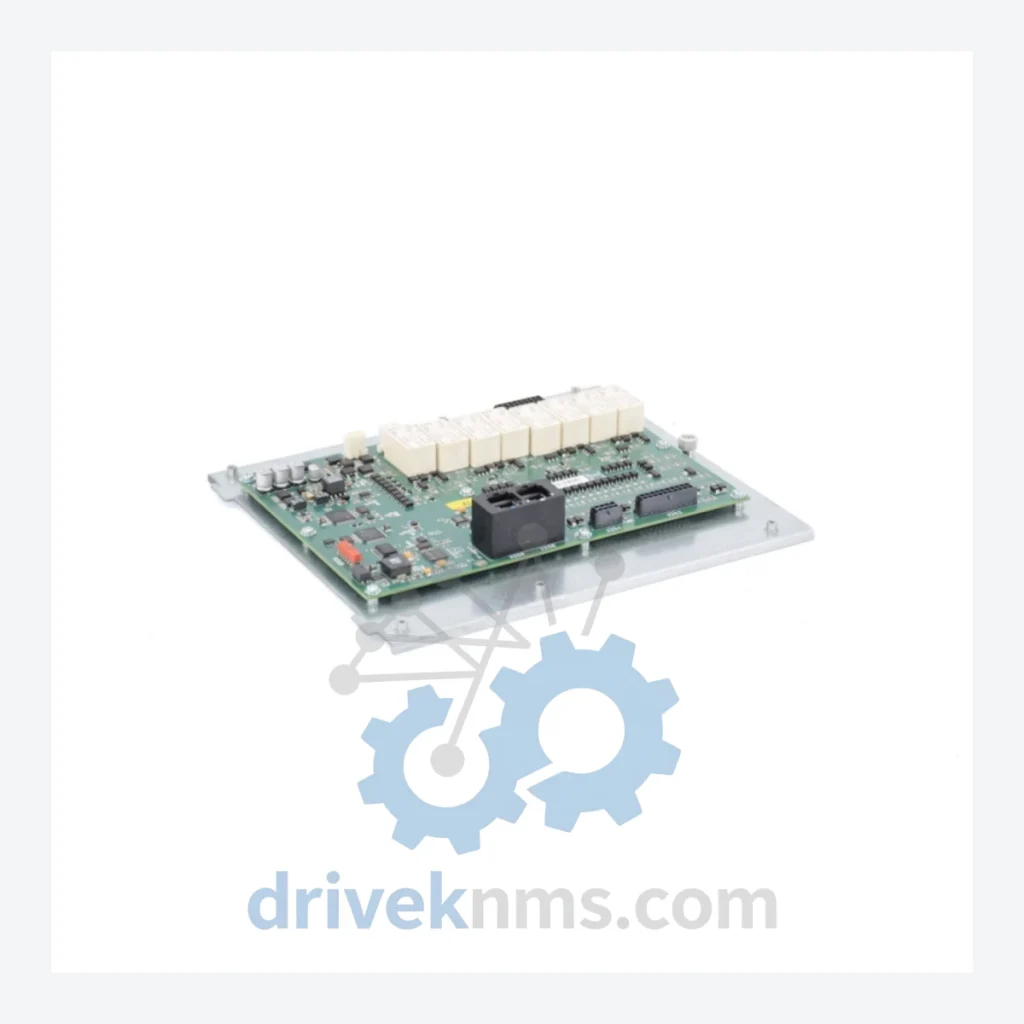
Product Overview
Commercial availability is handled through direct RFQ, model verification and export-oriented follow-up rather than public cart checkout.
Datasheet Preview
Use attached product manuals when available. If the manual is not public yet, request the full file directly through RFQ.
Commercial Path
Product pages on DRIVEKNMS are designed to verify model, brand and series first, then move the buyer into one clean quotation path.
Technical Dossier
When a robot reducer fails on a KUKA KR-series arm, the production line does not pause politely. It stops. For facilities running legacy KUKA KR 150, KR 200, KR 210, or KR 240 robots, the reducer assemblies referenced by part numbers 00-176-037, 00-262-652, and 00-178-888 are no longer in active production. KUKA has discontinued these components as part of its transition to newer robot generations. The replacement path KUKA's own service network will propose is a full robot arm upgrade — a capital expenditure that routinely exceeds USD 120,000 per unit when installation, re-programming, fixture re-tooling, and production downtime are factored in. A single sourced reducer from existing inventory avoids that entire cost structure. DriveKNMS maintains verified stock of these discontinued gearbox assemblies specifically to serve facilities that cannot justify — or cannot schedule — a full system replacement.
| Part Numbers | 00-176-037 / 00-262-652 / 00-178-888 |
|---|---|
| Manufacturer | KUKA Roboter GmbH |
| Component Type | Robot Joint Reducer / Axis Gearbox |
| Series Compatibility | KUKA KR Series (KR 150 / KR 200 / KR 210 / KR 240 – verify axis assignment before ordering) |
| Production Status | Discontinued – No longer manufactured by OEM |
| Country of Origin | Germany |
| Condition Available | New Old Stock (NOS) / Professionally Refurbished |
Note: Electrical and torque parameters vary by axis assignment. Confirmed specifications are provided upon request with axis and robot model details. No parameters are published here that cannot be independently verified.
KUKA KR-series robots were the backbone of automotive body shops, foundry handling lines, and heavy-payload palletizing cells throughout the 1990s and 2000s. Many of these installations remain mechanically sound — the structural frames, wiring harnesses, and KRC controllers continue to function within specification. The reducer is the single highest-wear component in the kinematic chain. It absorbs the full torque load of every axis movement across millions of cycles. When it fails, the robot is down. When the OEM no longer supplies the part, the facility faces a forced decision between an unbudgeted capital replacement and an extended production gap.
The reducers covered by 00-176-037, 00-262-652, and 00-178-888 are RV-type or harmonic-drive assemblies (axis-dependent) that were engineered to KUKA's original torque and backlash specifications. No current-generation aftermarket equivalent matches the mechanical interface without modification. This is not a component where a generic substitute is viable. The only path to restoring the robot to its original repeatability specification is an OEM-matched reducer — which means sourcing from remaining global inventory rather than from KUKA's active supply chain.
Facilities that have invested in KUKA KR-series infrastructure — including the tooling, fixtures, and process programs built around those robots — have a direct financial interest in extending the operational life of those assets. The cost of a verified reducer is a fraction of the cost of the alternative. The decision is not sentimental; it is a straightforward capital allocation calculation.
Factory management facing system retirement pressure from maintenance teams often underestimate the remaining service life available in a mechanically sound robot body. The following strategy has been applied successfully across automotive, aerospace, and process industries to defer replacement capital expenditure by five to ten years:
1. Reducer replacement as the primary intervention. In the majority of KR-series end-of-life cases, axis reducer wear — not controller failure, not structural fatigue — is the proximate cause of retirement. Replacing the reducer restores the robot to its original repeatability specification. The KRC2 or KRC3 controller, the teach pendant, and the process program remain untouched.
2. Preventive spare procurement. Once a robot is confirmed operational post-reducer replacement, procuring a second unit as a cold spare eliminates the next failure event as a production crisis. The cost of holding a spare reducer is negligible against the cost of an unplanned line stoppage. For facilities running multiple KR-series units, a shared spare pool across the fleet is the most capital-efficient approach.
3. Condition-based maintenance scheduling. Reducer wear produces measurable backlash increase before catastrophic failure. Scheduling annual backlash checks using the robot's own mastering routine allows maintenance teams to plan reducer replacement during scheduled downtime rather than responding to unplanned failures.
4. Controller firmware stabilization. KRC2 and KRC3 controllers running stable firmware versions should not be updated. Firmware changes on legacy controllers introduce compatibility risks with existing process programs. Freeze the software environment and document it. The robot's value is in its calibrated process, not in its software version.
5. Mechanical inspection at replacement. Reducer replacement is the correct moment to inspect adjacent components: motor coupling condition, axis brake function, and cable harness integrity at the axis. Addressing these items during a planned reducer replacement prevents secondary failures that would otherwise trigger a separate downtime event.
This approach does not require engineering consultants or capital approval processes. It requires a verified spare part and a competent maintenance team. The total cost of a five-year asset extension program built around reducer sourcing and preventive spares is typically less than 8% of the cost of a new robot installation.
Discontinued components sourced from secondary markets carry inherent condition risk. DriveKNMS applies a five-step inspection protocol to all reducer units before shipment:
Step 1 – Visual and mechanical inspection. External housing examined for impact damage, corrosion, and seal integrity. Input and output flanges checked for dimensional conformance.
Step 2 – Electrolytic capacitor assessment (where applicable). For units with integrated electronics, capacitor condition is evaluated. Aged electrolytic capacitors are a primary failure mode in stored components and are replaced where degradation is identified.
Step 3 – Firmware and label verification. Part number markings, date codes, and any embedded firmware identifiers are cross-referenced against KUKA's documented part genealogy to confirm authenticity and revision level.
Step 4 – Pin and connector corrosion inspection. All electrical connectors and mechanical interface surfaces are inspected for oxidation and corrosion. Affected surfaces are treated or the unit is rejected from inventory.
Step 5 – Functional verification. Where test equipment is available for the specific axis configuration, units are run through a load cycle prior to packaging. Units that cannot be functionally tested are clearly identified as inspected-only and priced accordingly.
Condition grade and inspection findings are documented and provided with each shipment.
Drop-in replacement. These reducer assemblies match the original KUKA mechanical interface. No adapter plates, no re-machining of mounting surfaces, no modification to the robot arm structure. The replacement unit installs in the same position as the original.
No re-programming required. Because the mechanical interface is identical, the robot's existing mastering offsets and process programs remain valid after reducer replacement. The only post-installation step is axis mastering — a standard maintenance procedure that takes less than 30 minutes with a KUKA EMT or dial gauge.
No engineering re-qualification. In regulated industries — automotive, food processing, pharmaceuticals — robot re-qualification after a component change is a documented process. A like-for-like reducer replacement under the same part number does not trigger a full re-qualification in most quality management frameworks. Confirm with your quality team, but the engineering burden is substantially lower than a robot replacement.
Immediate availability. DriveKNMS maintains physical inventory. Lead time is days, not months. For facilities facing an active production stoppage, contact us directly for expedited handling.
Q: What warranty applies to discontinued reducer units?
A: DriveKNMS provides a 90-day warranty against defects identified during our inspection process for refurbished units, and a 180-day warranty for confirmed New Old Stock units. Warranty terms are confirmed in writing at the time of order.
Q: How do I confirm the unit is genuine KUKA and not a counterfeit?
A: Each unit is inspected against KUKA's documented part markings and date code conventions. Inspection documentation is provided with shipment. We do not source from unverified channels. If you require additional authentication, we can arrange third-party inspection prior to shipment at cost.
Q: Should I buy more than one unit?
A: For facilities running more than two KR-series robots of the same model, holding at least one cold spare is the operationally sound position. These part numbers will not return to active production. Current available inventory represents a finite global supply. Procurement decisions made now determine whether a future failure event is a maintenance task or a capital crisis.
Q: Can you source other KUKA KR-series discontinued parts?
A: Yes. DriveKNMS specializes in obsolete industrial automation components. Submit your full part number list and we will provide availability and lead time within 24 hours.
© 2026 DriveKNMS. Status: DRAFT
Related Paths
KUKA KCP2 Series: Comprehensive Module Range and Technical Overview The KUKA KCP2 (KUKA Control Panel 2) teach pendant is the…
KUKA KCP2 VKCP2 Robot Control Panel: Sourcing Strategy & Asset Return Value in a Constrained Global Supply Chain The KUKA…
KUKA KVGA Series: Comprehensive Module Range and Technical Overview The KUKA KVGA (KRC Video Graphics Adapter) series is a family…