
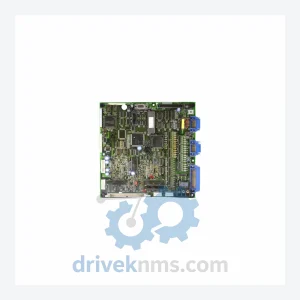
Yaskawa YPHT11014-1A Circuit Board – Obsolete Drive Control Spare Part
Yaskawa YPHT11014-1A Circuit Board – Obsolete Drive Control Spare Part When a Yaskawa YPHT11014-1A circuit board fails in a production…
Model: PCU-ETHIOEI X82 CBL-YRC-061-1 X81 CBL-YRC-061-1 8M J JZRCR-YSV24-111 dx200
Product Overview
Commercial availability is handled through direct RFQ, model verification and export-oriented follow-up rather than public cart checkout.
Datasheet Preview
Use attached product manuals when available. If the manual is not public yet, request the full file directly through RFQ.
Commercial Path
Product pages on DRIVEKNMS are designed to verify model, brand and series first, then move the buyer into one clean quotation path.
Technical Dossier
The Yaskawa DX200 is the fourth-generation robot controller platform developed by Yaskawa Electric Corporation (Japan), succeeding the NX100 and XRC series. It is deployed across heavy industrial sectors including automotive body welding lines, chemical plant material handling, nuclear facility maintenance robots, and refinery pipeline inspection systems. The DX200 supports coordinated control of up to 72 axes across 8 robots simultaneously, making it the reference architecture for large-scale robotic cells in continuous-process industries. Its dual-CPU redundancy design and IEC 61508 SIL2-compliant functional safety architecture have made it the standard controller for safety-critical automation environments globally.
Yaskawa's controller architecture evolved through distinct generations: the XRC (1998) introduced open-network connectivity; the NX100 (2003) added Ethernet-based pendant communication and expanded I/O capacity; the DX100 (2008) introduced the YCP21 CPU board with Windows CE-based HMI; the DX200 (2012) replaced the YCP21 with a dual-core processor architecture, introduced the PCU (Process Control Unit) subsystem for Ethernet/IP and PROFINET integration, and standardized the JZRCR-YSV servo amplifier family for all axis configurations. The FS100 and YRC1000 (2016–2019) succeeded the DX200 for new installations, but the DX200 remains in active production use at thousands of facilities. Compatibility between DX200 and YRC1000 is limited: servo cables, I/O modules, and PCU boards are not cross-compatible without hardware modification. Facilities running DX200 controllers must source DX200-specific spare parts to maintain uptime.
The following SKUs represent the verified DX200 module catalog, organized by functional category. Each entry reflects a discrete hardware component used in DX200 controller cabinets or robot arm servo circuits.
Process Control Unit (PCU) & Communication Boards
Servo Amplifier Modules (JZRCR-YSV Series)
Cable Assemblies
I/O & Power Distribution
Yaskawa officially transitioned new robot shipments to the YRC1000 platform in 2019. The DX200 entered the mature/end-of-active-production phase, with Yaskawa's own spare parts availability becoming increasingly constrained for low-volume SKUs such as PCU communication boards, specific cable lengths, and individual servo amplifier sub-modules. DriveKNMS maintains a dedicated DX200 lifecycle inventory program. Stock is sourced from decommissioned automotive and process industry cells, tested to OEM specification, and held in climate-controlled storage. For obsolete DX200 SKUs including JANCD-series boards and JZRCR-YSV amplifier variants, DriveKNMS provides cross-reference verification, functional test reports, and 12-month replacement warranty on all shipped units. Customers operating DX200 fleets beyond 2026 are advised to establish a consignment stock agreement to mitigate lead-time risk on critical spare parts.
DX200 modules present specific test challenges due to the integrated backplane bus architecture and the servo amplifier's dependency on encoder feedback signals for self-diagnostics. DriveKNMS applies the following test protocol to all DX200 spare parts: (1) Visual inspection of PCB traces, connector pins, and capacitor condition on all JANCD-series boards; (2) Powered bench test of JZRCR-YSV amplifier modules using a DX200 controller test rig with simulated encoder feedback; (3) EtherNet/IP and PROFINET communication verification for all PCU-ETHIOEI boards using a Wireshark-monitored test network; (4) Cable continuity and insulation resistance test (500V Megger) on all CBL-YRC cable assemblies; (5) Functional safety I/O verification on JANCD-YFC21-E boards per IEC 62061 test procedures. All units are shipped with a test report and serialized traceability record.
Related Paths
Yaskawa YPHT11014-1A Circuit Board – Obsolete Drive Control Spare Part When a Yaskawa YPHT11014-1A circuit board fails in a production…
Yaskawa YPCT11065-1-3 Circuit Board – Obsolete Varispeed Series Spare Part When a circuit board like the YPCT11065-1-3 fails inside a…
Yaskawa SGMG Series: Comprehensive Module Range and Technical Overview The Yaskawa SGMG series represents one of the most widely deployed…