
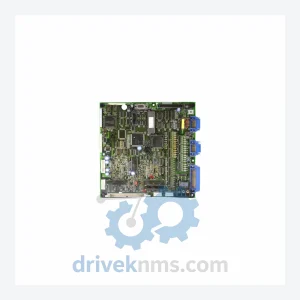
Yaskawa YPHT11014-1A Circuit Board – Obsolete Drive Control Spare Part
Yaskawa YPHT11014-1A Circuit Board – Obsolete Drive Control Spare Part When a Yaskawa YPHT11014-1A circuit board fails in a production…
Model: HW9381442-DEPX2900L SRDA-SDB95A01A-EDX100MPL800 HW0380024-FEPX2900U
Product Overview
Commercial availability is handled through direct RFQ, model verification and export-oriented follow-up rather than public cart checkout.
Datasheet Preview
Use attached product manuals when available. If the manual is not public yet, request the full file directly through RFQ.
Commercial Path
Product pages on DRIVEKNMS are designed to verify model, brand and series first, then move the buyer into one clean quotation path.
Technical Dossier
The YASKAWA SRDA (Servo Drive) series, together with the DEPX and FEPX reducer assemblies, constitutes the core motion-control and power-transmission backbone of the YASKAWA Motoman industrial robot platform. Deployed across petrochemical refineries, nuclear facility material-handling cells, automotive body-in-white welding lines, and heavy-fabrication plants globally, these components are engineered to IEC 61800 servo drive standards and are rated for continuous-duty operation in Class F insulation environments. The SRDA servo amplifier family provides closed-loop torque, velocity, and position control for each robot axis, while the DEPX and FEPX harmonic-drive reducer units deliver the high reduction ratios (typically 1:80 to 1:160) required for precise, backlash-free joint articulation in 6-axis and 7-axis Motoman manipulators. The installed base of SRDA-series hardware spans multiple robot generations—UP, ES, HP, MA, MS, and MH series—making lifecycle parts management a critical operational requirement for maintenance engineers worldwide.
YASKAWA's robot servo drive architecture has progressed through three distinct generations since the mid-1990s. The first generation, represented by the SRDA-COA□□A and early CACR-SR amplifier families, used analog current-loop control and discrete IGBT modules, requiring periodic capacitor and IGBT replacement at 5–7 year intervals. The second generation introduced the SRDA-SDB and SRDA-SDA families with digital DSP-based current control, integrated regenerative braking circuits, and the NX100 / DX100 controller bus interface. The third and current generation, represented by the SRDA-SDB95A01A and related variants, integrates FPGA-based real-time current regulation, EtherCAT-compatible encoder feedback, and enhanced thermal management for high-cycle-rate applications. The DEPX and FEPX reducer series (e.g., HW9381442-DEPX2900L, HW0380024-FEPX2900U) are mechanically matched to specific axis torque ratings and are not interchangeable across generations without verifying the output flange interface, reduction ratio, and oil-seal specification. Compatibility mapping between controller generation (NX100, DX100, YRC1000) and the corresponding SRDA amplifier variant is mandatory before substitution.
Servo Drive Amplifier Modules (SRDA Series)
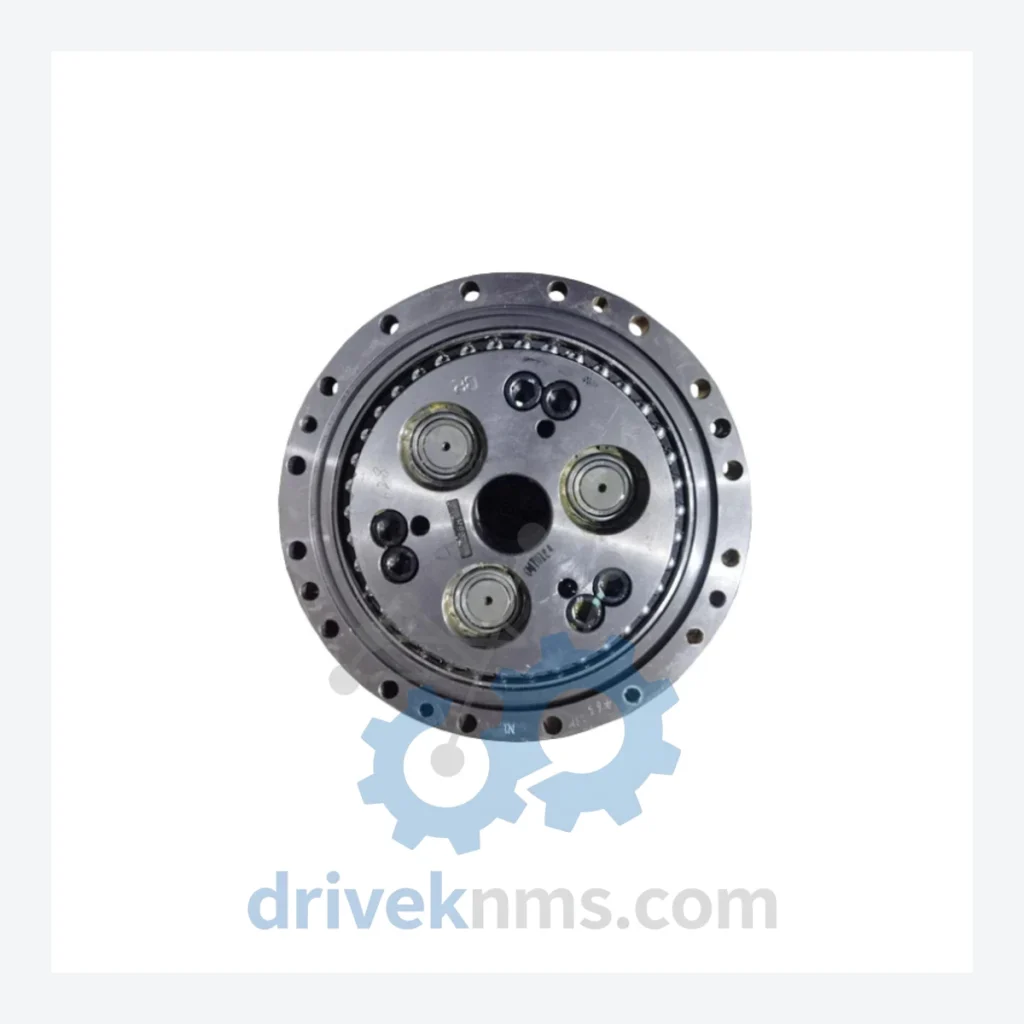
Reducer / Gearbox Assemblies (DEPX / FEPX Series)
The SRDA-COA and SRDA-SDA sub-families have been formally discontinued by YASKAWA, with OEM support terminated for NX100-generation hardware in most regions. DriveKNMS maintains a dedicated inventory of tested surplus and refurbished SRDA amplifiers and DEPX/FEPX reducer assemblies to support plants operating legacy Motoman robots beyond the OEM service window. Our sourcing network covers manufacturer-surplus stock, decommissioned robot cells, and certified repair-exchange units. For each obsolete part number, DriveKNMS provides a cross-reference to the nearest compatible current-generation substitute, including any required parameter file or wiring harness modification. Lead times for hard-to-find SRDA variants are typically 3–10 business days from confirmed order.
All SRDA servo amplifiers processed by DriveKNMS undergo a structured bench-test protocol: incoming inspection verifies bus connector integrity and capacitor ESR values; functional testing applies rated load current across the full speed range using a motor simulator; thermal imaging confirms IGBT junction temperatures remain within specification at 100% duty cycle; and final verification checks encoder feedback signal integrity at 2,500 PPR and 20,000 PPR resolutions. DEPX and FEPX reducer assemblies are inspected for oil-seal condition, output flange runout (tolerance: ≤0.02 mm TIR), and backlash measurement against OEM specification. Units exhibiting backlash exceeding 1 arc-minute are rejected or routed to rebuild. All tested units ship with a functional test report and a 12-month warranty against defects in materials and workmanship.
Related Paths
Yaskawa YPHT11014-1A Circuit Board – Obsolete Drive Control Spare Part When a Yaskawa YPHT11014-1A circuit board fails in a production…
Yaskawa YPCT11065-1-3 Circuit Board – Obsolete Varispeed Series Spare Part When a circuit board like the YPCT11065-1-3 fails inside a…
Yaskawa SGMG Series: Comprehensive Module Range and Technical Overview The Yaskawa SGMG series represents one of the most widely deployed…