
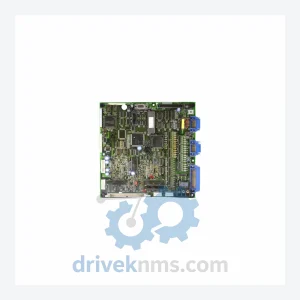
Yaskawa YPHT11014-1A Circuit Board – Obsolete Drive Control Spare Part
Yaskawa YPHT11014-1A Circuit Board – Obsolete Drive Control Spare Part When a Yaskawa YPHT11014-1A circuit board fails in a production…
Model: HW0380146-F SGDR-SDB950A01D HW9380961-D
Product Overview
Commercial availability is handled through direct RFQ, model verification and export-oriented follow-up rather than public cart checkout.
Datasheet Preview
Use attached product manuals when available. If the manual is not public yet, request the full file directly through RFQ.
Commercial Path
Product pages on DRIVEKNMS are designed to verify model, brand and series first, then move the buyer into one clean quotation path.
Technical Dossier
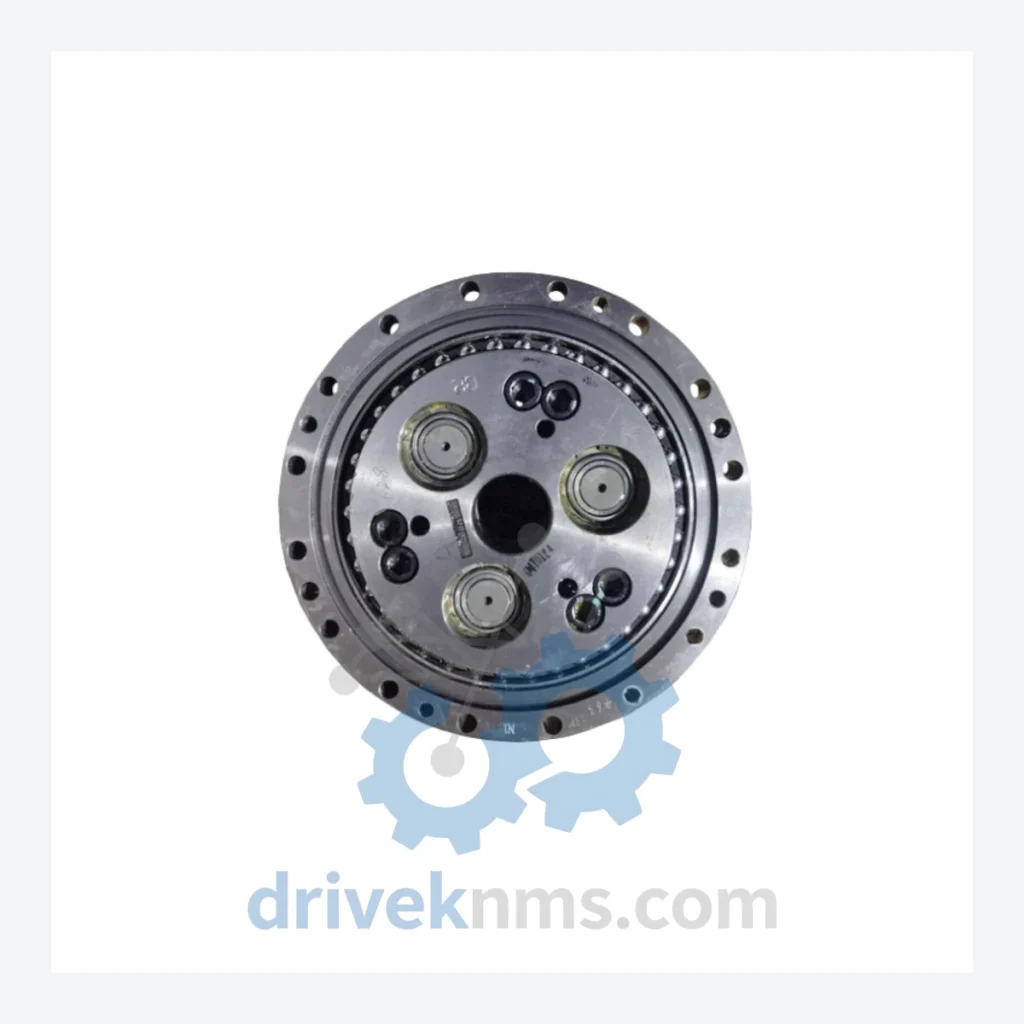
The Yaskawa SGDR-SDB series represents a dedicated line of precision speed reducers engineered for multi-axis industrial robot systems, most notably deployed within the Yaskawa Motoman robot platform. These units are installed across global heavy industries including petrochemical refineries, nuclear facility maintenance robots, automotive body welding lines, and continuous-process chemical plants. The SGDR-SDB series functions as the mechanical transmission interface between the servo motor output shaft and the robot joint axis, providing high reduction ratios with minimal backlash. Units in this series are identified by dual part number conventions: the HW-prefixed assembly code (e.g., HW0380146-F, HW9380961-D) and the SGDR-SDB model designation indicating torque class and axis assignment. The B-axis variant (SGDR-SDB950A01D) is specifically rated for the second major rotational axis on Yaskawa UP series and HP series manipulators, where load torque and cyclic stress demands are highest.
The SGDR-SDB series traces its design lineage to Yaskawa's early harmonic drive and cycloidal reduction integration work in the late 1980s, when the Motoman L-series robots required compact, high-torque-density reducers for confined joint housings. Early variants used a single-stage cycloidal mechanism with external lubrication ports, requiring scheduled grease replenishment every 3,000 operating hours. By the mid-1990s, Yaskawa transitioned to sealed-for-life grease packs in the SDB-series housings, reducing maintenance intervals and improving contamination resistance for foundry and paint-shop environments.
The HW-prefix part numbering system was introduced to unify assembly-level traceability across Yaskawa's global service network, allowing a single HW code to map to a specific SGDR-SDB torque class, axis designation, and revision level. The suffix letters (e.g., -F, -D) denote hardware revision states, with later revisions incorporating improved bearing preload specifications and updated seal materials compatible with synthetic lubricants. Compatibility between revision levels is axis-specific: B-axis and S-axis reducers from different revision generations are generally not interchangeable without verifying the mating flange interface dimensions and the servo motor shaft coupling bore.
As the Motoman UP series gave way to the HP, MA, and MH platform generations, the SGDR-SDB torque classes were progressively superseded by the SGMRS and RV-series reducer assemblies. However, a substantial installed base of UP6, UP20, UP50, HP20, and HP165 robots continues to operate in facilities where full robot replacement is not economically justified, sustaining active demand for SGDR-SDB spare units well into the current decade.
The following SKUs represent confirmed models within the Yaskawa SGDR-SDB speed reducer series, classified by axis assignment and torque class:
B-Axis (Second Joint) Reducers
SGDR-SDB950A01D (HW0380146-F / HW9380961-D): B-axis speed reducer, 950 Nm class, for UP/HP series robots, dual HW assembly codes.
SGDR-SDB550A01B: B-axis reducer, 550 Nm class, earlier revision, UP6 and UP20 platform compatibility.
SGDR-SDB550A01D: B-axis reducer, 550 Nm class, revision D, updated seal specification.
SGDR-SDB950A01B: B-axis reducer, 950 Nm class, revision B, predecessor to the A01D variant.
S-Axis (Base Rotation) Reducers
SGDR-SDS950A01D: S-axis (waist rotation) reducer, 950 Nm class, cycloidal stage, UP50/HP165 base joint.
SGDR-SDS550A01D: S-axis reducer, 550 Nm class, UP6/UP20 waist joint assembly.
SGDR-SDS1400A01D: S-axis reducer, 1400 Nm class, heavy-payload HP165 and UP165 base rotation.
U-Axis (Upper Arm) Reducers
SGDR-SDU550A01D: U-axis (elbow joint) reducer, 550 Nm class, UP6/UP20 upper arm.
SGDR-SDU950A01D: U-axis reducer, 950 Nm class, UP50 and HP20 elbow joint.
SGDR-SDU200A01D: U-axis reducer, 200 Nm class, compact UP series wrist-adjacent joint.
R / T / L Wrist Axis Reducers
SGDR-SDR200A01D: R-axis (wrist roll) reducer, 200 Nm class, UP6 and HP6 wrist assembly.
SGDR-SDT200A01D: T-axis (wrist pitch) reducer, 200 Nm class, UP20 wrist pitch joint.
SGDR-SDL200A01D: L-axis (wrist yaw) reducer, 200 Nm class, UP series wrist yaw stage.
High-Payload Extended Series
SGDR-SDB1400A01D: B-axis reducer, 1400 Nm class, HP165 and UP165 heavy-payload second joint.
SGDR-SDS2000A01D: S-axis reducer, 2000 Nm class, ultra-heavy-payload base rotation for UP350 class robots.
SGDR-SDB2000A01D: B-axis reducer, 2000 Nm class, UP350 second joint, maximum torque class in series.
The SGDR-SDB series has entered the mature-to-end-of-life phase of its product lifecycle. Yaskawa has formally discontinued new production of most SGDR-SDB torque classes, with OEM replacement parts available only through authorized service channels at extended lead times, or not at all for early revision suffixes (-A, -B). For facilities operating Motoman UP and HP series robots that are not scheduled for replacement within the next five to ten years, securing verified spare SGDR-SDB reducer assemblies is a critical maintenance planning requirement.
DriveKNMS maintains a sourced inventory of SGDR-SDB units acquired through decommissioned robot disassembly, authorized distributor overstock, and direct factory surplus channels. Each unit is catalogued by HW assembly code, SGDR-SDB model number, revision suffix, and physical condition grade. For the specific assembly covered by this listing — HW0380146-F / SGDR-SDB950A01D / HW9380961-D — DriveKNMS can provide exchange units, tested surplus stock, or facilitate cross-reference to compatible replacement assemblies where direct equivalents are unavailable. Customers operating multiple UP50 or HP165 robots are advised to maintain at least one spare B-axis reducer on-site given the 4–12 week typical lead time for sourced units of this torque class.
Speed reducers in the SGDR-SDB series present specific inspection challenges due to their integrated cycloidal reduction stages, precision output flanges, and sealed grease chambers. DriveKNMS applies the following test protocol to all SGDR-SDB units prior to dispatch:
Backlash measurement: Output flange angular backlash is measured under no-load conditions using a calibrated dial indicator fixture. Acceptable backlash for 950 Nm class units is within 1.0 arc-minute; units exceeding 2.0 arc-minutes are rejected.
Rotational torque check: Input shaft is driven at rated speed via a servo test rig; output torque is logged across the full reduction ratio to verify no internal stage slippage or bearing drag anomalies.
Seal integrity inspection: All grease seals and O-ring interfaces are pressure-tested to confirm no lubricant migration paths exist. Units with compromised seals are resealed using OEM-specification elastomer compounds before retesting.
Flange interface dimensional verification: Output and input flange bolt circle diameters, pilot bore dimensions, and shaft coupling bore tolerances are measured against Yaskawa engineering drawings to confirm drop-in fitment compatibility.
Grease condition assessment: Internal grease is sampled and inspected for metallic particle contamination using magnetic particle analysis. Units with contaminated grease are fully disassembled, cleaned, and repacked with fresh Yaskawa-specified grease before reassembly.
Related Paths
Yaskawa YPHT11014-1A Circuit Board – Obsolete Drive Control Spare Part When a Yaskawa YPHT11014-1A circuit board fails in a production…
Yaskawa YPCT11065-1-3 Circuit Board – Obsolete Varispeed Series Spare Part When a circuit board like the YPCT11065-1-3 fails inside a…
Yaskawa SGMG Series: Comprehensive Module Range and Technical Overview The Yaskawa SGMG series represents one of the most widely deployed…