
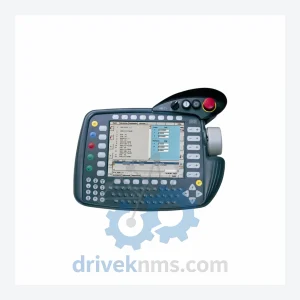
KUKA KCP2 VKCP2 Robot Control Panel – KCP Series
KUKA KCP2 VKCP2 Robot Control Panel: Sourcing Strategy & Asset Return Value in a Constrained Global Supply Chain The KUKA…
Model: 00-131-492 1FK7103-5AF81-1YY3-Z S17 6.9KW C400-216-801 00-169-213 C4 27V 00169213
Product Overview
Commercial availability is handled through direct RFQ, model verification and export-oriented follow-up rather than public cart checkout.
Datasheet Preview
Use attached product manuals when available. If the manual is not public yet, request the full file directly through RFQ.
Commercial Path
Product pages on DRIVEKNMS are designed to verify model, brand and series first, then move the buyer into one clean quotation path.
Technical Dossier
The KUKA KR C4 is the fourth-generation robot controller platform introduced by KUKA Robotics, deployed globally across automotive body-in-white lines, heavy fabrication, foundry automation, nuclear facility material handling, and petrochemical plant maintenance robotics. Since its commercial release in 2009, the KR C4 architecture has become the de facto standard for KUKA industrial robot integration, replacing the KR C2 and KR C3 generations. Installed base estimates place KR C4 units in the hundreds of thousands across North America, Europe, and Asia-Pacific, with a significant proportion now entering the 10–15 year maintenance window where original spare parts availability becomes a critical operational risk.
The controller integrates a Windows-based real-time operating environment (KUKA.VxWorks), EtherCAT-based internal bus communication, and a modular power electronics architecture. The power supply and drive modules — including the 00-131-492, C400-216-801, and 00-169-213 — are load-bearing components that directly govern servo axis performance, regenerative braking, and 27V DC logic supply stability. Failure of any one of these modules results in full robot downtime.
The KR C4 platform underwent several hardware revisions between 2009 and 2022. Early production units (2009–2013) used a discrete power supply topology with separate rectifier, DC bus, and logic supply boards. Mid-generation revisions (2014–2018) consolidated some power functions and introduced improved EMC filtering. Late-production units (2019–2022) shifted toward integrated drive-power modules with revised firmware dependencies.
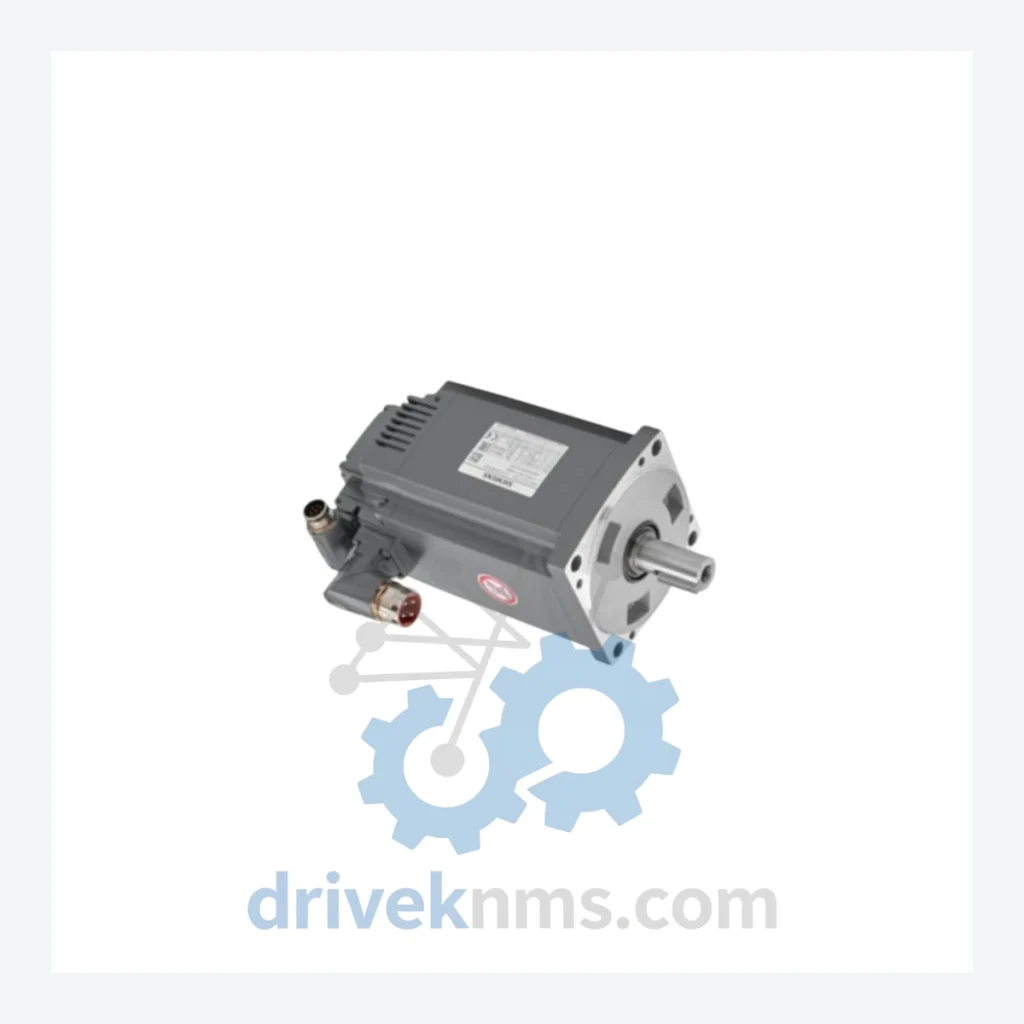
This generational fragmentation creates a direct compatibility challenge for maintenance engineers: a replacement module sourced from a different production batch may require firmware alignment or bus address reconfiguration. The 1FK7103-5AF81-1YY3-Z servo motor (Siemens SIMOTICS S-1FK7 series, 6.9 kW, 400V, flange-mount) is the axis drive motor paired with this controller assembly. Its drive parameters are stored in the KR C4's KPS (KUKA Power Supply) module — meaning motor and controller components must be treated as a matched set during replacement planning.
As of 2024, KUKA (now a Midea Group subsidiary) has formally discontinued several KR C4 sub-assemblies, with recommended migration paths toward the KR C5 platform. However, KR C5 migration requires mechanical reconfiguration, new teach pendant hardware, and full WorkVisual project re-commissioning — a process that typically costs USD 80,000–250,000 per robot cell when engineering, downtime, and validation are factored in. For facilities operating 20–100 KR C4 units, the economic case for spare parts-based life extension is unambiguous.
The following SKUs represent verified components within the KUKA KR C4 ecosystem. Each entry reflects a distinct functional role within the controller or drive chain:
00-131-492: KR C4 internal power supply assembly, 27V DC logic rail, primary axis
C400-216-801: KR C4 power electronics module, DC bus interface, regenerative capable
00-169-213: KR C4 27V DC auxiliary power board, logic and I/O supply
1FK7103-5AF81-1YY3-Z: Siemens SIMOTICS S servo motor, 6.9 kW, 400V, matched axis drive
00-117-340: KR C4 KPS600 power supply unit, 600V DC bus, standard cabinet
00-117-341: KR C4 KPS600 power supply unit, variant with extended thermal rating
00-130-468: KR C4 RDC (Resolver Digital Converter) board, axis feedback processing
00-130-469: KR C4 RDC board, extended axis count variant (7-axis configuration)
00-168-894: KR C4 EtherCAT master communication card, internal bus controller
00-168-895: KR C4 EtherCAT slave interface module, I/O expansion
00-160-552: KR C4 safety controller board (KSB), SIL2/PLe certified
00-160-553: KR C4 safety interface module, external safety circuit integration
00-118-935: KR C4 main computer board (PC mainboard), Intel-based, KUKA.VxWorks host
00-118-936: KR C4 compact main computer board, KR C4 compact cabinet variant
00-132-017: KR C4 KPP (KUKA Power Pack) servo drive module, axes 1–3
00-132-018: KR C4 KPP servo drive module, axes 4–6, wrist axis group
00-156-872: KR C4 cabinet fan assembly, forced-air cooling, standard cabinet
00-156-873: KR C4 heat exchanger unit, sealed cabinet thermal management
00-109-435: KUKA smartPAD teach pendant, KR C4 compatible, 7m cable
00-109-436: KUKA smartPAD cable assembly, 10m extension, KR C4 interface
DriveKNMS maintains a dedicated inventory program for KUKA KR C4 components that have been discontinued by KUKA or are subject to extended lead times through authorized distribution channels. The modules listed on this page — including the 00-131-492, C400-216-801, and 00-169-213 — fall into this category.
Our sourcing methodology for KR C4 components includes direct acquisition from decommissioned robot cells, controlled factory closures, and authorized surplus liquidation. Each unit is logged with its production date code, firmware version (where readable), and physical condition grade prior to any testing or refurbishment work.
For facilities managing a fleet of KR C4 robots, DriveKNMS recommends a structured spare parts buffer strategy: maintain a minimum of one KPS module, one RDC board, and one KPP drive module per 10 operational robots. This buffer, sourced at current market prices, represents a fraction of the cost of a single unplanned production stoppage in an automotive or process industry environment.
KR C4 power and drive modules present specific failure modes that require targeted inspection protocols. DriveKNMS applies the following five-stage process to all KR C4 components prior to dispatch:
Stage 1 – Electrolytic Capacitor Assessment: DC bus capacitors and logic supply filter capacitors are measured for capacitance retention and ESR (Equivalent Series Resistance). Units with capacitance below 85% of rated value or ESR above threshold are recapped using equivalent-specification components.
Stage 2 – Firmware Version Verification: Where accessible, onboard firmware versions are read and documented. KR C4 modules with known firmware incompatibilities (particularly RDC and safety boards) are flagged and matched to compatible controller generations.
Stage 3 – Pin and Connector Inspection: All backplane connectors, Harting interfaces, and signal pins are inspected under magnification for oxidation, fretting corrosion, and mechanical deformation. Affected contacts are treated or the connector assembly is replaced.
Stage 4 – Functional Load Test: Power supply modules are tested under resistive load at rated output current. Drive modules are bench-tested for gate drive signal integrity and DC bus regulation.
Stage 5 – EtherCAT Bus Communication Test: Communication modules are verified for correct EtherCAT frame handling and node address response using a KR C4-compatible test harness.
For KR C4 spare parts inquiries, availability checks, or bulk procurement:
Related Paths
KUKA KCP2 VKCP2 Robot Control Panel: Sourcing Strategy & Asset Return Value in a Constrained Global Supply Chain The KUKA…
KUKA KCP2 Series: Comprehensive Module Range and Technical Overview The KUKA KCP2 (KUKA Control Panel 2) teach pendant is the…
KUKA KVGA Series: Comprehensive Module Range and Technical Overview The KUKA KVGA (KRC Video Graphics Adapter) series is a family…