
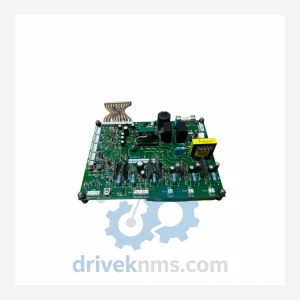
Yaskawa YPCT11065-1-3 Circuit Board – Obsolete Varispeed Series Spare Part
Yaskawa YPCT11065-1-3 Circuit Board – Obsolete Varispeed Series Spare Part When a circuit board like the YPCT11065-1-3 fails inside a…
Model: DX200 JANCD-YCP02-E JZMQZ-TB40B Q8B801-391-3-14 JZMQZ-TB40
Product Overview
Commercial availability is handled through direct RFQ, model verification and export-oriented follow-up rather than public cart checkout.
Datasheet Preview
Use attached product manuals when available. If the manual is not public yet, request the full file directly through RFQ.
Commercial Path
Product pages on DRIVEKNMS are designed to verify model, brand and series first, then move the buyer into one clean quotation path.
Technical Dossier
The Yaskawa DX200 is a multi-robot controller platform deployed across heavy industrial sectors including automotive body welding lines, chemical plant material handling, nuclear facility maintenance robotics, and refinery pipeline inspection systems. Introduced as the successor to the NX100 and XRC controller families, the DX200 supports coordinated control of up to eight axes and four robots simultaneously from a single cabinet. Its installed base spans facilities in Japan, the United States, Germany, China, South Korea, and Brazil, making it one of the most widely maintained robot controller architectures in global industrial automation.
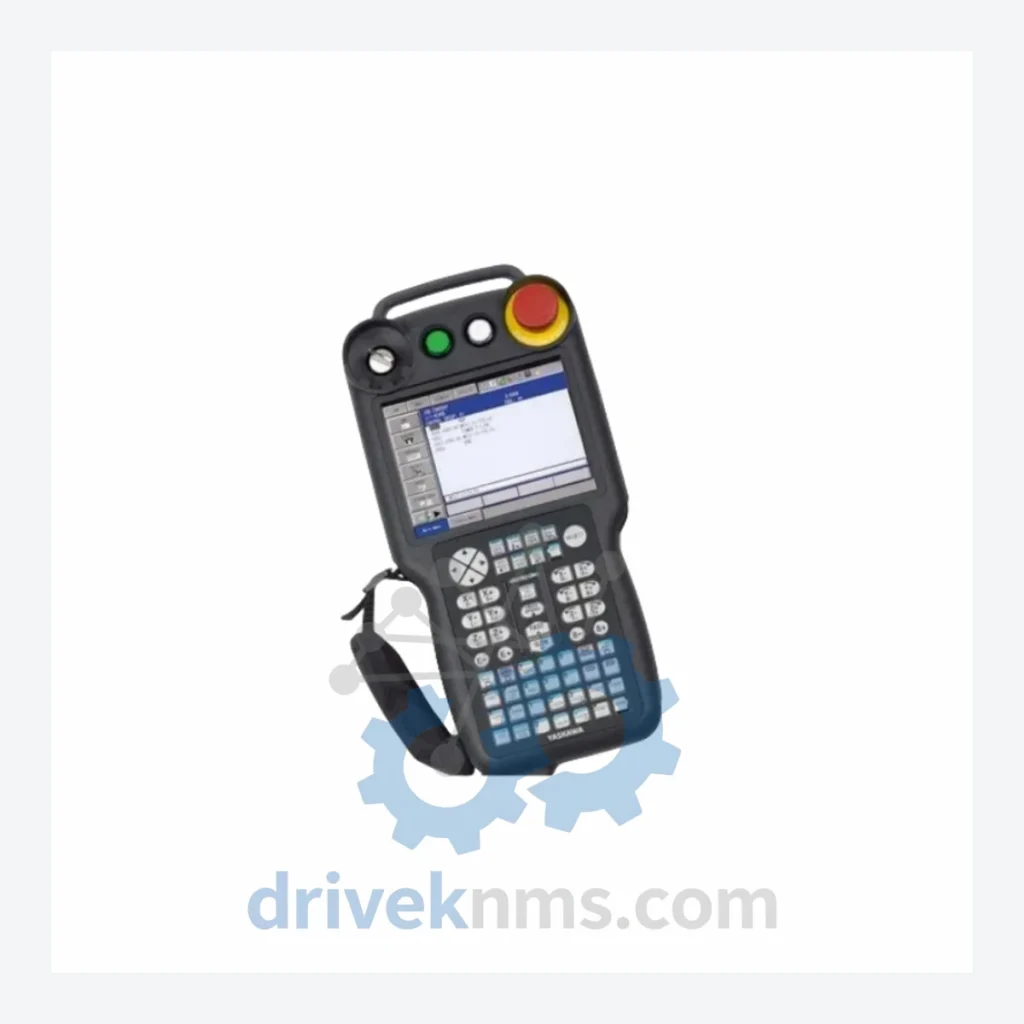
The DX200 operates on a Windows CE-based teach pendant interface (JZMQZ-TB40 / JZMQZ-TB40B series) and a modular backplane architecture that separates CPU, I/O, servo, and communication functions into discrete, field-replaceable units. This design enables targeted component-level repair without full controller replacement, which is the primary driver of sustained aftermarket demand for individual board-level modules.
Yaskawa's robot controller lineage progressed through the YASNAC MRC (1988), XRC (1998), NX100 (2003), and DX100 (2007) platforms before the DX200 was released in 2011. Each generation introduced tighter integration between motion control and safety logic. The DX200 consolidated functional safety (FSU — Functional Safety Unit) directly into the controller backplane, eliminating the need for external safety relays in many applications and enabling compliance with ISO 13849-1 PLd and IEC 62061 SIL2 without third-party safety PLCs.
The DX200 backplane uses a proprietary high-speed serial bus (MECHATROLINK-III derivative) to synchronize the JANCD-YCP02-E CPU board with servo amplifier boards (SRDA series) and I/O expansion racks. Compatibility between DX200 firmware revisions and specific board hardware revisions is strictly version-controlled; mixing incompatible firmware and hardware revisions results in axis alarm faults (alarm codes 0400–0499 range). Maintenance engineers sourcing replacement boards must verify the hardware revision suffix (e.g., -E, -B, -C) against the controller's system software version.
The DX200 platform reached end-of-active-production announcement in 2022, with Yaskawa transitioning new installations to the YRC1000 and YRC1000micro platforms. However, the DX200 remains in active service at the majority of its installed base, and Yaskawa's official parts support window extends through 2030. After that date, third-party MRO suppliers represent the primary sourcing channel for board-level components.
CPU & Main Controller Boards
I/O Expansion Modules
Communication & Fieldbus Adapters
Servo & Power Supply Boards
Teach Pendant & HMI Components
DriveKNMS maintains a dedicated inventory program for DX200 board-level components sourced from decommissioned robot cells, authorized surplus channels, and controlled factory-refurbishment pipelines. As the DX200 transitions from active production to the MRO lifecycle phase, the primary sourcing challenge shifts from lead time to authenticity verification — counterfeit JANCD-series boards have been documented in the secondary market, typically identifiable by incorrect PCB silkscreen revision markings and non-conforming EEPROM part number strings.
DriveKNMS applies a three-source verification protocol for all DX200 boards: (1) physical hardware revision cross-check against Yaskawa's published revision matrix, (2) EEPROM firmware string readout via JANCD-YCP02-E diagnostic port, and (3) functional power-on test against a reference DX200 controller chassis. Boards that pass all three stages are classified as Verified Serviceable and carry a 12-month operational warranty.
For end-users operating DX200 controllers beyond Yaskawa's 2030 support window, DriveKNMS offers a Long-Term Maintenance Agreement (LTMA) that provides guaranteed board availability, firmware archiving, and on-demand technical documentation access for the full DX200 module catalog.
DX200 modules present specific test challenges due to the controller's integrated backplane bus architecture. Unlike modular PLCs where individual I/O cards can be bench-tested in isolation, DX200 CPU and FSU boards require a live backplane environment to complete their self-diagnostic boot sequence. DriveKNMS operates a dedicated DX200 test rig — a complete controller chassis with calibrated servo load banks — that replicates production operating conditions for board validation.
Test procedures for the JANCD-YCP02-E specifically include: cold-start boot sequence verification (alarm code 0000 clear), MECHATROLINK-III bus synchronization check across all eight axis slots, FSU handshake confirmation with JANCD-YSF22-E, and teach pendant communication validation via JZMQZ-TB40B interface. I/O boards (JANCD-YIO02-E, JANCD-YIO21-E) are tested under full 24 VDC load with automated point-by-point DI/DO verification. Communication adapters are validated against live PLC networks (Siemens S7-1500 for PROFINET, Allen-Bradley ControlLogix for EtherNet/IP) to confirm protocol-level data exchange before shipment.
Related Paths
Yaskawa YPCT11065-1-3 Circuit Board – Obsolete Varispeed Series Spare Part When a circuit board like the YPCT11065-1-3 fails inside a…
Yaskawa YPHT11014-1A Circuit Board – Obsolete Drive Control Spare Part When a Yaskawa YPHT11014-1A circuit board fails in a production…
Yaskawa SGMG Series: Comprehensive Module Range and Technical Overview The Yaskawa SGMG series represents one of the most widely deployed…