
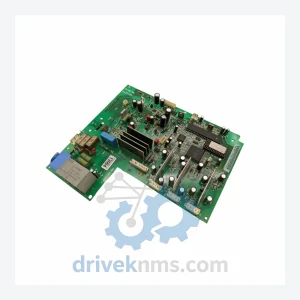
ABB SNAT-7120 Circuit Board – SNAZ7120J Series
ABB SNAT-7120 / SNAZ7120J Circuit Board: Sourcing Strategy & Asset Return Value in a Constrained Global Supply Chain The ABB…
Model: IRB4603HAC054556-001 IRB66203HAC026114-007 IRB66203HAC026114-006
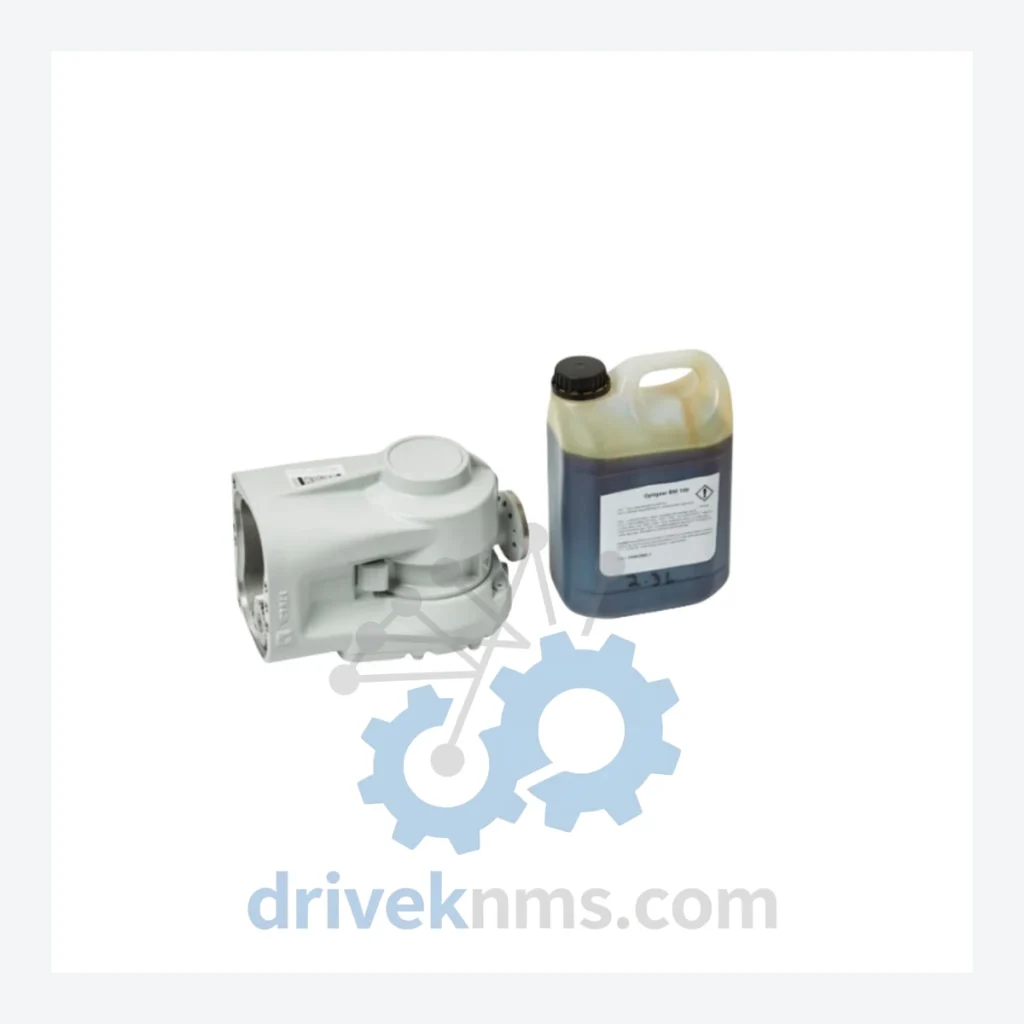
Product Overview
Commercial availability is handled through direct RFQ, model verification and export-oriented follow-up rather than public cart checkout.
Datasheet Preview
Use attached product manuals when available. If the manual is not public yet, request the full file directly through RFQ.
Commercial Path
Product pages on DRIVEKNMS are designed to verify model, brand and series first, then move the buyer into one clean quotation path.
Technical Dossier
When a critical module in an ABB Foundry Prime robot fails and the part is no longer available through standard distribution channels, the consequences extend far beyond a single machine going offline. A full production line stoppage in a foundry or heavy-manufacturing environment can cost between $50,000 and $500,000 per day in lost output, scrap, and labor. If the failure forces a system-wide upgrade — new controllers, new teach pendants, new safety validation, new programming — the capital expenditure routinely exceeds $1,000,000 per robot cell. The three part numbers listed here — HAC054556-001, HAC026114-007, and HAC026114-006 — are confirmed discontinued components within the ABB IRB4600 and IRB6620 Foundry Prime platform. DriveKNMS maintains verified physical stock of these units, sourced through controlled industrial channels, for plant engineers and maintenance managers who need a direct replacement without triggering a system redesign.
| Part Numbers | HAC054556-001 / HAC026114-007 / HAC026114-006 |
|---|---|
| Compatible Robot Series | ABB IRB4600 (Foundry Prime), ABB IRB6620 (Foundry Prime) |
| Series | ABB Foundry Prime |
| Manufacturer | ABB Robotics, Sweden |
| Country of Origin | Sweden |
| Discontinuation Status | Confirmed Discontinued – No longer available through ABB standard distribution |
| Typical Control System | ABB IRC5 Controller (Foundry Prime variant) |
| Application Environment | Foundry, die casting, heavy-duty industrial automation |
| Condition Available | New Old Stock (NOS) / Professionally Refurbished |
Note: Electrical parameters specific to each sub-module are not published here to prevent misapplication. Contact our technical team for verification against your system's documentation before ordering.
The ABB IRB4600 and IRB6620 Foundry Prime robots were engineered for the harshest industrial environments — high-temperature foundry floors, die casting cells, and heavy-payload handling lines. Their mechanical robustness means the physical robot structure often outlasts the availability of its electronic and mechanical sub-components by a decade or more. ABB's product lifecycle policy has moved these platforms into end-of-life status, meaning spare parts are no longer manufactured or stocked by the OEM.
For plant managers operating these robots, this creates a specific and serious problem: the robot itself is mechanically sound and fully integrated into a production process, but a single failed module — a drive board, a harness assembly, a sensor bracket — can render the entire cell inoperable. The cost of replacing the robot with a current-generation model is not simply the purchase price. It includes decommissioning, civil works, new safety fencing, IRC5 to IRC5 or OmniCore migration, reprogramming of all motion paths, and re-validation of the safety system. In most facilities, this process takes three to six months and costs multiples of the original robot's value.
Sourcing the original spare part — even at a premium — is the rational economic decision. DriveKNMS specializes in locating, verifying, and supplying exactly these components for facilities that have made the correct calculation.
Factory management teams facing pressure to retire aging robot cells should consider the following maintenance strategy before committing to capital expenditure:
1. Conduct a failure mode audit. Identify which sub-systems on your IRB4600 or IRB6620 fleet are statistically most likely to fail over the next five years. For Foundry Prime variants, harness assemblies and drive-side electronics are the highest-risk items due to thermal cycling and vibration exposure.
2. Build a strategic spare parts buffer. Procuring two to three units of each high-risk component — while stock exists — eliminates the single point of failure that forces unplanned downtime. The cost of buffer stock is a fraction of one day of unplanned line stoppage.
3. Establish a scheduled inspection cycle. Foundry Prime robots operating in high-temperature environments should have their cable harnesses, connectors, and cooling systems inspected on a 6-month cycle. Early detection of wear prevents catastrophic failure.
4. Document your current firmware and calibration state. Before any hardware replacement, record the IRC5 controller's current software version, axis calibration data, and safety configuration. This eliminates re-commissioning time after a swap.
5. Negotiate a maintenance contract with a qualified ABB integrator. Even without OEM support, third-party integrators with IRC5 expertise can provide preventive maintenance coverage that extends reliable operation well beyond the OEM's stated end-of-life date.
Facilities that execute this strategy consistently report five to ten additional years of productive operation from robot assets that would otherwise have been retired under capital pressure.
Every unit of HAC054556-001, HAC026114-007, and HAC026114-006 that leaves DriveKNMS passes through a five-stage quality process designed specifically for discontinued industrial components:
Stage 1 – Visual and Physical Inspection: All connectors, housings, and mounting points are examined for mechanical damage, pin corrosion, and contamination consistent with foundry environments.
Stage 2 – Electrolytic Capacitor Assessment: Aged electrolytic capacitors are the primary failure mode in stored electronic assemblies. Each board is inspected for capacitor bulging, leakage, and ESR degradation. Units with suspect capacitors are either recapped or rejected.
Stage 3 – Firmware and Label Verification: Where applicable, firmware version markings and hardware revision labels are cross-referenced against known ABB production records to confirm authenticity and compatibility.
Stage 4 – Pin and Contact Integrity Check: All electrical contacts are cleaned and tested for continuity and resistance. Corroded or oxidized pins are treated or the unit is rejected.
Stage 5 – Functional Bench Test: Units are powered and tested under controlled conditions before packaging. Only units that pass all five stages are offered for sale.
Drop-in replacement: These parts are direct OEM equivalents. Installation requires no modification to the robot's mechanical structure or electrical harness routing.
No reprogramming required: Replacing a hardware module with the correct OEM part number does not require reloading robot programs, reconfiguring the IRC5 controller, or re-validating safety functions — provided the replacement is the correct revision.
Avoids engineering redesign costs: Using the original part number eliminates the need to engage a systems integrator for a hardware adaptation project, which typically costs $15,000–$80,000 per robot cell depending on complexity.
Preserves existing process qualification: In regulated manufacturing environments (automotive, aerospace supply chain), replacing a robot with a different model triggers a full process re-qualification. Using the original spare part maintains the existing qualification status.
Q: What warranty applies to discontinued parts?
A: DriveKNMS provides a 90-day warranty against defects in material and workmanship on all units that have passed our five-stage QA process. Warranty claims are handled directly by our technical team.
Q: How do I confirm the unit is genuine and not a counterfeit?
A: We provide documentation of the unit's sourcing channel upon request. All units carry original ABB part markings. We do not sell unmarked or re-labeled components.
Q: Are these new or refurbished?
A: Stock condition varies. We clearly state whether a unit is New Old Stock (NOS — original packaging, never installed) or Professionally Refurbished (tested, reconditioned, and QA-passed). You will be informed of the specific condition before purchase confirmation.
Q: Should I buy multiple units as long-term spares?
A: For facilities operating more than two IRB4600 or IRB6620 robots, purchasing two to three units of each critical part number is a standard risk management practice. Once current stock is exhausted, no further supply can be guaranteed.
Q: Can you source other ABB Foundry Prime parts not listed here?
A: Yes. Contact our team with your full part number list. We maintain sourcing relationships across multiple industrial surplus channels and can often locate parts not publicly listed.
Related Paths
ABB SNAT-7120 / SNAZ7120J Circuit Board: Sourcing Strategy & Asset Return Value in a Constrained Global Supply Chain The ABB…
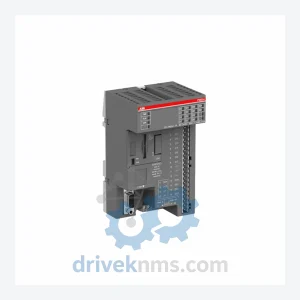
ABB AC500 Series: Comprehensive Module Range and Technical Overview The ABB AC500 is a scalable modular PLC platform deployed across…
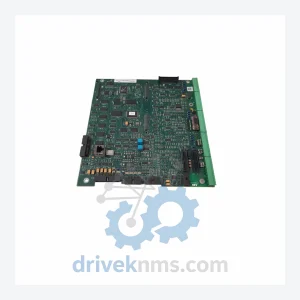
ABB SCDCS-CON-4 Control Board – Obsolete DCS Spare Part When a single control board fails in a legacy distributed control…