
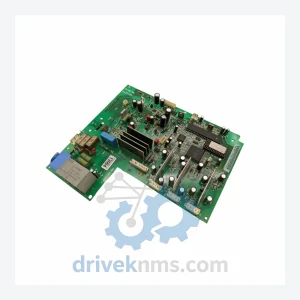
ABB SNAT-7120 Circuit Board – SNAZ7120J Series
ABB SNAT-7120 / SNAZ7120J Circuit Board: Sourcing Strategy & Asset Return Value in a Constrained Global Supply Chain The ABB…
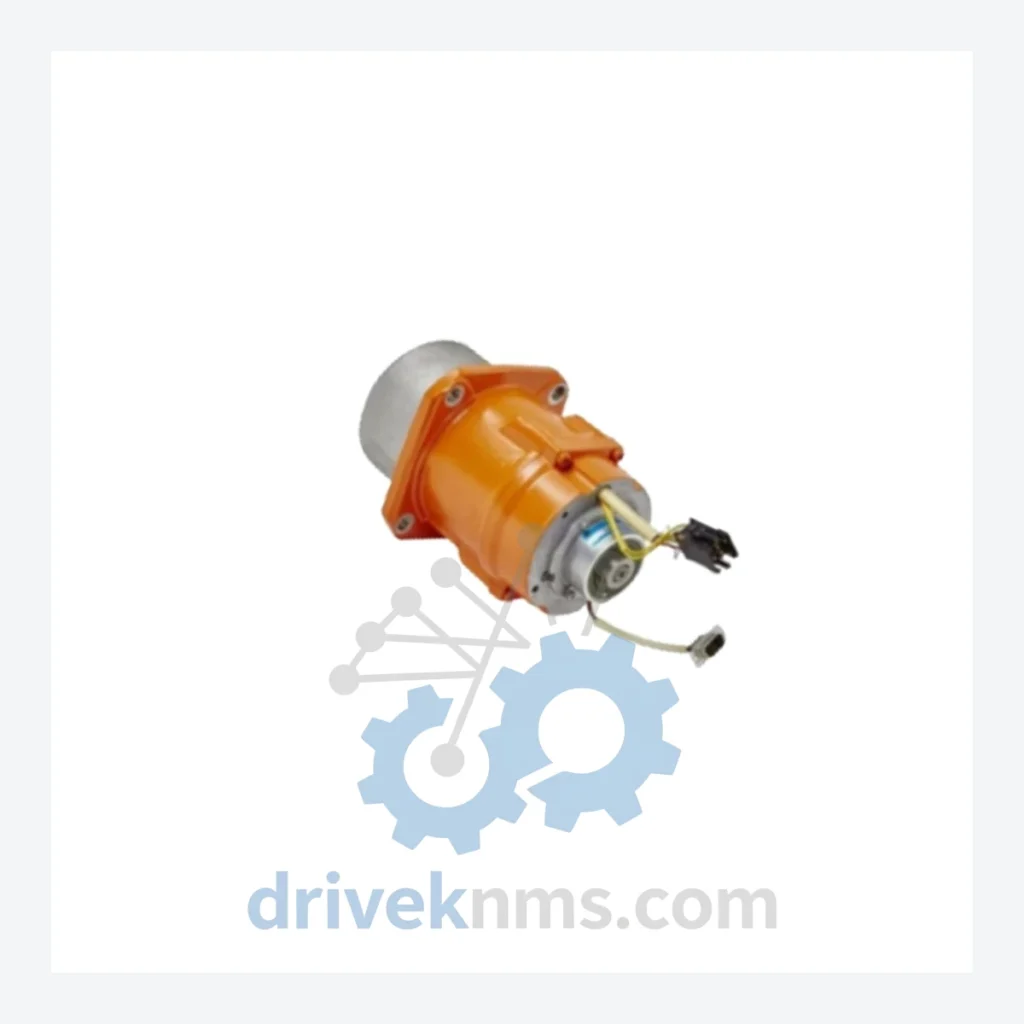
Model: IRB24003HAC021346-001 3HAC17326-13HAC021346-001 3HAC021346-001
Product Overview
Commercial availability is handled through direct RFQ, model verification and export-oriented follow-up rather than public cart checkout.
Datasheet Preview
Use attached product manuals when available. If the manual is not public yet, request the full file directly through RFQ.
Commercial Path
Product pages on DRIVEKNMS are designed to verify model, brand and series first, then move the buyer into one clean quotation path.
Technical Dossier
When an ABB IRB 2400 robot arm goes down due to a failed axis motor, the production line does not pause politely. In automotive body shops, foundries, and general manufacturing cells where IRB 2400 units have run for 15–25 years, a single motor failure can trigger a cascade: unplanned downtime, missed delivery commitments, and — in the worst case — a capital expenditure conversation no plant manager wants to have. A full IRB 2400 replacement, including integration, reprogramming, and requalification, routinely exceeds USD 80,000–150,000 per cell. The 3HAC021346-001 motor with pinion is the mechanical heart of specific IRB 2400 axis drives. ABB has discontinued this part. Sourcing it through standard distribution channels is no longer possible. DriveKNMS maintains verified physical stock of this component for facilities that cannot afford to gamble on system retirement.
| Part Number | 3HAC021346-001 |
| Cross Reference | 3HAC17326-1 |
| Description | Motor with Pinion |
| Compatible Robot | ABB IRB 2400 Series (IRB 2400/10, IRB 2400/16) |
| Manufacturer | ABB Robotics |
| Country of Origin | Sweden |
| Product Status | Discontinued / Obsolete – No longer available through ABB distribution |
| Condition Available | New Old Stock (NOS) / Professionally Refurbished |
Note: Electrical parameters such as rated voltage, rated speed, and encoder specification are axis-position dependent. Confirm axis assignment before ordering. DriveKNMS technical staff can assist with cross-verification.
The ABB IRB 2400 was introduced in 1994 and remained in production for over two decades. Tens of thousands of units are still active in global manufacturing facilities — welding lines, material handling cells, machine tending stations — because the robot's mechanical reliability made replacement economically unjustifiable. ABB's end-of-life declaration for the IRB 2400 platform did not retire the robots. It retired the supply chain that supports them.
The 3HAC021346-001 motor with pinion is not a generic component. It is a precision-matched drive element engineered to ABB's axis geometry and gear interface tolerances. Substituting an off-the-shelf servo motor requires mechanical adaptation, encoder reconfiguration, and controller parameter retuning — work that can consume 40–80 engineering hours per axis and introduces recertification obligations in regulated industries. For most facilities, that cost exceeds the value of the robot itself.
Facilities that have secured verified spare 3HAC021346-001 units report mean time to repair (MTTR) measured in hours rather than weeks. Those that have not face lead times of 8–20 weeks sourcing from secondary markets — if the part can be located at all. The strategic calculus is straightforward: a stocked spare costs a fraction of one day of unplanned downtime.
Plant managers facing pressure to retire aging IRB 2400 cells have a documented alternative: structured spare parts management combined with targeted preventive maintenance. The following protocol has been applied successfully in automotive and electronics manufacturing environments to defer capital expenditure by 5–10 years without compromising throughput or safety:
1. Axis Motor Condition Monitoring. Implement quarterly vibration signature analysis on all axis motors. Early-stage bearing wear in the 3HAC021346-001 motor assembly produces characteristic frequency signatures detectable with standard accelerometers. Catching degradation at this stage allows planned replacement during scheduled downtime rather than emergency intervention.
2. Critical Spare Inventory Positioning. For any facility operating three or more IRB 2400 units, maintaining one 3HAC021346-001 motor with pinion per affected axis configuration is the minimum defensible position. The carrying cost of a single spare is recovered within the first hour of downtime it prevents.
3. Firmware and Controller Alignment. Ensure that the IRC5 or S4C+ controller firmware version is documented and locked. Uncontrolled firmware updates on legacy controllers can alter motor parameter maps, causing compatibility issues with replacement motors. Freeze the software environment before it drifts.
4. Mechanical Interface Inspection. At each planned maintenance interval, inspect the pinion gear mesh condition, backlash measurement, and housing bore wear. The motor-to-gearbox interface is the primary wear point. Catching housing wear before it damages the motor shaft saves the cost of a complete motor replacement.
5. Supplier Qualification. Not all secondary market sources for obsolete ABB parts maintain traceability or perform functional verification. Establish a qualified supplier list and require documentation of test results before accepting any 3HAC021346-001 unit into your spare parts inventory.
Every 3HAC021346-001 unit shipped by DriveKNMS passes a five-stage inspection protocol before it leaves our facility. This process was developed specifically for electromechanical components that have been in storage or field service and addresses the failure modes most commonly encountered in aged servo motor assemblies:
Step 1 – Electrolytic Capacitor Assessment. Internal drive electronics associated with the motor assembly are inspected for electrolytic capacitor aging. Capacitors in storage beyond 5 years are subject to electrolyte evaporation and dielectric degradation. Units showing ESR values outside specification are rejected.
Step 2 – Firmware Version Verification. Where applicable, embedded firmware versions are documented and cross-referenced against ABB's last published compatibility matrix for the IRC5 and S4C+ controller families.
Step 3 – Pin and Connector Corrosion Inspection. All electrical connectors and encoder interface pins are inspected under magnification for oxidation, fretting corrosion, and mechanical deformation. Affected contacts are treated or the unit is rejected.
Step 4 – Mechanical Runout and Pinion Inspection. Shaft runout is measured. Pinion gear tooth profile is inspected for wear, chipping, and surface fatigue. Units outside ABB's published tolerance are not shipped.
Step 5 – Functional Load Test. Where test equipment permits, units are run under controlled load conditions to verify torque output, encoder signal integrity, and thermal behavior before packaging.
The 3HAC021346-001 is a direct mechanical and electrical replacement for the original factory-installed unit. Installation does not require controller reprogramming, axis recalibration from scratch, or modifications to the robot's mechanical structure. The motor mounts to the existing housing using the original fastener pattern. The encoder connector mates to the existing cable harness. The pinion engages the existing gear train without shimming or adaptation.
This drop-in replacement characteristic is the primary reason facilities choose verified OEM spare parts over aftermarket alternatives. Engineering time is eliminated. Requalification scope is minimized. The robot returns to production in the same configuration it left — with documented traceability to the replacement component.
For facilities operating under ISO 9001, IATF 16949, or similar quality management frameworks, the ability to document a like-for-like replacement with a verified OEM part number is a compliance requirement, not a preference.
Q: What warranty applies to a discontinued part like the 3HAC021346-001?
A: DriveKNMS provides a 90-day functional warranty on all refurbished units and a 180-day warranty on verified New Old Stock units. Warranty covers failure under normal operating conditions and excludes damage resulting from installation error or controller misconfiguration.
Q: How do I confirm the unit is genuine ABB and not a counterfeit?
A: All units supplied by DriveKNMS include the original ABB part label, serial number, and where available, original packaging. We provide a test report and photographic documentation of the unit prior to shipment. Customers may request pre-shipment inspection.
Q: Should I buy more than one unit as a long-term reserve?
A: For facilities with multiple IRB 2400 robots sharing the same axis configuration, purchasing two to three units as a strategic reserve is the standard recommendation. Global secondary market inventory for this part number is finite and diminishing. Price and availability will not improve over time.
Q: Can this part be used in IRB 2400/10 and IRB 2400/16 variants?
A: Compatibility depends on the specific axis position. Please provide your robot serial number and axis number when inquiring. DriveKNMS technical staff will confirm compatibility before order confirmation.
Q: What is the lead time?
A: In-stock units ship within 2 business days of payment confirmation. Express freight options are available for critical downtime situations.
To confirm stock availability, request a quotation, or submit a technical inquiry:
Related Paths
ABB SNAT-7120 / SNAZ7120J Circuit Board: Sourcing Strategy & Asset Return Value in a Constrained Global Supply Chain The ABB…
ABB AC500 Series: Comprehensive Module Range and Technical Overview The ABB AC500 is a scalable modular PLC platform deployed across…
ABB SCDCS-CON-4 Control Board – Obsolete DCS Spare Part When a single control board fails in a legacy distributed control…