
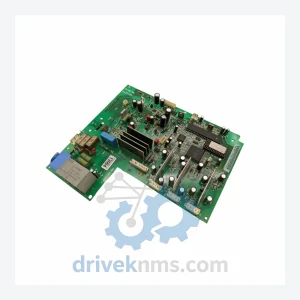
ABB SNAT-7120 Circuit Board – SNAZ7120J Series
ABB SNAT-7120 / SNAZ7120J Circuit Board: Sourcing Strategy & Asset Return Value in a Constrained Global Supply Chain The ABB…
Model: IRB46003HAC043134-004 3HAC044361-003 IRB46003HAC044361-002
Product Overview
Commercial availability is handled through direct RFQ, model verification and export-oriented follow-up rather than public cart checkout.
Datasheet Preview
Use attached product manuals when available. If the manual is not public yet, request the full file directly through RFQ.
Commercial Path
Product pages on DRIVEKNMS are designed to verify model, brand and series first, then move the buyer into one clean quotation path.
Technical Dossier
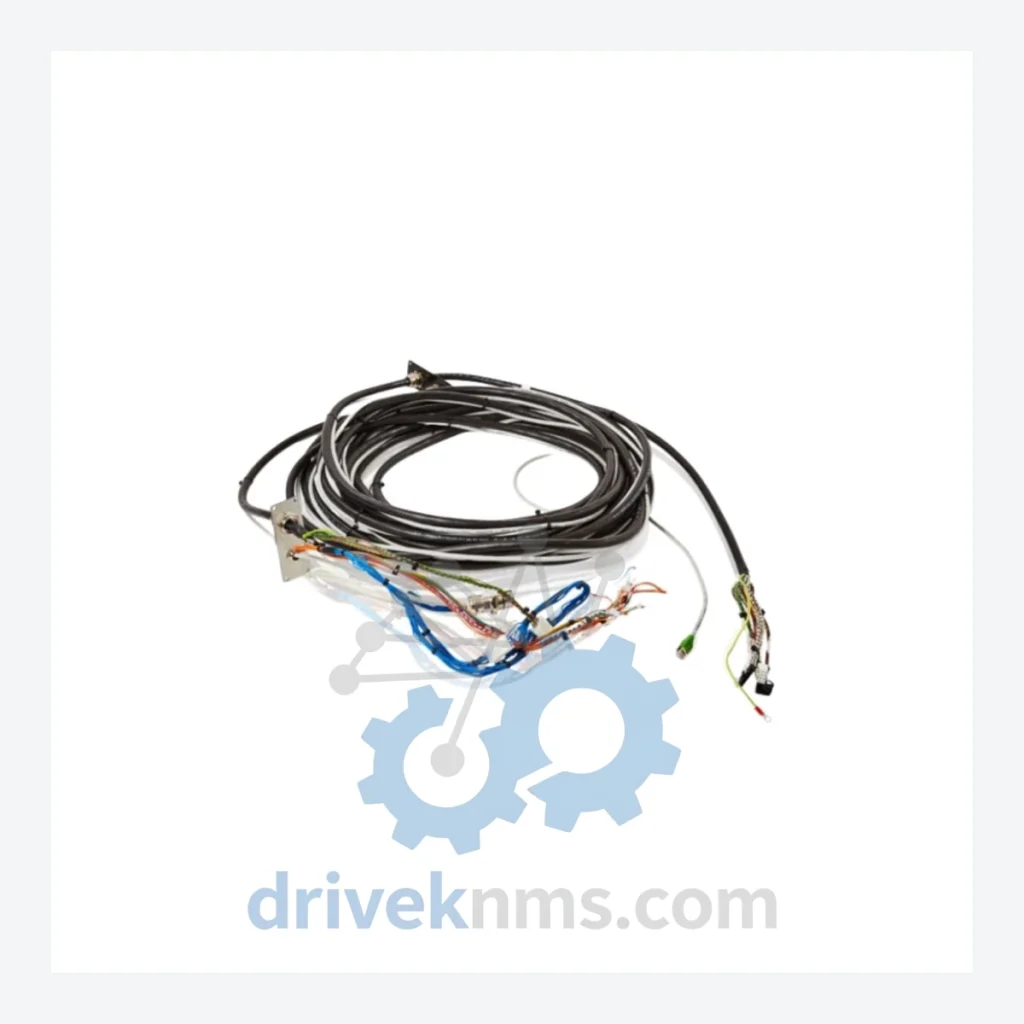
The ABB IRB 4600 is a 6-axis industrial robot platform engineered for high-throughput applications in arc welding, machine tending, material handling, and assembly. With a payload range of 20–60 kg and a reach envelope of 2.05–2.55 m, the IRB 4600 is deployed across heavy-industry sectors including automotive body shops, chemical processing plants, oil refineries, and nuclear fuel fabrication facilities. Its compact footprint and high axis speed make it one of the most widely installed mid-payload robots in ABB's portfolio, with active installations spanning more than 50 countries. The cable harness sub-assemblies covered on this page — 3HAC043134-004, 3HAC044361-003, and 3HAC044361-002 — are internal wiring looms that route power, signal, and encoder data between the robot's axes and the IRC5 controller. These harnesses are safety-critical components; degraded insulation or connector failure directly causes axis faults, E-stop triggers, and unplanned downtime.
The IRB 4600 was introduced in 2009 as a successor to the IRB 4400 platform, incorporating the IRC5 single-cabinet controller and the ABB FlexPendant (DSQC 679). Early production units (2009–2013) used a first-generation internal cable routing scheme with harness assemblies identified by the 3HAC03xxxx prefix range. A mid-cycle revision (2013–2017) introduced revised axis-2 and axis-3 cable clamp geometry, reflected in the 3HAC043xxx and 3HAC044xxx part number series — the exact range covered by this page. A further revision post-2017 updated the dress pack interface for collaborative-cell integration, introducing 3HAC050xxx and 3HAC058xxx harness variants compatible with the OmniCore controller ecosystem.
Compatibility note: 3HAC043134-004 and 3HAC044361-003/002 are mechanically and electrically interchangeable only within the mid-cycle IRB 4600 build range. Cross-fitting with early or late-generation harnesses requires verification of connector pinout revision and cable gauge specification against the robot's serial number plate.
Cable Harnesses & Internal Wiring
Motors & Servo Drives
Controller & I/O Modules (IRC5)
Gearboxes & Mechanical
The mid-generation IRB 4600 cable harness series (3HAC043xxx / 3HAC044xxx) is no longer in active ABB production. OEM lead times for new-old-stock equivalents through authorized distributors typically exceed 16–24 weeks. DriveKNMS maintains a dedicated inventory of tested, pull-from-service IRB 4600 harness assemblies sourced from decommissioned robot cells in automotive and general manufacturing facilities. All units are catalogued by part number, revision suffix, and robot serial number range to ensure fitment accuracy. For end-users operating IRB 4600 fleets beyond the standard 15-year service window, DriveKNMS provides lifecycle extension support including cross-reference mapping to available substitute harness assemblies and connector-level repair services for looms with localized insulation damage.
Cable harness assemblies for the IRB 4600 undergo a structured inspection protocol prior to dispatch. Each unit is visually inspected for jacket abrasion, connector pin corrosion, and strain relief integrity at all clamp points. Continuity testing is performed on every conductor using a calibrated low-resistance ohmmeter (target: <0.5 Ω per conductor). Insulation resistance is verified at 500 VDC megohm test (minimum 100 MΩ). Connector housings are mated and de-mated five cycles to confirm latch retention force. For encoder signal looms (3HAC044361-003 / -002), differential pair impedance is verified against ABB specification to prevent resolver signal degradation at axis speeds above 200°/s. Units that fail any parameter are quarantined and not returned to stock.
Related Paths
ABB SNAT-7120 / SNAZ7120J Circuit Board: Sourcing Strategy & Asset Return Value in a Constrained Global Supply Chain The ABB…
ABB AC500 Series: Comprehensive Module Range and Technical Overview The ABB AC500 is a scalable modular PLC platform deployed across…
ABB SCDCS-CON-4 Control Board – Obsolete DCS Spare Part When a single control board fails in a legacy distributed control…