
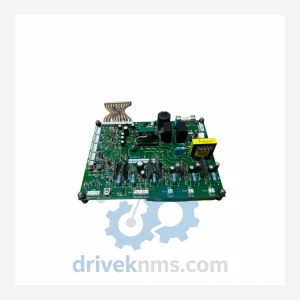
Yaskawa YPCT11065-1-3 Circuit Board – Obsolete Varispeed Series Spare Part
Yaskawa YPCT11065-1-3 Circuit Board – Obsolete Varispeed Series Spare Part When a circuit board like the YPCT11065-1-3 fails inside a…
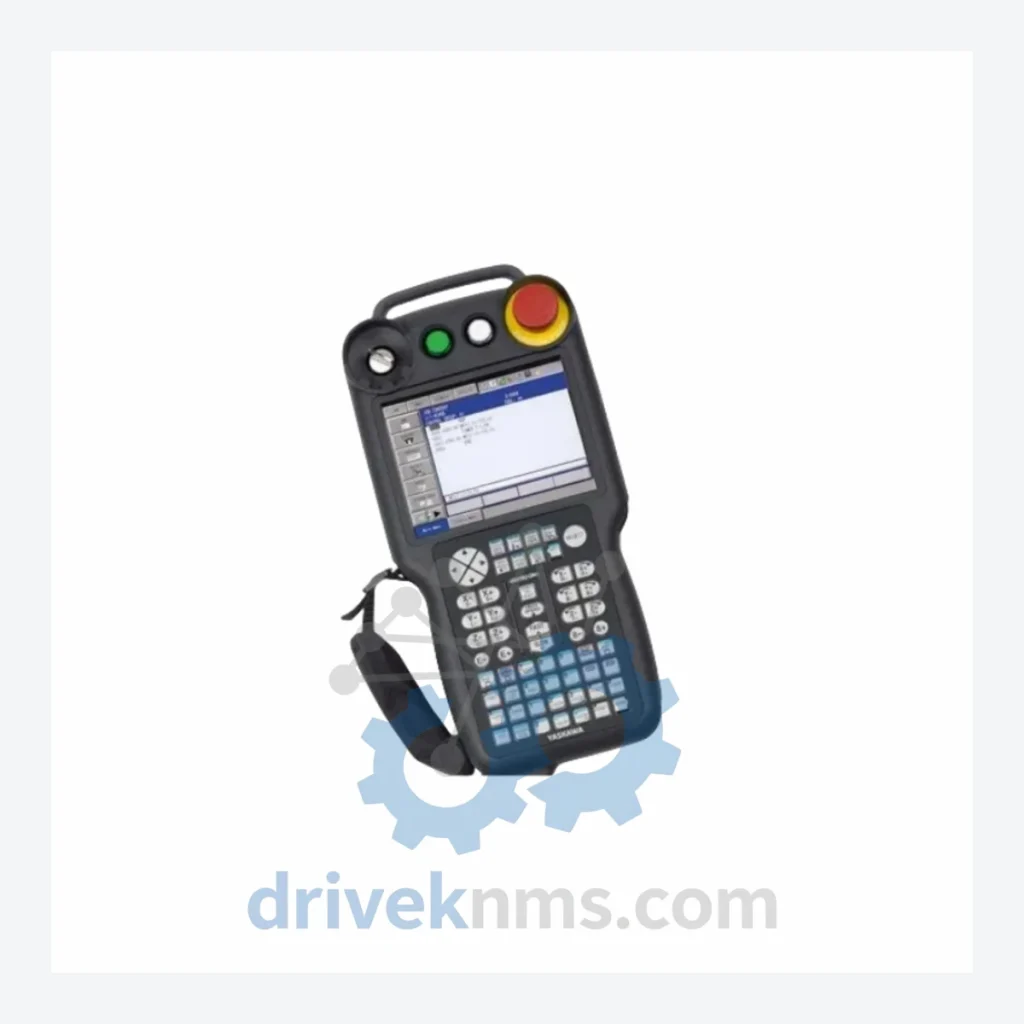
Model: JZRCR-YPP21-1
Product Overview
Commercial availability is handled through direct RFQ, model verification and export-oriented follow-up rather than public cart checkout.
Datasheet Preview
Use attached product manuals when available. If the manual is not public yet, request the full file directly through RFQ.
Commercial Path
Product pages on DRIVEKNMS are designed to verify model, brand and series first, then move the buyer into one clean quotation path.
Technical Dossier
The Yaskawa Motoman DX200 controller is a high-density, multi-robot control platform deployed across heavy industrial sectors including automotive body welding, chemical processing, nuclear facility maintenance, and petroleum refinery automation. Introduced as the successor to the NX100 and DX100 platforms, the DX200 supports coordinated control of up to eight robots and 72 axes simultaneously. Its architecture is based on a Windows CE-based human-machine interface combined with a proprietary real-time OS for motion control, making it one of the most capable multi-axis robot controllers in its class. The DX200 is installed in tens of thousands of production cells globally, with particularly high penetration in Tier 1 automotive suppliers across North America, Europe, and East Asia.
The Motoman DX200 was released in 2013 as a direct evolution of the DX100 (2008) and NX100 (2003) platforms. The DX100 introduced Ethernet-based fieldbus communication and a color pendant interface; the DX200 extended this with a full-color 7-inch LCD touchscreen pendant (JZRCR-YPP21-1), expanded I/O capacity, and integrated functional safety (FSU – Functional Safety Unit) compliant with ISO 13849-1 PLd. The DX200 also introduced the YRC1000 migration path, which shares programming language (INFORM III) and job file compatibility, easing system upgrades. As of 2024, the DX200 is in the mature/end-of-active-production phase; Yaskawa continues to supply spare parts and repair services, but new robot cells are typically specified with the YRC1000 or YRC1000micro. Long-term maintenance support for DX200 installations is therefore a critical procurement requirement for plant engineering teams.
The following SKUs represent the verified component inventory for the Motoman DX200 controller platform, organized by functional category:
Teach Pendant & HMI
CPU & Main Control Boards
I/O Modules
Power Supply Units
Communication & Network Adapters
Servo & Axis Control
As the DX200 platform transitions from active production to lifecycle support status, procurement of spare parts—particularly teach pendants (JZRCR-YPP21-1), CPU boards (JANCD-YCP21-E), and FSU modules (JANCD-YSF21-E)—requires access to specialist distributors with verified surplus inventory. DriveKNMS maintains a dedicated stock of DX200 components sourced from decommissioned production lines, authorized surplus channels, and factory-refurbished units. All units are cataloged by revision level and firmware version to ensure compatibility with the target controller configuration. For end-of-life models no longer available through Yaskawa's standard distribution network, DriveKNMS provides cross-reference analysis to identify compatible replacement modules or refurbished equivalents, minimizing unplanned downtime in facilities where DX200 controllers remain in active service.
DX200 modules—particularly the teach pendant (JZRCR-YPP21-1) and communication boards—undergo a structured verification process prior to dispatch. Teach pendants are tested for LCD integrity, touchscreen calibration, emergency stop circuit continuity, deadman switch response, and USB port functionality. CPU boards are bench-tested under simulated load conditions with known-good servo and I/O modules to verify real-time OS boot, axis initialization, and fieldbus enumeration. Communication adapters (EtherNet/IP, PROFIBUS, DeviceNet) are validated against protocol analyzers to confirm correct frame transmission and error handling. Power supply units are load-tested at rated current with output voltage tolerance verified to ±2%. All units are logged with test results and assigned a condition grade (Refurbished / Tested Surplus / New Surplus) prior to shipment.
Related Paths
Yaskawa YPCT11065-1-3 Circuit Board – Obsolete Varispeed Series Spare Part When a circuit board like the YPCT11065-1-3 fails inside a…
Yaskawa YPHT11014-1A Circuit Board – Obsolete Drive Control Spare Part When a Yaskawa YPHT11014-1A circuit board fails in a production…
Yaskawa SGMG Series: Comprehensive Module Range and Technical Overview The Yaskawa SGMG series represents one of the most widely deployed…