
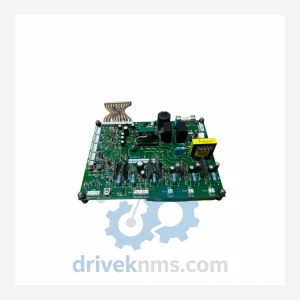
Yaskawa YPCT11065-1-3 Circuit Board – Obsolete Varispeed Series Spare Part
Yaskawa YPCT11065-1-3 Circuit Board – Obsolete Varispeed Series Spare Part When a circuit board like the YPCT11065-1-3 fails inside a…
Model: FS100 CSTR-SDBR90AAA CSTR-SDB1R6AAA
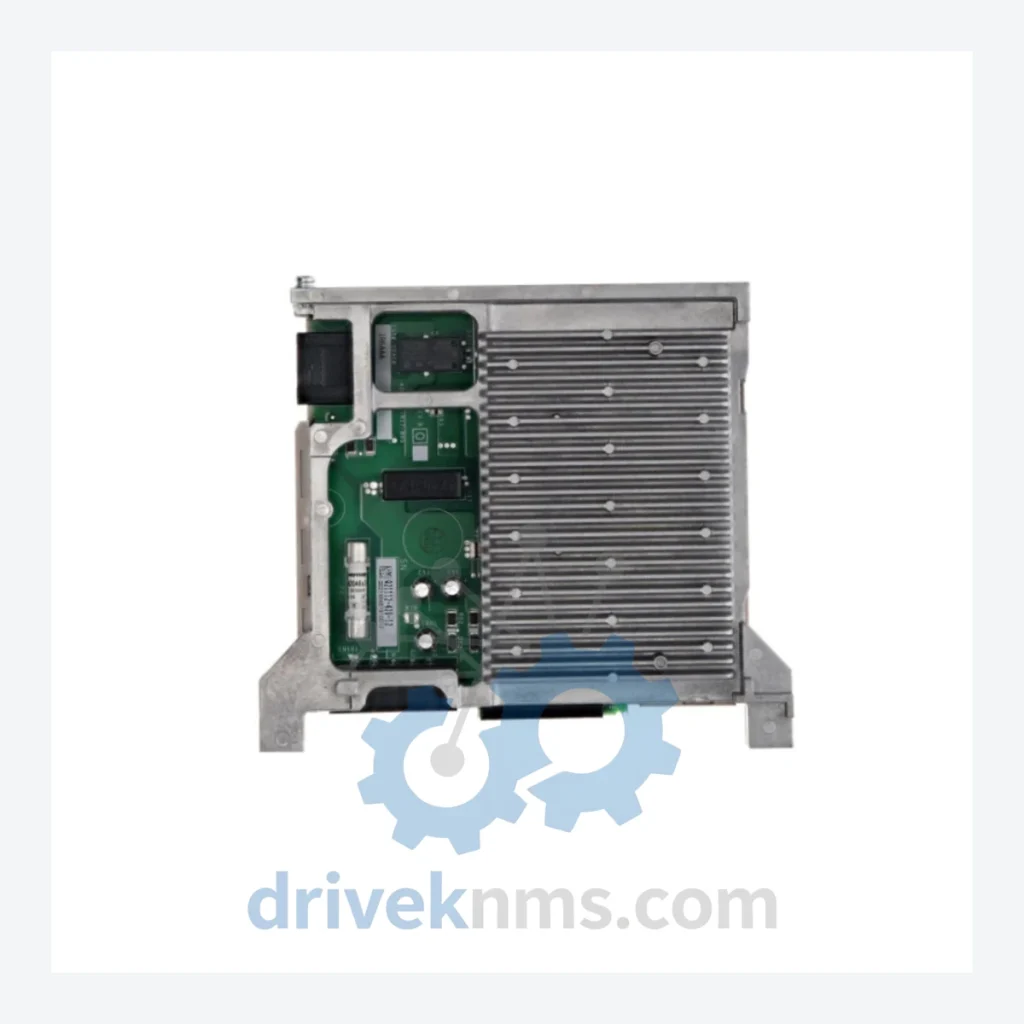
Product Overview
Commercial availability is handled through direct RFQ, model verification and export-oriented follow-up rather than public cart checkout.
Datasheet Preview
Use attached product manuals when available. If the manual is not public yet, request the full file directly through RFQ.
Commercial Path
Product pages on DRIVEKNMS are designed to verify model, brand and series first, then move the buyer into one clean quotation path.
Technical Dossier
When a servo amplifier module fails inside a Yaskawa FS100 robot controller, the production line does not pause politely. It stops. For facilities still operating FS100-based robotic cells — welding lines, material handling systems, assembly automation — the cost of an unplanned shutdown is measured in hours of lost throughput, emergency engineering fees, and in the worst case, a forced migration to the YRC1000 platform that carries six-figure integration costs. A single replacement module, sourced in time, eliminates that entire risk exposure.
DriveKNMS maintains verified stock of the CSTR-SDBR90AAA and CSTR-SDB1R6AAA servo amplifier boards for the Yaskawa FS100 controller. These are not substitutes or cross-referenced alternatives. They are the correct, model-specific components for this platform.
| Parameter | Detail |
|---|---|
| Manufacturer | Yaskawa Electric Corporation |
| Controller Platform | FS100 Robot Controller |
| Part Numbers | CSTR-SDBR90AAA / CSTR-SDB1R6AAA |
| Component Type | Servo Amplifier / Servopack Board |
| Country of Origin | Japan |
| Platform Status | Discontinued – superseded by YRC1000 series |
| Compatible Robot Series | Yaskawa Motoman robots paired with FS100 controller (e.g., MA, MH, HP, VA series) |
| Typical Application | Arc welding, material handling, assembly, spot welding automation cells |
Note: Electrical parameters specific to individual axis configurations are not published here to prevent misapplication. Contact our technical team to confirm compatibility with your robot model and axis count before ordering.
Yaskawa officially discontinued the FS100 controller platform. The replacement, the YRC1000, is not a drop-in upgrade — it requires new teach pendants, updated robot harnesses, revised safety wiring, and in many cases, full reprogramming of job files. For a single robotic cell, that migration project routinely costs USD $30,000–$80,000 when engineering time, downtime, and recommissioning are factored in. For a multi-robot line, the figure scales accordingly.
The CSTR-SDBR90AAA and CSTR-SDB1R6AAA servo amplifier boards are internal to the FS100 controller cabinet. They govern axis drive signals between the controller CPU and the robot's servo motors. A failed board produces axis alarms, erratic motion, or complete loss of robot operation. There is no software workaround. The board must be replaced.
Facilities that have invested in Yaskawa Motoman robotic infrastructure — and whose production processes are tuned around that equipment — have a clear financial interest in maintaining the FS100 platform for as long as the hardware can be kept operational. Sourcing verified spare amplifier boards is the lowest-cost path to that outcome. The alternative is a capital project that competes for budget, engineering resources, and production downtime windows that most facilities cannot easily schedule.
Practical asset extension strategy: Procurement teams managing aging FS100 installations should treat servo amplifier boards as consumable strategic assets. Holding two to three spare units per controller cabinet — particularly for high-cycle-rate robots — provides a buffer against lead time risk and eliminates single-point-of-failure exposure. The cost of that buffer is a fraction of one day of unplanned downtime. For facilities with five or more FS100 controllers, a centralized spare parts pool managed against actual failure history is a defensible maintenance investment that extends productive asset life by five to ten years beyond the platform's official end-of-support date.
Obsolete servo amplifier boards sourced from secondary markets carry real risk if they are not properly evaluated before installation. DriveKNMS applies a five-step inspection protocol to every FS100 servo amplifier board before it is offered for sale:
1. Electrolytic Capacitor Assessment — Capacitor aging is the primary failure mode in boards that have been stored or lightly used over extended periods. Each board is inspected for capacitor bulging, electrolyte leakage, and ESR deviation. Boards with degraded capacitors are not offered as serviceable stock.
2. Firmware Version Verification — FS100 servo amplifier boards carry embedded firmware. Version mismatches between the amplifier board and the controller CPU can produce compatibility faults. We verify firmware revision against known FS100 platform compatibility matrices before dispatch.
3. Connector and Pin Corrosion Inspection — Board connectors and edge pins are inspected under magnification for oxidation, corrosion, and mechanical damage. Affected contacts are cleaned or the board is rejected from serviceable inventory.
4. Functional Bench Test — Where test equipment permits, boards are powered and checked for basic operational response prior to packaging.
5. Packaging for Long-Term Storage — Boards are packaged in anti-static bags with desiccant and labeled with inspection date and condition grade. This supports traceability for facilities that hold boards as long-term spares.
The CSTR-SDBR90AAA and CSTR-SDB1R6AAA are direct replacement boards for the FS100 controller. Installation does not require controller reprogramming, job file modification, or changes to the robot's parameter set. The replacement procedure follows standard Yaskawa FS100 maintenance documentation.
This means: no engineering contractor fees for software reconfiguration, no production time lost to recommissioning, and no risk of parameter corruption during a rushed repair. The board is removed, the replacement is seated, and the system returns to its prior operational state. That is the practical value of a correct, model-specific spare part versus an improvised workaround or a platform migration forced by parts unavailability.
For maintenance engineers working under time pressure during a breakdown event, the availability of a verified spare board on-site is the difference between a two-hour repair and a two-week procurement crisis.
Q: What warranty applies to obsolete spare parts?
A: DriveKNMS provides a 90-day warranty against defects identified under normal operating conditions. Given the discontinued status of the FS100 platform, we recommend testing replacement boards in a controlled environment before committing them to production service.
Q: Are these new or refurbished units?
A: Stock condition varies. Each listing specifies whether the unit is new-in-box (NIB), new-surplus (unused, removed from original packaging), or professionally refurbished (inspected and tested per our five-step protocol). Contact us to confirm the condition of current available stock before ordering.
Q: How should we manage long-term spare parts for an FS100 installation?
A: For facilities with active FS100 robots, we recommend identifying the three to five highest-risk board assemblies in each controller cabinet — servo amplifiers, power supply boards, and CPU modules — and holding at least one spare of each. As global secondary market stock of FS100 components continues to deplete, sourcing windows will narrow. Procurement decisions made now carry significantly lower cost and risk than emergency sourcing during a breakdown event two or three years from now.
Q: Can you source other FS100 controller components?
A: Yes. DriveKNMS specializes in obsolete and hard-to-find industrial automation components. Contact us with your full parts list for availability and lead time.
© 2026 DriveKNMS. All trademarks belong to their respective owners. Specifications are for reference only and subject to change without notice. Verify all parameters against official documentation before installation.
Related Paths
Yaskawa YPCT11065-1-3 Circuit Board – Obsolete Varispeed Series Spare Part When a circuit board like the YPCT11065-1-3 fails inside a…
Yaskawa YPHT11014-1A Circuit Board – Obsolete Drive Control Spare Part When a Yaskawa YPHT11014-1A circuit board fails in a production…
Yaskawa SGMG Series: Comprehensive Module Range and Technical Overview The Yaskawa SGMG series represents one of the most widely deployed…