
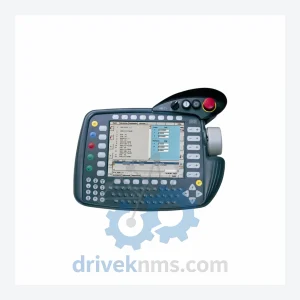
KUKA KCP2 VKCP2 Robot Control Panel – KCP Series
KUKA KCP2 VKCP2 Robot Control Panel: Sourcing Strategy & Asset Return Value in a Constrained Global Supply Chain The KUKA…
Model: KR6 00-204-935 00-204-551
Product Overview
Commercial availability is handled through direct RFQ, model verification and export-oriented follow-up rather than public cart checkout.
Datasheet Preview
Use attached product manuals when available. If the manual is not public yet, request the full file directly through RFQ.
Commercial Path
Product pages on DRIVEKNMS are designed to verify model, brand and series first, then move the buyer into one clean quotation path.
Technical Dossier
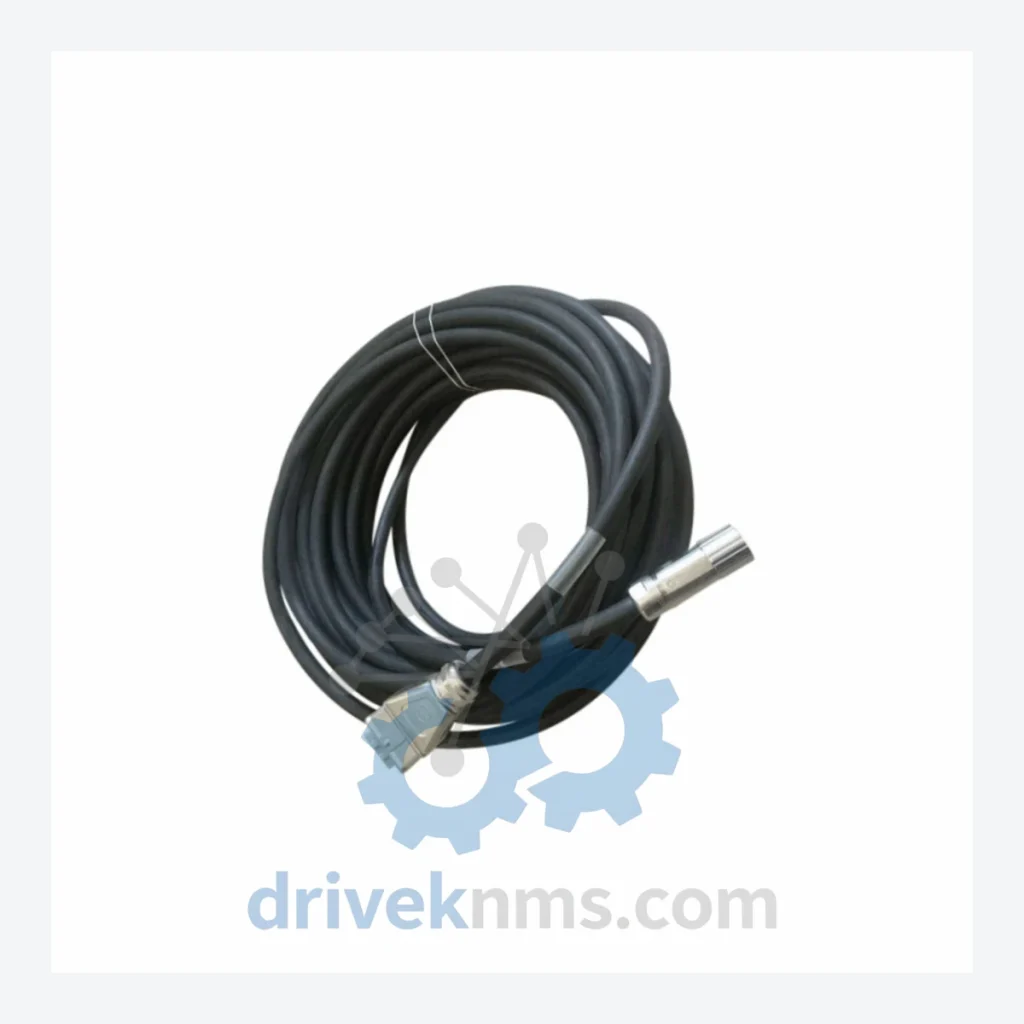
The KUKA KR6 series represents one of the most widely deployed compact robot platforms in global heavy industry. With a payload capacity of 6 kg and a reach of up to 1,611 mm (KR6 R1820), KR6 robots are installed across chemical processing plants, nuclear facility maintenance cells, petroleum refinery automation lines, and precision assembly operations worldwide. The interconnecting cable assemblies — including motor power cables, resolver/encoder signal cables, and data bus harnesses — are critical consumable components that directly affect robot uptime and motion accuracy. KR6 00-204-935 (motor power cable assembly) and KR6 00-204-551 (signal/resolver cable assembly) are among the highest-demand replacement parts for this platform.
The KUKA KR6 platform has evolved through several generations of mechanical and electrical architecture since its introduction. Early KR6 variants used analogue resolver-based feedback systems with dedicated shielded cable harnesses routed through the robot's hollow wrist and arm structure. Subsequent generations transitioned to digital encoder feedback (EtherCAT-based KSP drives), requiring revised cable pinouts and connector types — creating compatibility segmentation between pre-2010 and post-2012 controller pairings (KRC2 vs. KRC4). The KR6 R700 SIXX and KR6 R900 SIXX variants introduced a further revised cable routing architecture with integrated dress packages, making direct cable substitution between generations non-trivial without cross-referencing the exact robot serial number and controller firmware version. Sourcing the correct cable assembly requires matching the robot generation, axis number, and cable length variant.
The following SKUs represent the verified cable and interconnect component range for the KUKA KR6 series, organized by functional category:
Motor Power Cables (Axis Drive)
Resolver / Encoder Signal Cables
Data Bus & Communication Harnesses
Peripheral & Dress Package Components
The KUKA KR6 series, particularly variants paired with the KRC2 controller, has entered the mature/end-of-life phase of its product lifecycle. KUKA AG has progressively reduced factory stock availability for KRC2-era cable assemblies. DriveKNMS maintains a dedicated inventory buffer for KR6 cable assemblies sourced through authorized secondary market channels, including tested pull-out units from decommissioned robot cells and new-old-stock (NOS) from verified distributor liquidations. For operators running KR6 robots in long-term production environments — particularly in nuclear maintenance, offshore platform automation, or legacy chemical plant lines where robot replacement is not operationally feasible — DriveKNMS provides lifecycle extension support including cross-reference verification, cable re-termination services, and multi-year supply agreements. All sourced parts are matched to the customer's robot serial number and controller version before dispatch.
KUKA KR6 cable assemblies present specific quality verification challenges due to their multi-conductor shielded construction, high-flex cycle requirements, and precision connector terminations. DriveKNMS applies the following test protocol to all KR6 cable stock prior to shipment: (1) Continuity and insulation resistance testing on all conductors per IEC 60228, with a minimum 500 VDC megohm test; (2) Shield integrity verification using a time-domain reflectometer (TDR) to detect any internal shield breaks not visible externally; (3) Connector pin-out verification against KUKA wiring diagrams for the specific cable part number and generation; (4) Flex fatigue inspection at the cable exit points and strain relief zones, which are the primary failure locations in high-cycle KR6 installations; (5) Dimensional verification of cable length and connector housing against OEM specifications. Each cable assembly is issued a test report traceable to its batch and inspection date.
Related Paths
KUKA KCP2 VKCP2 Robot Control Panel: Sourcing Strategy & Asset Return Value in a Constrained Global Supply Chain The KUKA…
KUKA KCP2 Series: Comprehensive Module Range and Technical Overview The KUKA KCP2 (KUKA Control Panel 2) teach pendant is the…
KUKA KVGA Series: Comprehensive Module Range and Technical Overview The KUKA KVGA (KRC Video Graphics Adapter) series is a family…