
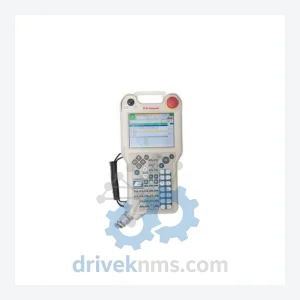
Kawasaki 50817-0066 Teach Pendant LCD Display Panel – Obsolete Robot Controller Spare Part
Kawasaki 50817-0066 Teach Pendant LCD Display Panel – Obsolete Robot Controller Spare Part When a teach pendant display fails on…
Model: 50817-1371
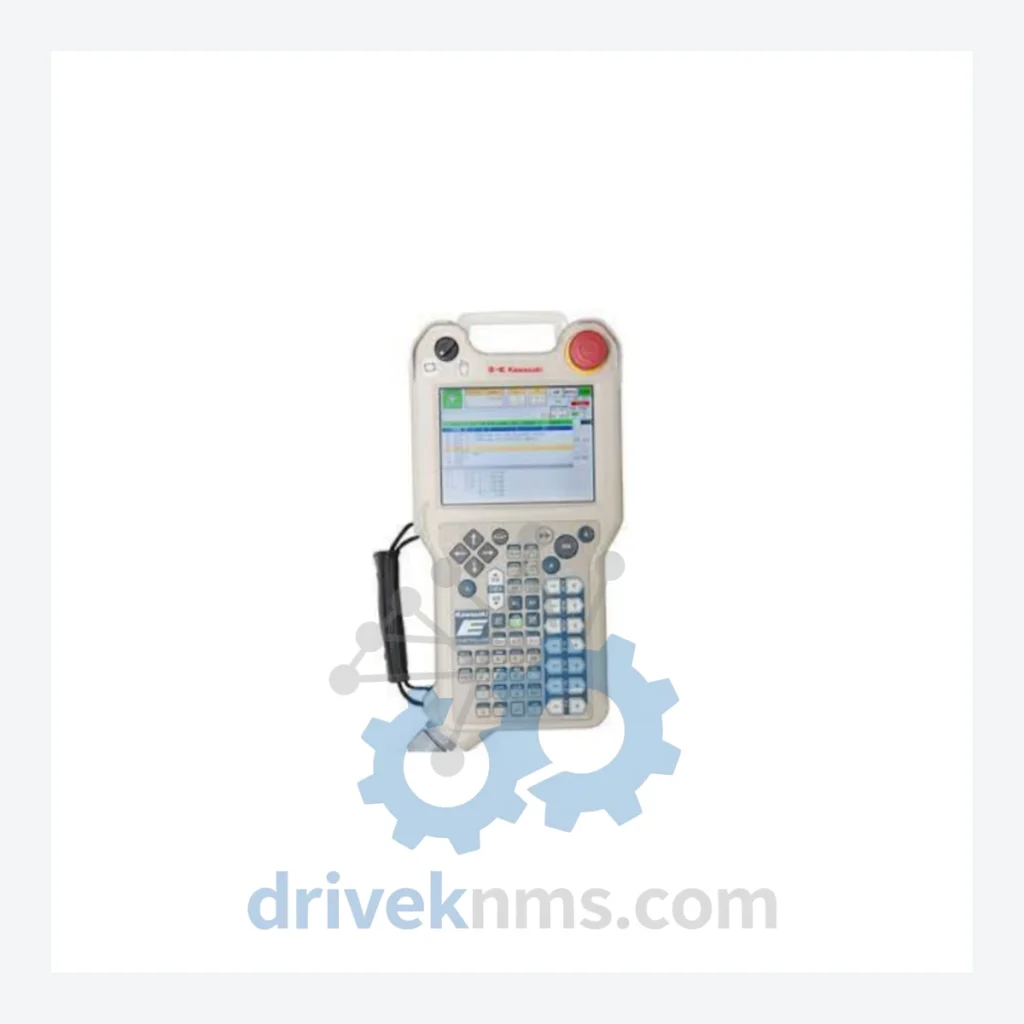
Product Overview
Commercial availability is handled through direct RFQ, model verification and export-oriented follow-up rather than public cart checkout.
Datasheet Preview
Use attached product manuals when available. If the manual is not public yet, request the full file directly through RFQ.
Commercial Path
Product pages on DRIVEKNMS are designed to verify model, brand and series first, then move the buyer into one clean quotation path.
Technical Dossier
When a switch keysheet overlay fails on aging Kawasaki equipment, the instinct is to treat it as a minor cosmetic issue. It is not. The keysheet overlay is the operator interface layer that protects the underlying switch matrix from contamination, mechanical wear, and misidentification of control functions. On legacy Kawasaki machinery still running production lines, a degraded or missing overlay leads to operator error, accelerated switch contact wear, and — in regulated environments — compliance failures that can trigger a full line shutdown.
Replacing the entire control panel or migrating to a modern HMI system to resolve a single worn overlay is a decision that carries six-figure engineering costs, weeks of downtime, and retraining overhead. The Kawasaki OEM part number 50817-1371 is the direct, drop-in solution that eliminates that cost entirely — if you can source it. DriveKNMS maintains verified stock of this discontinued overlay for facilities that cannot afford to gamble on system availability.
| Parameter | Detail |
|---|---|
| OEM Part Number | 50817-1371 |
| Manufacturer | Kawasaki |
| Component Type | Plastic Switch Keysheet Overlay |
| Country of Origin | Japan |
| Discontinuation Status | Obsolete / No Longer in OEM Production |
| Application | Kawasaki legacy equipment switch panels |
| Material | Engineered plastic / membrane overlay |
| Condition Available | New Old Stock (NOS) / Inspected Surplus |
Note: Electrical and dimensional parameters are confirmed only against verified units in stock. No speculative data is published. Contact us for unit-specific inspection reports.
Kawasaki industrial and mobile equipment built across the 1980s through early 2000s remains in active service at facilities worldwide — not because operators are unaware of newer alternatives, but because the capital cost of full system replacement is prohibitive and the operational risk of a mid-cycle platform migration is unacceptable. These machines were engineered for decades of service, and the control architecture reflects that durability.
The switch keysheet overlay (50817-1371) sits at the intersection of operator safety and machine longevity. It is not a wear item that was designed to be replaced frequently, which is precisely why OEM production was discontinued without a widely publicized successor part. Facilities that did not stockpile this component during the active production window now face a sourcing gap that standard distribution channels cannot fill.
The consequence of operating with a degraded overlay is not theoretical. Worn or delaminated overlays obscure switch labeling, increasing the probability of operator error during high-pressure production moments. In hydraulic or high-voltage control environments, that error margin is unacceptable. Sourcing a verified OEM replacement from DriveKNMS's existing inventory is the lowest-risk, lowest-cost path to restoring full operational integrity without touching the underlying control architecture.
For facilities managing fleets of legacy Kawasaki equipment, a structured spare parts reserve strategy — holding two to four units of critical interface components like the 50817-1371 — can extend the productive service life of each machine by five to ten years beyond what reactive maintenance alone would allow. The cost of four overlay units is a fraction of one day of unplanned downtime.
Every unit of the Kawasaki 50817-1371 processed through DriveKNMS undergoes a structured five-step inspection protocol before it is offered for sale. This protocol was developed specifically for obsolete OEM parts where manufacturing quality control records are no longer accessible and storage history is unknown.
Step 1 – Visual and Structural Inspection: Each overlay is examined under controlled lighting for delamination, surface cracking, print legibility, and edge integrity. Units with any cosmetic compromise that could affect operator readability are rejected.
Step 2 – Material Integrity Check: Plastic components sourced from long-term storage are assessed for brittleness, UV degradation, and adhesive layer condition. Overlays that show material fatigue are not offered for sale regardless of surface appearance.
Step 3 – Dimensional Verification: Mounting hole patterns and overall dimensions are verified against reference units to confirm drop-in fitment compatibility with the target switch panel assembly.
Step 4 – Pin and Contact Interface Inspection: Where the overlay interfaces with underlying switch contacts or membrane layers, pin alignment and contact surface condition are inspected for corrosion or mechanical deformation.
Step 5 – Firmware and Labeling Verification: Part number markings and revision codes are cross-referenced against OEM documentation to confirm the unit matches the 50817-1371 specification and has not been relabeled from an adjacent part number.
Drop-in replacement: The 50817-1371 is a direct OEM part. Installation requires no modification to the existing switch panel, no firmware changes, and no recalibration of connected control systems. Engineering time is limited to the physical swap.
No reprogramming required: Unlike HMI migration projects that require PLC logic review, operator retraining, and system validation, replacing this overlay restores full function without touching any software layer.
Avoids engineering reconstruction costs: A full control panel replacement or HMI upgrade on legacy Kawasaki equipment typically involves mechanical fabrication, electrical re-termination, and software integration work. Sourcing the correct OEM overlay eliminates that entire cost vector.
Preserves existing operator familiarity: Operators trained on the original control layout continue working without retraining. In shift-based production environments, this continuity has measurable safety and efficiency value.
Supports long-term asset protection strategy: For plant managers operating under capital expenditure constraints, maintaining a small reserve of critical interface components like this overlay is a documented strategy for deferring major equipment replacement cycles by five to ten years while maintaining full operational compliance.
Q: What warranty applies to an obsolete OEM part like the 50817-1371?
A: DriveKNMS provides a 90-day warranty against defects identified at the time of inspection. Given the discontinued status of this part, warranty terms are confirmed in writing at the time of purchase. We do not offer warranties against failures caused by installation errors or incompatible application.
Q: How do I confirm the unit is genuine OEM and not a counterfeit or substitute?
A: Each unit is cross-referenced against OEM part number documentation. We provide inspection records and, where available, original packaging or part markings. If you require a pre-shipment inspection report, request it at the time of inquiry.
Q: Should I purchase more than one unit?
A: For any facility operating more than one piece of Kawasaki equipment that uses this overlay, purchasing two to four units is a defensible asset protection decision. Once existing global surplus stock is exhausted, no further OEM supply will be available. Aftermarket alternatives, if they exist, carry fitment and material compatibility risks that OEM stock does not.
Q: What is the lead time?
A: Units confirmed in stock ship within 3–5 business days. Contact us to verify current availability before placing an order.
Q: Can DriveKNMS source this part if it is not currently in stock?
A: Yes. DriveKNMS operates an active global sourcing network for obsolete industrial and OEM parts. Submit your requirement and we will conduct a sourcing search with a response within 5 business days.
© 2026 DriveKNMS. Status: DRAFT
Related Paths
Kawasaki 50817-0066 Teach Pendant LCD Display Panel – Obsolete Robot Controller Spare Part When a teach pendant display fails on…
Kawasaki 50817-0128L05 Screen Display: Sourcing Strategy & Asset Return Value in a Constrained Supply Chain The Kawasaki 50817-0128L05 is an…
Kawasaki 50999 Series PLC Boards: Comprehensive Module Range and Technical Overview The Kawasaki 50999 Series represents a core family of…