
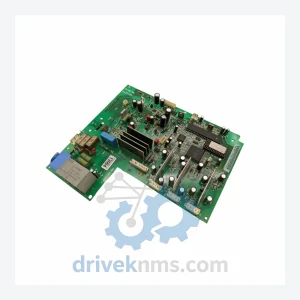
ABB SNAT-7120 Circuit Board – SNAZ7120J Series
ABB SNAT-7120 / SNAZ7120J Circuit Board: Sourcing Strategy & Asset Return Value in a Constrained Global Supply Chain The ABB…
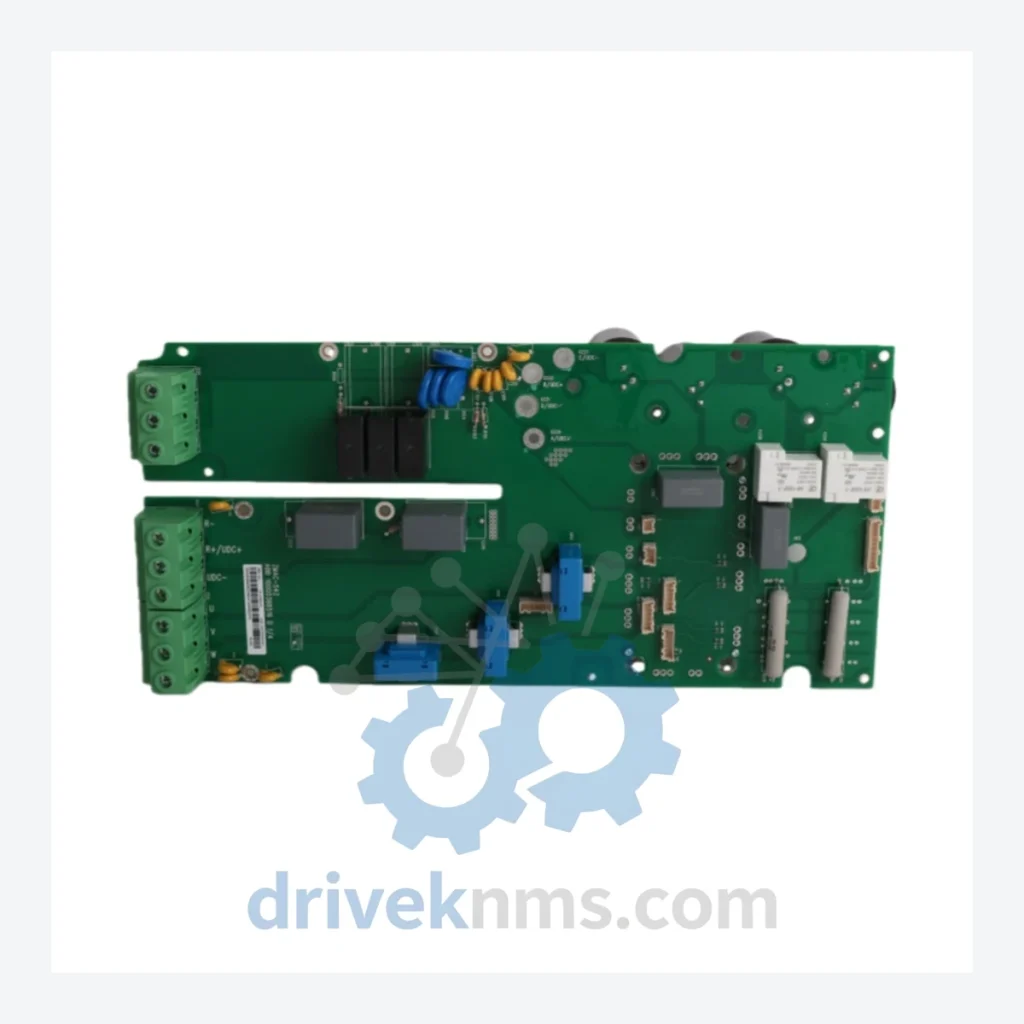
Model: ZMAC-541
Product Overview
Commercial availability is handled through direct RFQ, model verification and export-oriented follow-up rather than public cart checkout.
Datasheet Preview
Use attached product manuals when available. If the manual is not public yet, request the full file directly through RFQ.
Commercial Path
Product pages on DRIVEKNMS are designed to verify model, brand and series first, then move the buyer into one clean quotation path.
Technical Dossier
The ABB ZMAC series represents a critical family of drive power boards and control interface modules deployed across global heavy industry sectors, including petrochemical refineries, nuclear power auxiliary systems, offshore platforms, pulp and paper mills, and large-scale mining operations. These boards serve as the power conditioning and gate drive interface layer within ABB's DC drive and AC drive platforms, specifically within the DCS 400, DCS 500, DCS 600, and associated legacy drive families. Installed base figures across these industries are substantial: ABB DC drives utilizing ZMAC-series boards have been in continuous operation in some facilities for over two decades, making lifecycle parts availability a primary procurement concern for maintenance engineers and reliability teams worldwide.
The ZMAC series is not a standalone product line but a functional sub-family of ABB's broader drive control architecture. Each board within the series performs a defined role in the signal chain between the main control board, firing circuits, and power semiconductors. Failure of a single ZMAC board typically results in full drive shutdown, making rapid replacement availability a direct operational continuity issue.
The ZMAC designation was introduced by ABB as part of the modular board architecture standardization effort for its DC drive product lines in the late 1980s and early 1990s. Early ZMAC boards were designed for the DCS 400 and DCS 500 platforms, operating in environments with relatively limited diagnostic capability. These early-generation boards used through-hole component construction and were designed for manual repair at the board level.
Through the mid-1990s to early 2000s, ABB transitioned ZMAC-series boards to surface-mount technology (SMT) construction, improving thermal performance and reducing board footprint. This generation introduced enhanced gate pulse isolation and improved compatibility with IGBT-based power stages, reflecting the broader industry shift from SCR to IGBT switching in medium-voltage drives.
By the late 2000s, the DCS 600 platform and its associated ZMAC boards had reached design maturity. ABB's subsequent drive generations (ACS800, ACS880) introduced entirely new control architectures, rendering the ZMAC series functionally obsolete in new installations. However, the installed base of DCS 400/500/600 drives in continuous industrial operation means that ZMAC boards remain in active demand as maintenance spares. ABB's official support for many ZMAC variants has been discontinued or reduced to limited availability, creating a secondary market dependency for end users requiring long-term operational continuity.
Compatibility across ZMAC generations is not universal. Board substitution requires verification of firmware revision, hardware revision code, and drive software version. Incorrect substitution can result in asymmetric firing, overcurrent faults, or permanent damage to power semiconductors.
The following SKUs represent confirmed models within the ABB ZMAC series, categorized by primary function. Each entry reflects the board's role within the drive system architecture.
Drive Power & Gate Drive Boards
Control & Signal Interface Boards
Protection & Monitoring Boards
ABB has progressively reduced factory support for ZMAC-series boards as the DCS 400, DCS 500, and DCS 600 drive platforms have moved through end-of-life and post-end-of-life phases. For many specific ZMAC variants, ABB no longer offers new manufacture, and lead times for any remaining factory stock are unpredictable and often measured in months.
DriveKNMS maintains a dedicated inventory program for ABB ZMAC series boards, sourced through controlled channels including decommissioned drive systems, authorized surplus liquidations, and long-term storage stock from original equipment manufacturers. All ZMAC boards in DriveKNMS inventory are cataloged by part number, hardware revision, and condition grade prior to listing.
For end users operating DCS 400/500/600 drives in facilities where drive replacement is not operationally or economically feasible in the near term, DriveKNMS provides lifecycle extension support including: identification of functional equivalents across ZMAC hardware revisions, cross-reference to compatible replacement boards where direct substitution is validated, and priority reservation programs for facilities requiring guaranteed spare availability over multi-year maintenance cycles.
Procurement teams are advised to submit complete drive nameplate data (drive type, software version, hardware revision) alongside the ZMAC part number when requesting availability confirmation, as board compatibility is revision-dependent.
ABB ZMAC boards present specific testing challenges due to their role as the interface between low-voltage control electronics and high-voltage power circuits. DriveKNMS applies a structured test protocol to all ZMAC boards prior to dispatch.
Each board undergoes visual inspection for component-level damage, solder joint integrity, and evidence of thermal stress or arc damage. Boards with evidence of prior repair are flagged and subjected to extended functional testing. Power supply boards (ZMAC-541 through ZMAC-548) are tested under load conditions using calibrated DC electronic loads to verify output voltage regulation, ripple, and current limiting behavior across the specified output range.
Gate drive boards are tested using a dedicated firing circuit simulator that replicates the pulse pattern generated by the ABB main control board, verifying pulse width, isolation integrity between gate channels, and response to fault inhibit signals. Isolation resistance between gate outputs and board ground is measured at 500 VDC using a calibrated insulation resistance tester, with acceptance criteria set to ABB factory specification minimums.
I/O and communication interface boards are tested using protocol-specific test fixtures that verify signal conditioning accuracy, digital I/O threshold levels, and communication protocol compliance. All test results are recorded and retained for traceability. Boards that do not meet specification are either returned for component-level repair or classified as non-serviceable and removed from inventory.
Related Paths
ABB SNAT-7120 / SNAZ7120J Circuit Board: Sourcing Strategy & Asset Return Value in a Constrained Global Supply Chain The ABB…
ABB AC500 Series: Comprehensive Module Range and Technical Overview The ABB AC500 is a scalable modular PLC platform deployed across…
ABB SCDCS-CON-4 Control Board – Obsolete DCS Spare Part When a single control board fails in a legacy distributed control…