
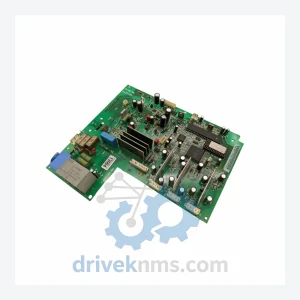
ABB SNAT-7120 Circuit Board – SNAZ7120J Series
ABB SNAT-7120 / SNAZ7120J Circuit Board: Sourcing Strategy & Asset Return Value in a Constrained Global Supply Chain The ABB…
Model: SMB3HAC7998-1/2/3/4/7
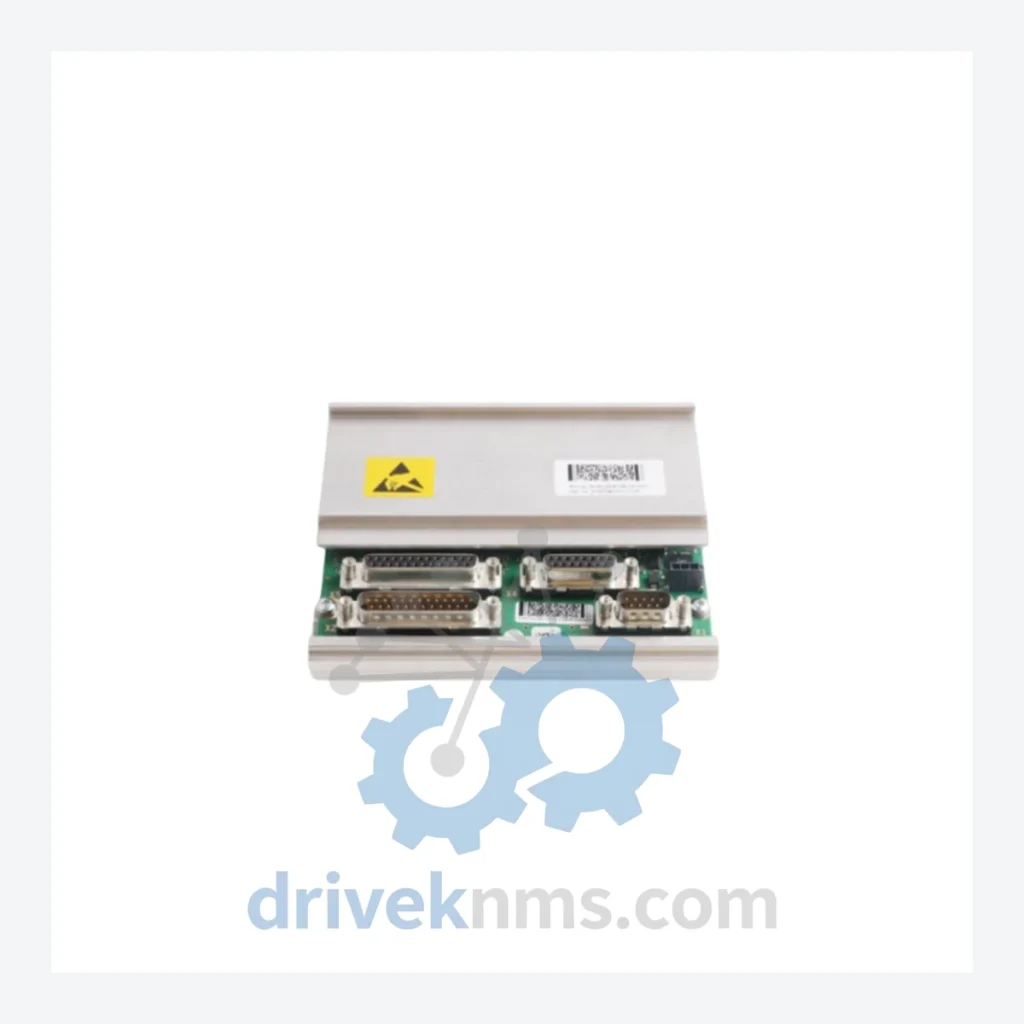
Product Overview
Commercial availability is handled through direct RFQ, model verification and export-oriented follow-up rather than public cart checkout.
Datasheet Preview
Use attached product manuals when available. If the manual is not public yet, request the full file directly through RFQ.
Commercial Path
Product pages on DRIVEKNMS are designed to verify model, brand and series first, then move the buyer into one clean quotation path.
Technical Dossier
When a servo motor on an ABB IRB robot arm fails, the clock starts immediately. Every hour of unplanned downtime on an automated production line carries a measurable cost — lost throughput, idle labor, and in many facilities, contractual penalties. For plants still operating ABB IRB-series robots built around the 3HAC motor platform, the SMB3HAC7998-1/2/3/4/7 is no longer available through standard distribution channels. A single failed axis motor, left unresolved, can force a decision no plant manager wants to make: a full robot replacement or a costly system migration that disrupts validated processes, retraining schedules, and production commitments. The capital expenditure for that path routinely runs into the hundreds of thousands of dollars — before engineering and integration costs are counted. DriveKNMS holds verified stock of the SMB3HAC7998-1/2/3/4/7. This is not a catalog listing. This is a physical unit available for immediate dispatch.
| Parameter | Detail |
|---|---|
| Part Number | SMB3HAC7998-1 / SMB3HAC7998-2 / SMB3HAC7998-3 / SMB3HAC7998-4 / SMB3HAC7998-7 |
| Manufacturer | ABB Robotics |
| Component Type | Servo Motor with Pinion |
| Series | ABB IRB Robot Series (3HAC Platform) |
| Country of Origin | Sweden |
| Discontinuation Status | Obsolete – No longer manufactured or distributed through standard ABB channels |
| Typical Application | ABB IRB industrial robot axis drive |
Note: Electrical parameters (voltage, rated torque, encoder resolution) vary by sub-variant suffix. Confirmed specifications are provided upon request based on your specific suffix requirement. No parameters are stated here that cannot be verified against ABB documentation.
ABB's IRB robot platform, built on the 3HAC component architecture, represents one of the most widely deployed industrial robot families in automotive, electronics, and general manufacturing. Many of these systems were installed in the 1990s and 2000s and remain in active production service today — not because replacement has been overlooked, but because the cost and disruption of migration cannot be justified against a robot that still performs its function when maintained correctly.
The SMB3HAC7998 motor series is the axis drive at the heart of these robots. When it fails, the robot stops. The axis cannot be bypassed, and no modern substitute drops in without controller-level reconfiguration. For facilities running ABB S4, S4C, or IRC5 controllers paired with older IRB mechanical units, sourcing this exact part number is the only path to restoring operation without a system overhaul.
The strategic reality for plant management is straightforward: a single verified spare unit held in maintenance inventory eliminates the risk of an extended outage caused by a part that cannot be sourced on short notice. The cost of one spare motor is a fraction of one day of unplanned downtime on a production line. Facilities that have extended the service life of their IRB robots by 5 to 10 years beyond the manufacturer's support window have done so through disciplined spare parts management — not through expensive system upgrades. The approach is not complicated: identify the highest-failure-risk components on each robot axis, secure verified stock before failure occurs, and document the replacement procedure so that maintenance can execute without external support. The SMB3HAC7998-1/2/3/4/7 belongs on that list for any facility running affected IRB models.
Obsolete servo motors sourced outside the original manufacturer's supply chain carry real risk if not properly evaluated. DriveKNMS applies a 5-step inspection protocol to every unit before it is offered for sale:
Step 1 – Visual and Mechanical Inspection: Full external inspection for housing damage, shaft wear, and pinion condition. Units with physical damage to the gear interface are rejected.
Step 2 – Electrolytic Capacitor Assessment: Internal capacitors in servo drive electronics degrade over time regardless of storage conditions. Units are assessed for capacitor aging indicators; those showing ESR drift beyond acceptable limits are not offered as operational spares.
Step 3 – Firmware and Encoder Version Verification: Where accessible, encoder firmware version is confirmed against known compatible versions for the target controller platform. Version mismatches that would cause axis faults are flagged before dispatch.
Step 4 – Pin and Connector Corrosion Check: All electrical connectors are inspected under magnification for oxidation, pin deformation, and contact resistance issues. Corroded contacts are the leading cause of intermittent faults in stored servo components.
Step 5 – Functional Verification: Where test equipment permits, the motor is run under no-load conditions to confirm rotation, encoder signal integrity, and absence of abnormal noise or vibration.
Units that pass all five stages are offered as verified serviceable stock. Condition grade is disclosed at the time of quotation.
The SMB3HAC7998-1/2/3/4/7 is a direct mechanical and electrical replacement for the original factory-installed unit. There is no requirement to modify the robot controller configuration, re-teach the robot program, or engage ABB service engineering for the swap. Maintenance personnel familiar with ABB IRB axis motor replacement procedures can complete the installation using standard tooling.
This drop-in replacement characteristic is the core of its value in a legacy system maintenance strategy. Engineering reconfiguration for a robot axis motor replacement — if the original part is unavailable and a substitute must be adapted — can involve days of downtime, external engineering fees, and revalidation of the robot's working envelope. None of that applies when the correct part number is installed. The robot returns to its validated state. Production resumes.
For facilities managing multiple IRB robots of the same model, a single spare unit covers the entire fleet. The investment is made once; the protection it provides is continuous.
What warranty applies to an obsolete spare part?
DriveKNMS provides a 90-day warranty against defects identified through our inspection process. Given the obsolete status of this component, we recommend customers treat the purchased unit as a working spare and source a second unit for long-term inventory if the robot is critical to production.
How do I confirm this is a genuine ABB unit and not a counterfeit?
All units are inspected for OEM markings, part number labeling, and construction consistency with known genuine ABB components. Documentation of the unit's provenance is provided where available. We do not sell units that cannot be verified as genuine ABB manufacture.
Should I buy more than one unit?
For any robot that runs a critical production process, yes. The SMB3HAC7998 series is no longer manufactured. Once current global surplus stock is exhausted, no further supply will exist. Facilities that have experienced a second motor failure after depleting their single spare understand this cost directly. If you operate more than two IRB robots using this motor, holding two units in inventory is a defensible maintenance decision.
Can you source specific sub-variants (e.g., SMB3HAC7998-3 only)?
Contact us with your specific suffix requirement. Stock availability varies by sub-variant. We will confirm availability and condition before any commitment is made.
Related Paths
ABB SNAT-7120 / SNAZ7120J Circuit Board: Sourcing Strategy & Asset Return Value in a Constrained Global Supply Chain The ABB…
ABB AC500 Series: Comprehensive Module Range and Technical Overview The ABB AC500 is a scalable modular PLC platform deployed across…
ABB SCDCS-CON-4 Control Board – Obsolete DCS Spare Part When a single control board fails in a legacy distributed control…