
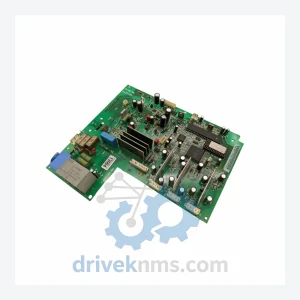
ABB SNAT-7120 Circuit Board – SNAZ7120J Series
ABB SNAT-7120 / SNAZ7120J Circuit Board: Sourcing Strategy & Asset Return Value in a Constrained Global Supply Chain The ABB…
Model: IRB66403HAC17484-10
Product Overview
Commercial availability is handled through direct RFQ, model verification and export-oriented follow-up rather than public cart checkout.
Datasheet Preview
Use attached product manuals when available. If the manual is not public yet, request the full file directly through RFQ.
Commercial Path
Product pages on DRIVEKNMS are designed to verify model, brand and series first, then move the buyer into one clean quotation path.
Technical Dossier
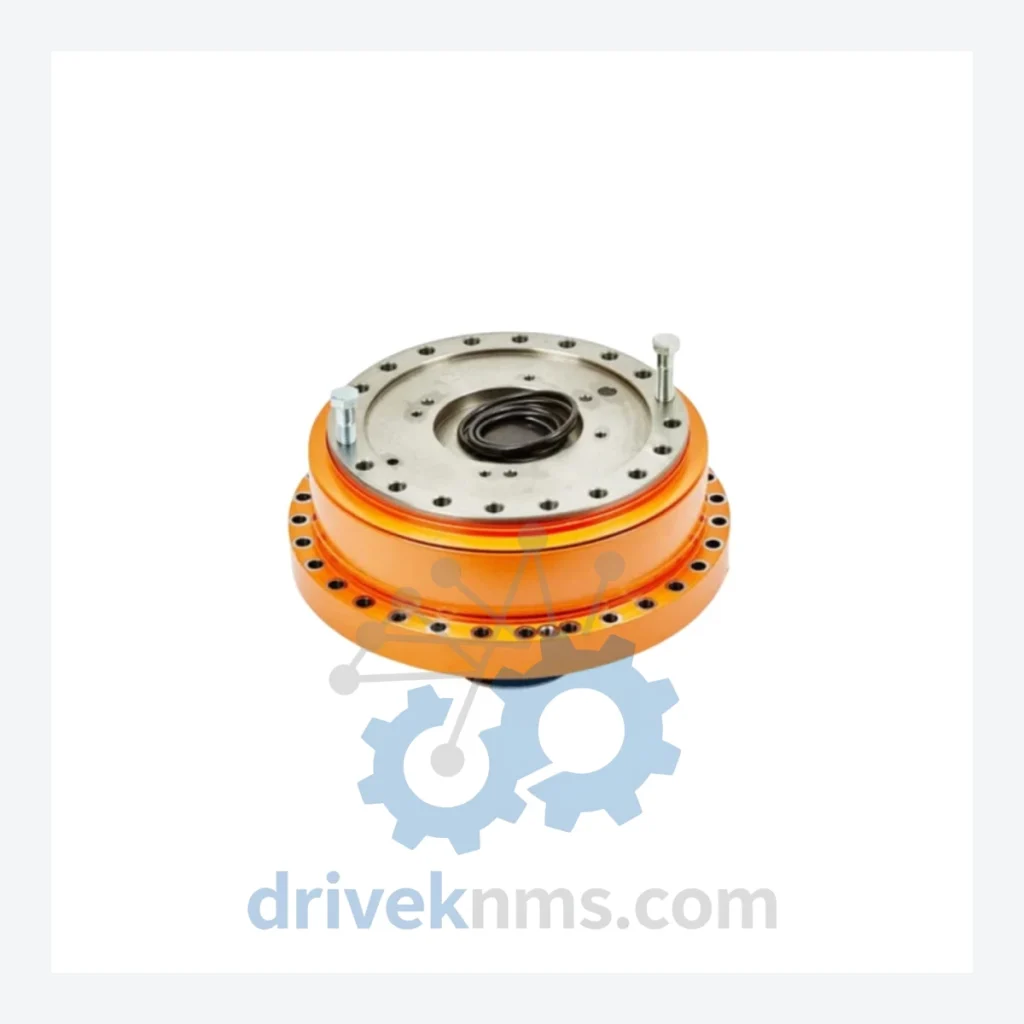
When the rotational AC motor on an ABB IRB6640 robot fails and the OEM has discontinued the part, the operational math becomes brutal. A single axis motor failure grounds the entire robot cell. Replacing the IRB6640 with a current-generation robot — including mechanical integration, end-of-arm tooling re-engineering, PLC reprogramming, and production downtime — routinely exceeds USD $300,000 to $800,000 per cell. The 3HAC17484-10 is the direct-fit motor for this platform. DriveKNMS holds verified physical stock of this discontinued component. Securing one unit now is not a maintenance decision; it is an asset protection decision.
| Part Number | 3HAC17484-10 |
|---|---|
| OEM Reference | IRB66403HAC17484-10 |
| Description | Rotational AC Servo Motor |
| Compatible Robot Platform | ABB IRB6640 (all payload variants) |
| Axis Application | Axis 1 / Axis 2 (verify against robot BOM before ordering) |
| Country of Origin | Sweden |
| OEM Discontinuation Status | Discontinued – no longer available through ABB authorized distribution channels |
| Condition Available | New Old Stock (NOS) / Professionally Refurbished |
Note: Electrical parameters such as rated voltage, rated current, encoder resolution, and torque ratings are not published here to prevent specification mismatch. Please contact our technical team with your robot serial number and axis configuration for verified parameter confirmation before purchase.
The ABB IRB6640 entered widespread deployment in automotive body-in-white, heavy material handling, and foundry automation from the mid-2000s onward. Thousands of these robots remain in active production globally. ABB's standard product lifecycle policy means that spare parts support for legacy platforms is progressively withdrawn — first from active production, then from authorized distribution, and finally from ABB's own service inventory.
The 3HAC17484-10 motor is not interchangeable with motors from current IRB6700 or IRB6790 platforms without mechanical and software modification. Facilities that attempt cross-generation substitution face axis calibration failures, SafeMove parameter conflicts, and potential warranty voidance on other robot components. The only zero-risk path is a direct part-number replacement.
For plant engineering teams managing IRB6640 fleets beyond their original design life, the strategic question is not whether a motor will fail — it is whether a replacement will be available when it does. Lead times for sourced obsolete motors from the open market average 8–16 weeks. Production cannot wait 8–16 weeks. Holding a verified spare on-site reduces mean time to repair (MTTR) from weeks to hours.
Factory management teams facing capital budget pressure and system retirement timelines have a documented alternative to full robot replacement: structured legacy asset extension. The following approach has been applied across automotive, aerospace, and heavy industry facilities to defer multi-million dollar robot fleet upgrades by a measurable 5–10 years.
1. Condition-Based Motor Monitoring: Install vibration and temperature sensors on all IRB6640 axis motors. Establish baseline signatures during normal operation. Deviations of more than 15% in vibration amplitude or sustained temperature increases above rated operating range are early indicators of bearing wear or winding degradation — both addressable before catastrophic failure if caught early.
2. Critical Spare Inventory Mapping: Identify the top 5–8 failure-prone components across your IRB6640 fleet by reviewing historical maintenance records. Motors, brake assemblies, and encoder units account for the majority of unplanned downtime events. Holding one unit of each per 10 robots in service is a defensible inventory investment against the cost of a single unplanned shutdown.
3. Firmware and Parameter Archiving: Before any motor replacement, archive the robot's current IRC5 controller parameters, SafeMove configuration, and axis calibration data. This eliminates the risk of configuration loss during maintenance and reduces recommissioning time from days to under two hours.
4. Scheduled Overhaul Cycles: Implement 18,000-hour or 3-year motor inspection intervals regardless of apparent condition. Proactive bearing replacement and encoder cleaning at these intervals costs a fraction of an emergency replacement and eliminates the parts-availability risk entirely.
5. Supplier Pre-Qualification for Obsolete Parts: Establish a verified supply relationship with a specialist obsolete parts distributor before you need the part. Qualification after a failure event, under production pressure, leads to procurement errors. DriveKNMS maintains documented stock of IRB6640 components and can provide traceability documentation on request.
Every 3HAC17484-10 unit processed by DriveKNMS passes a structured 5-step quality protocol before it is offered for sale. This process is designed specifically for the failure modes common to motors that have been in storage or removed from service.
Step 1 – Electrolytic Capacitor Assessment: Internal drive-side capacitors are inspected for ESR drift and physical swelling. Capacitors showing degradation are replaced with rated equivalents before the unit is cleared.
Step 2 – Firmware Version Verification: Where applicable, encoder firmware and any embedded motor identification data are verified against known-good IRB6640 compatibility matrices.
Step 3 – Pin and Connector Corrosion Inspection: All motor connectors, feedback connectors, and brake connectors are inspected under magnification for oxidation, fretting corrosion, and mechanical damage. Affected contacts are treated or the connector assembly is replaced.
Step 4 – Insulation Resistance Test: Winding insulation resistance is measured to confirm no moisture ingress or winding breakdown has occurred during storage.
Step 5 – Functional Run Test: Where test bench infrastructure permits, the motor is run under no-load conditions to confirm rotation, encoder signal integrity, and brake engagement/release function.
Q: What warranty applies to a discontinued motor like the 3HAC17484-10?
A: DriveKNMS provides a 90-day functional warranty on all refurbished units and a 12-month warranty on verified New Old Stock units. Warranty covers failure under normal operating conditions and excludes damage from installation error or electrical overstress.
Q: How do I confirm the unit is new or professionally refurbished — not a field-pulled unknown?
A: Each unit ships with a DriveKNMS inspection report documenting the 5-step QA process, the condition classification (NOS or refurbished), and the technician sign-off. Traceability documentation is available on request for regulated industries.
Q: Should I buy more than one unit?
A: For facilities operating more than three IRB6640 robots, holding a minimum of two 3HAC17484-10 units on-site is a defensible risk management position. Open-market availability of this part is not guaranteed. Once current stock is depleted, sourcing timelines are unpredictable. Bulk pricing is available — contact us to discuss fleet-level spare strategies.
Q: Can this motor be used on IRB6640 variants with different payload ratings?
A: The 3HAC17484-10 is used across multiple IRB6640 payload configurations, but axis assignment varies by variant. Confirm your robot's serial number and axis configuration with our technical team before ordering to ensure correct application.
Related Paths
ABB SNAT-7120 / SNAZ7120J Circuit Board: Sourcing Strategy & Asset Return Value in a Constrained Global Supply Chain The ABB…
ABB AC500 Series: Comprehensive Module Range and Technical Overview The ABB AC500 is a scalable modular PLC platform deployed across…
ABB SCDCS-CON-4 Control Board – Obsolete DCS Spare Part When a single control board fails in a legacy distributed control…