
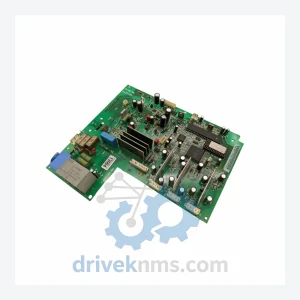
ABB SNAT-7120 Circuit Board – SNAZ7120J Series
ABB SNAT-7120 / SNAZ7120J Circuit Board: Sourcing Strategy & Asset Return Value in a Constrained Global Supply Chain The ABB…
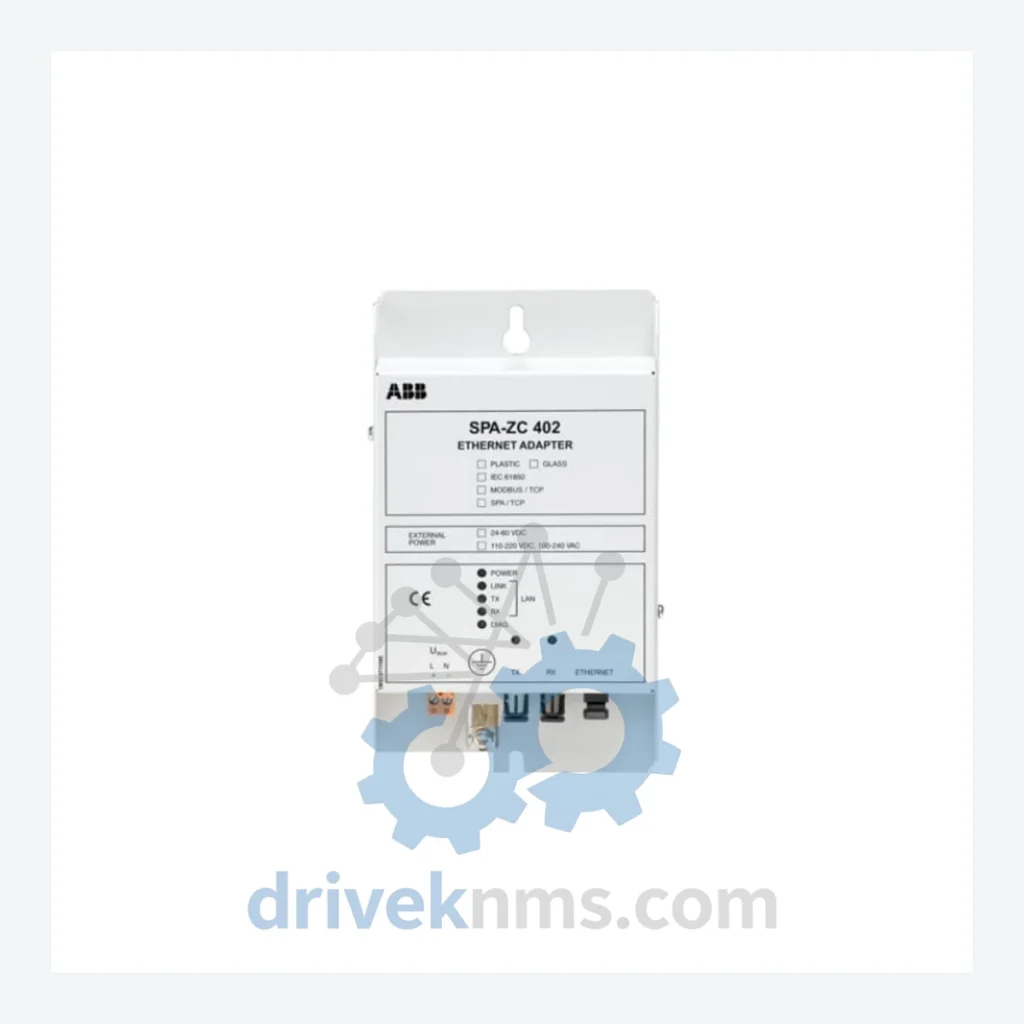
Model: SPA-ZC 402
Product Overview
Commercial availability is handled through direct RFQ, model verification and export-oriented follow-up rather than public cart checkout.
Datasheet Preview
Use attached product manuals when available. If the manual is not public yet, request the full file directly through RFQ.
Commercial Path
Product pages on DRIVEKNMS are designed to verify model, brand and series first, then move the buyer into one clean quotation path.
Technical Dossier
The ABB SPA-ZC series of communication adapters occupies a critical position in the global installed base of industrial automation infrastructure. Deployed extensively in chemical processing plants, oil refineries, nuclear power stations, and pulp & paper mills, these modules serve as the protocol bridge between ABB's proprietary SPA (Serial Port for Accessories) bus and higher-level supervisory systems including INSUM, MicroSCADA, and third-party DCS platforms. The SPA bus, operating at RS-485 physical layer with ABB's proprietary token-passing protocol, remains active in tens of thousands of legacy installations worldwide, making SPA-ZC adapter availability a persistent operational requirement for plant maintenance teams.
The SPA bus protocol was introduced by ABB (then ASEA) in the early 1980s as a low-cost, deterministic serial communication standard for protection relays and motor controllers. The SPA-ZC adapter family was developed to extend SPA bus connectivity into Ethernet and fieldbus environments as plant networks modernized through successive industrial eras.
Generation 1 (1980s–1990s): Early SPA-ZC variants provided RS-232 and RS-485 point-to-point connections, primarily interfacing REX, SPAJ, and SPAM relay families to local operator panels. Baud rates were fixed at 9600 bps. These units are now fully obsolete with no manufacturer support.
Generation 2 (1990s–2000s): The SPA-ZC 400 sub-family introduced optical fiber isolation and multi-drop bus topologies, supporting up to 32 slave devices per segment. The SPA-ZC 402 belongs to this generation, providing fiber-optic SPA bus conversion with galvanic isolation — a mandatory requirement in high-voltage switchgear environments.
Generation 3 (2000s–present): The SPA-ZC 500 and COM600 series introduced Ethernet-based SPA bus gateways, enabling IEC 61850 migration paths. However, the installed base of Generation 2 hardware remains substantial, and direct hardware replacement is not always feasible due to panel space, wiring, and relay firmware constraints.
Compatibility note: SPA-ZC modules are not interchangeable across sub-families without verifying optical wavelength (820 nm vs. 660 nm), connector type (ST vs. FSMA), and firmware revision of the connected relay population.
The following SKUs represent verified, commonly sourced modules within the ABB SPA-ZC and closely related SPA bus adapter families. Each entry reflects a distinct hardware configuration:
SPA-ZC 402: Fiber-optic SPA bus communication adapter, ST connector, 820 nm, galvanic isolation for switchgear bays.
SPA-ZC 400: Base SPA bus adapter, RS-485 electrical interface, DIN rail mount, 32-device multi-drop support.
SPA-ZC 401: SPA bus adapter with FSMA fiber connector, 660 nm wavelength, for older relay panel installations.
SPA-ZC 403: Enhanced SPA-ZC with extended temperature range (-40°C to +70°C), for outdoor switchgear kiosks.
SPA-ZC 404: SPA bus to RS-232 converter module, point-to-point topology, for legacy SCADA serial port connections.
SPA-ZC 500: Ethernet SPA bus gateway, 10/100 Mbps, supports up to 254 SPA bus slave addresses.
SPA-ZC 501: Dual-port Ethernet SPA bus gateway with redundant network support for ring topology.
SPA-ZC 502: SPA bus gateway with integrated web server and SNMP agent for network management integration.
SPA-ZC 100: Early-generation SPA bus adapter, RS-232 interface, compatible with SPAM 150 and REX relay families.
SPA-ZC 101: SPA bus adapter with optical isolation, single-channel, for SPAJ 140C and SPAJ 141C relays.
SPA-ZC 200: SPA bus to PROFIBUS DP gateway, supports GSD file integration with Siemens S7 and ABB AC500 PLCs.
SPA-ZC 201: SPA bus to Modbus RTU converter, for integration with third-party SCADA and energy management systems.
SPA-ZC 202: SPA bus to LON (LonWorks) gateway, used in building automation and district energy applications.
SPA-ZC 300: SPA bus repeater and segment extender, extends bus length beyond 1 km using fiber backbone.
SPA-ZC 301: SPA bus optical repeater with signal conditioning, for noisy industrial environments with high EMI.
SPA-ZC 600: IEC 61850 to SPA bus protocol converter, enables legacy relay integration into modern substation automation systems.
ABB has progressively discontinued the SPA-ZC 400 sub-family, with end-of-life notifications issued for most Generation 2 hardware. However, plant operators running ABB MicroSCADA Pro, INSUM, or legacy DCS configurations cannot migrate to IEC 61850 without significant relay replacement programs — projects that are capital-intensive and require protection coordination re-studies.
DriveKNMS maintains a dedicated inventory of SPA-ZC modules sourced from decommissioned switchgear panels, surplus OEM stock, and verified third-party refurbishers. Our procurement network covers ABB distribution channels across Europe, Southeast Asia, and the Middle East, enabling us to locate specific hardware revisions (e.g., SPA-ZC 402 Rev. D vs. Rev. F) that affect firmware compatibility with specific relay generations.
For end-users requiring long-term maintenance agreements, DriveKNMS offers consignment stocking arrangements for critical SPA-ZC variants, ensuring availability for emergency replacements within 24–72 hours of order confirmation.
SPA-ZC modules present specific test challenges due to their optical interface and proprietary protocol stack. Standard bench testing with generic RS-485 analyzers is insufficient to validate SPA bus communication integrity. DriveKNMS applies the following test protocol to all SPA-ZC units prior to dispatch:
Optical power measurement: Transmit power and receive sensitivity are verified against ABB factory specifications using calibrated optical power meters. For SPA-ZC 402, minimum transmit power is -15 dBm at 820 nm; receive sensitivity threshold is -28 dBm.
SPA bus protocol validation: Each unit is connected to a reference SPA bus master (ABB COM600 or equivalent) and cycled through full read/write command sequences across all 254 addressable slave positions. Response timing and frame integrity are logged.
Isolation voltage test: Galvanic isolation between the SPA bus optical interface and the RS-485/power supply side is verified at 2 kV AC for 1 minute, per IEC 60255-27 requirements applicable to protection relay auxiliary equipment.
Thermal cycling: Units are subjected to 0°C to +55°C thermal cycling over 4 hours to identify latent solder joint failures common in aged PCB assemblies.
Firmware revision identification: Hardware revision markings and firmware version strings are documented and disclosed to the buyer prior to shipment to prevent compatibility mismatches.
Related Paths
ABB SNAT-7120 / SNAZ7120J Circuit Board: Sourcing Strategy & Asset Return Value in a Constrained Global Supply Chain The ABB…
ABB AC500 Series: Comprehensive Module Range and Technical Overview The ABB AC500 is a scalable modular PLC platform deployed across…
ABB SCDCS-CON-4 Control Board – Obsolete DCS Spare Part When a single control board fails in a legacy distributed control…