
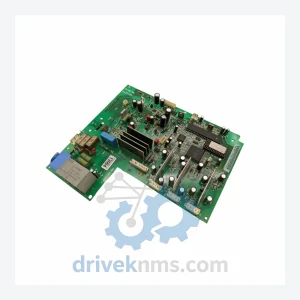
ABB SNAT-7120 Circuit Board – SNAZ7120J Series
ABB SNAT-7120 / SNAZ7120J Circuit Board: Sourcing Strategy & Asset Return Value in a Constrained Global Supply Chain The ABB…
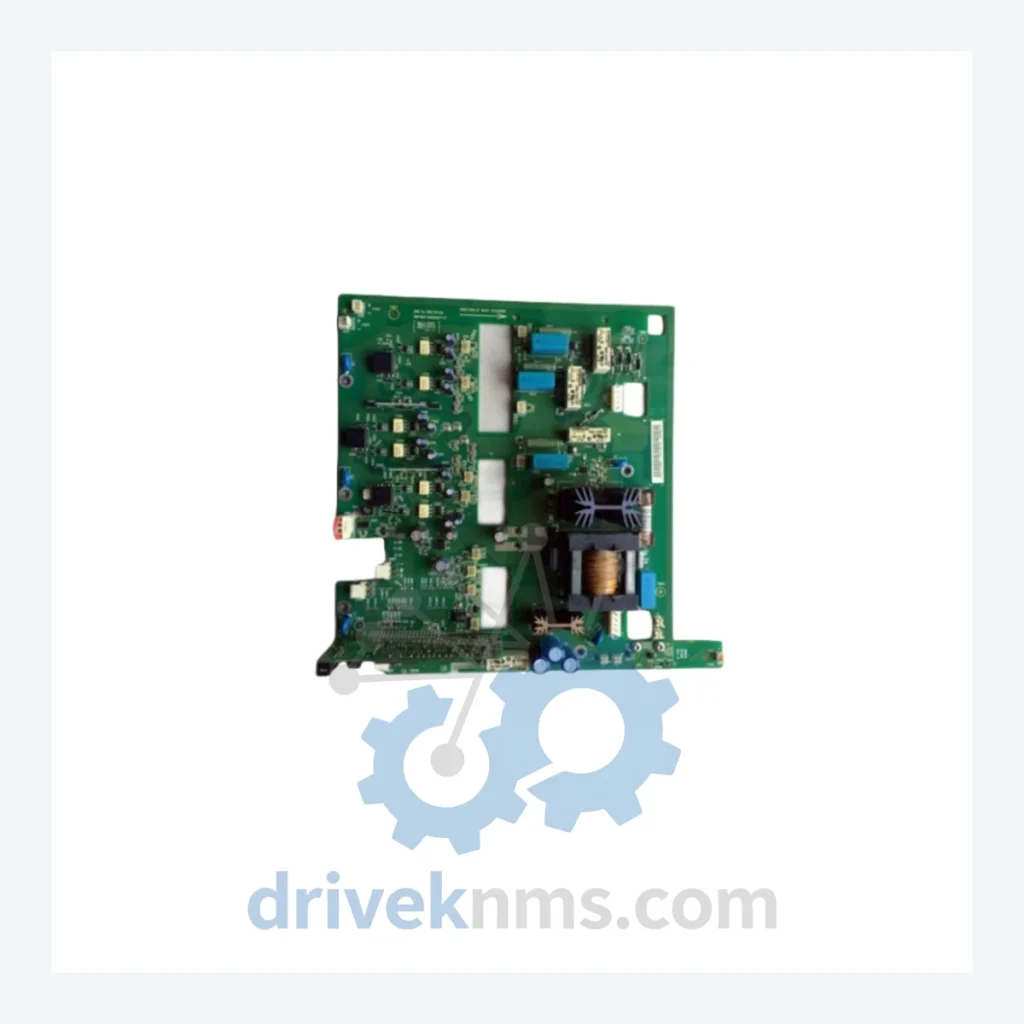
Model: RINT-6611C
Product Overview
Commercial availability is handled through direct RFQ, model verification and export-oriented follow-up rather than public cart checkout.
Datasheet Preview
Use attached product manuals when available. If the manual is not public yet, request the full file directly through RFQ.
Commercial Path
Product pages on DRIVEKNMS are designed to verify model, brand and series first, then move the buyer into one clean quotation path.
Technical Dossier
The ABB RINT series comprises gate driver and interface boards engineered for use within ABB's ACS and ACS800 family of industrial AC drives. These modules are deployed across high-demand sectors including petrochemical refining, nuclear auxiliary systems, pulp and paper processing, marine propulsion, and large-scale HVAC infrastructure. The RINT series occupies a critical position in the drive control architecture: it serves as the intermediary layer between the main control board (RMIO/RDCU) and the IGBT power stage, managing gate pulse distribution, fault feedback, and DC bus monitoring. Installed base spans hundreds of thousands of drive units globally, making RINT boards among the most frequently sourced spare parts in industrial drive maintenance programs.
The RINT series was introduced alongside ABB's ACS600 platform in the mid-1990s, designed to standardize gate driver communication across varying power ratings. Early variants such as the RINT-5511C and RINT-6611C used fiber-optic signal transmission to isolate the low-voltage control domain from the high-voltage IGBT switching stage — a design choice that remains standard in the series to this day.
With the transition to the ACS800 platform (early 2000s), ABB refined the RINT board layout to accommodate higher switching frequencies and improved short-circuit protection response times. Boards such as the RINT-5514C and RINT-6614C introduced enhanced fault latch logic and tighter propagation delay tolerances. The ACS880 generation (post-2012) migrated gate driver functions into integrated IGBT stack assemblies, effectively ending new RINT board development — however, the installed base of ACS600 and ACS800 drives ensures continued demand for RINT spares well into the 2030s.
Compatibility across RINT variants is frame-size and power-stage dependent. Cross-substitution between RINT-5xxx and RINT-6xxx sub-families is not supported without hardware verification. Firmware on the RMIO/RDCU control board must be validated against the specific RINT revision level to avoid gate timing mismatches.
The following SKUs represent verified, commonly stocked RINT series components used across ACS600 and ACS800 drive platforms. Each entry reflects a distinct hardware configuration tied to a specific frame size or power module topology.
RINT-5511C: Gate driver board for ACS600 R5 frame, single inverter module
RINT-5514C: Gate driver board for ACS600 R5 frame, enhanced fault detection revision
RINT-5521C: Interface board for ACS600 R5, dual fiber-optic output configuration
RINT-5524C: ACS600 R5 gate driver with updated DC bus undervoltage threshold
RINT-6611C: Gate driver board for ACS600/ACS800 R6 frame, standard IGBT interface
RINT-6614C: R6 frame gate driver with revised short-circuit blanking time
RINT-6621C: ACS800 R6 dual-module gate driver, parallel inverter support
RINT-6624C: R6 gate driver board, high-frequency switching variant
RINT-7611C: Gate driver for ACS800 R7 frame, single IGBT stack
RINT-7614C: R7 frame board with extended temperature operating range
RINT-7621C: ACS800 R7 dual-stack gate driver interface board
RINT-7624C: R7 high-power gate driver, parallel module topology
RINT-8611C: Gate driver board for ACS800 R8 frame, heavy industrial rating
RINT-8614C: R8 frame board with improved EMC shielding on fiber connectors
RINT-8621C: ACS800 R8 dual-module gate driver, high-current inverter stage
RINT-8624C: R8 gate driver, parallel IGBT stack configuration for high-power drives
ABB formally discontinued new production of the majority of RINT series boards following the phase-out of the ACS600 platform. ACS800 RINT variants entered end-of-life status progressively between 2018 and 2023. As a result, procurement through standard distribution channels is no longer reliable for most RINT part numbers.
DriveKNMS maintains a dedicated inventory of tested RINT boards sourced from decommissioned drive systems, authorized refurbishment programs, and verified surplus channels. Our stock covers both common variants (RINT-6611C, RINT-5511C) and low-volume frame-specific boards (RINT-8621C, RINT-7624C). For facilities operating legacy ACS600 or ACS800 drives with no planned platform migration, DriveKNMS provides lifecycle extension support including: multi-unit buffer stock agreements, cross-reference validation against drive serial numbers, and technical consultation on compatible substitute revisions where applicable.
RINT boards present specific test challenges due to their role as the interface between low-voltage logic and high-voltage switching. DriveKNMS applies a structured multi-stage verification protocol to all RINT units prior to dispatch:
Fiber-optic path integrity test: Each transmit/receive fiber port is verified for signal continuity and optical power level using calibrated test equipment. Degraded fiber connectors are replaced before board qualification.
Gate pulse output verification: Boards are bench-tested under simulated drive conditions to confirm correct gate signal timing, pulse width, and dead-time insertion across all output channels.
DC bus feedback circuit check: Undervoltage and overvoltage detection thresholds are measured and compared against ABB factory specifications for the specific RINT revision.
Fault latch and reset logic test: Short-circuit and overcurrent fault response is triggered under controlled conditions to verify correct latch behavior and reset acknowledgment via the control board interface.
Visual and component-level inspection: All boards undergo inspection for capacitor condition, solder joint integrity, and connector pin seating. Boards with signs of thermal stress or arc damage are rejected.
Test records are retained per unit and available upon request for quality-audited procurement programs.
Related Paths
ABB SNAT-7120 / SNAZ7120J Circuit Board: Sourcing Strategy & Asset Return Value in a Constrained Global Supply Chain The ABB…
ABB AC500 Series: Comprehensive Module Range and Technical Overview The ABB AC500 is a scalable modular PLC platform deployed across…
ABB SCDCS-CON-4 Control Board – Obsolete DCS Spare Part When a single control board fails in a legacy distributed control…