
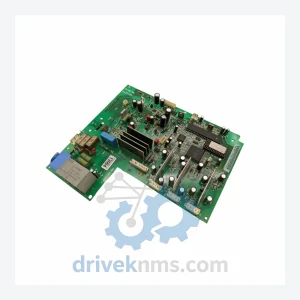
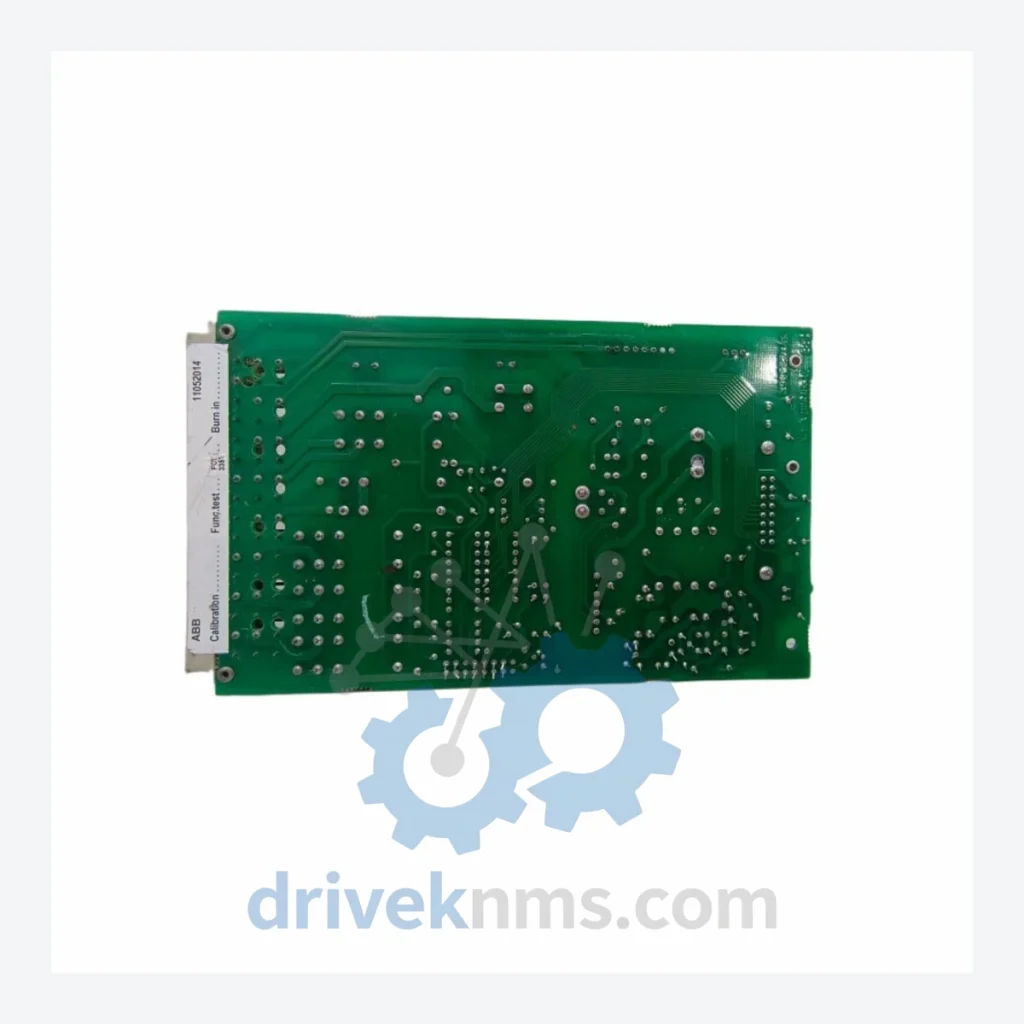
ABB SNAT-7120 Circuit Board – SNAZ7120J Series
ABB SNAT-7120 / SNAZ7120J Circuit Board: Sourcing Strategy & Asset Return Value in a Constrained Global Supply Chain The ABB…
Model: SPTKM01
Product Overview
Commercial availability is handled through direct RFQ, model verification and export-oriented follow-up rather than public cart checkout.
Datasheet Preview
Use attached product manuals when available. If the manual is not public yet, request the full file directly through RFQ.
Commercial Path
Product pages on DRIVEKNMS are designed to verify model, brand and series first, then move the buyer into one clean quotation path.
Technical Dossier
The ABB SPTKM series — Sequence of Events (SOE) Time Keeper Master modules — is a critical subsystem within ABB's Advant OCS / MOD 300 Distributed Control System (DCS) architecture. Deployed extensively across global heavy industry sectors including petrochemical refineries, nuclear power stations, offshore platforms, and large-scale chemical processing plants, the SPTKM series provides high-resolution time synchronization and event sequencing for safety-critical process control loops. Its 1 ms resolution timestamping capability makes it indispensable for post-incident analysis, regulatory compliance logging, and fault diagnostics in facilities where event sequence accuracy is a legal and operational requirement. The installed base of ABB Advant/MOD 300 systems worldwide — spanning facilities in Europe, the Middle East, Asia-Pacific, and the Americas — ensures sustained demand for SPTKM modules well beyond the series' original production lifecycle.
The SPTKM series was developed as part of ABB's Advant Controller 450 (AC450) and MOD 300 platform ecosystem, introduced in the late 1980s and refined through the 1990s. The architecture is built around a master-slave SOE topology: the SPTKM01 Time Keeper Master module acts as the central clock reference node, distributing synchronized time signals across the SOE network to subordinate recorder and input modules (SPTK series). Communication is conducted over ABB's proprietary Modulebus backplane, with the SPTKM01 accepting external GPS or IRIG-B time synchronization inputs to maintain UTC-traceable accuracy. Early revisions of the SPTKM architecture relied on crystal oscillator-based internal clocking with periodic external correction; later firmware revisions improved drift compensation algorithms. As ABB transitioned its DCS portfolio toward the System 800xA platform (introduced circa 2004), the SPTKM series entered a maintenance-only lifecycle. No direct plug-compatible replacement exists within 800xA; migration requires full SOE subsystem redesign. This positions the SPTKM01 and its associated modules as long-term spare parts requirements for any facility not yet migrated. Compatibility is confirmed with AC450, AC410, and MOD 300 controller backplanes running RCOM and Modulebus communication protocols.
The following SKUs represent the verified SPTKM and closely associated SOE subsystem modules within the ABB Advant / MOD 300 platform. Each module is classified by functional role:
SOE Time Keeper & Master Clock Modules
SOE Recorder & Slave Input Modules
Advant Modulebus Communication & Interface Modules
Power Supply Modules (SOE Subsystem Compatible)
Associated AC450 / MOD 300 Controller Modules
The SPTKM series was officially discontinued by ABB as part of the broader Advant OCS end-of-life program. ABB ceased new production of SPTKM01 and associated SOE modules, with factory support formally withdrawn. For operators of MOD 300 and AC450 systems who have not completed migration to System 800xA, this creates a critical spare parts dependency. DriveKNMS maintains a dedicated inventory program for obsolete ABB Advant modules, including the SPTKM01, SPTKM02, SPTRM01, SPTRM02, and associated Modulebus interface cards. All units are sourced from decommissioned plant inventories, verified OEM surplus channels, and controlled storage facilities. DriveKNMS provides: (1) unit-level availability confirmation within 24 hours of inquiry; (2) full traceability documentation including prior installation records where available; (3) long-term supply agreements for facilities requiring multi-year maintenance stock; (4) cross-reference support to identify functional equivalents where direct replacements are unavailable. For facilities operating under extended plant life programs — common in nuclear and refinery sectors — DriveKNMS offers consignment stock arrangements to guarantee module availability aligned with planned maintenance windows.
SPTKM series modules present specific quality control challenges due to their role as precision timing references and their dependence on Modulebus backplane communication integrity. DriveKNMS applies the following test protocol to all SPTKM and associated SOE modules prior to dispatch: (1) Visual and mechanical inspection: PCB examination for corrosion, capacitor degradation, connector pin integrity, and conformal coating condition — critical for modules sourced from high-humidity or offshore environments. (2) Power-on functional test: Module energized in a controlled AC450-compatible test rack; boot sequence, LED status indicators, and self-diagnostic outputs verified against ABB factory specifications. (3) Modulebus communication test: SPTKM01 units tested for correct master clock signal generation and Modulebus frame transmission using protocol-level monitoring equipment. (4) SOE synchronization accuracy test: Time output verified against a calibrated reference clock; timestamp resolution confirmed at ≤1 ms per ABB SPTKM01 datasheet specification. (5) IRIG-B input validation (where applicable): External time sync input tested for correct signal acceptance and clock correction response. (6) Burn-in cycle: Modules subjected to 48-hour powered operation under controlled thermal conditions to screen for latent component failures prior to shipment. All test records are retained and available to customers upon request.
Related Paths
ABB SNAT-7120 / SNAZ7120J Circuit Board: Sourcing Strategy & Asset Return Value in a Constrained Global Supply Chain The ABB…
ABB AC500 Series: Comprehensive Module Range and Technical Overview The ABB AC500 is a scalable modular PLC platform deployed across…
ABB SCDCS-CON-4 Control Board – Obsolete DCS Spare Part When a single control board fails in a legacy distributed control…