
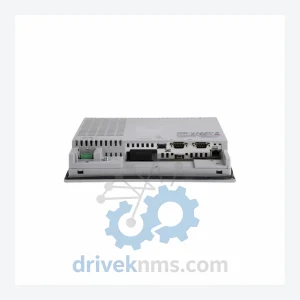
Pro-face PFXGP4501TAD HMI Touch Panel – Obsolete GP4000 Series Spare Part
Pro-face PFXGP4501TAD HMI Touch Panel – Obsolete GP4000 Series Spare Part When a Pro-face PFXGP4501TAD fails on the production floor,…
Model: GP2600-TC11
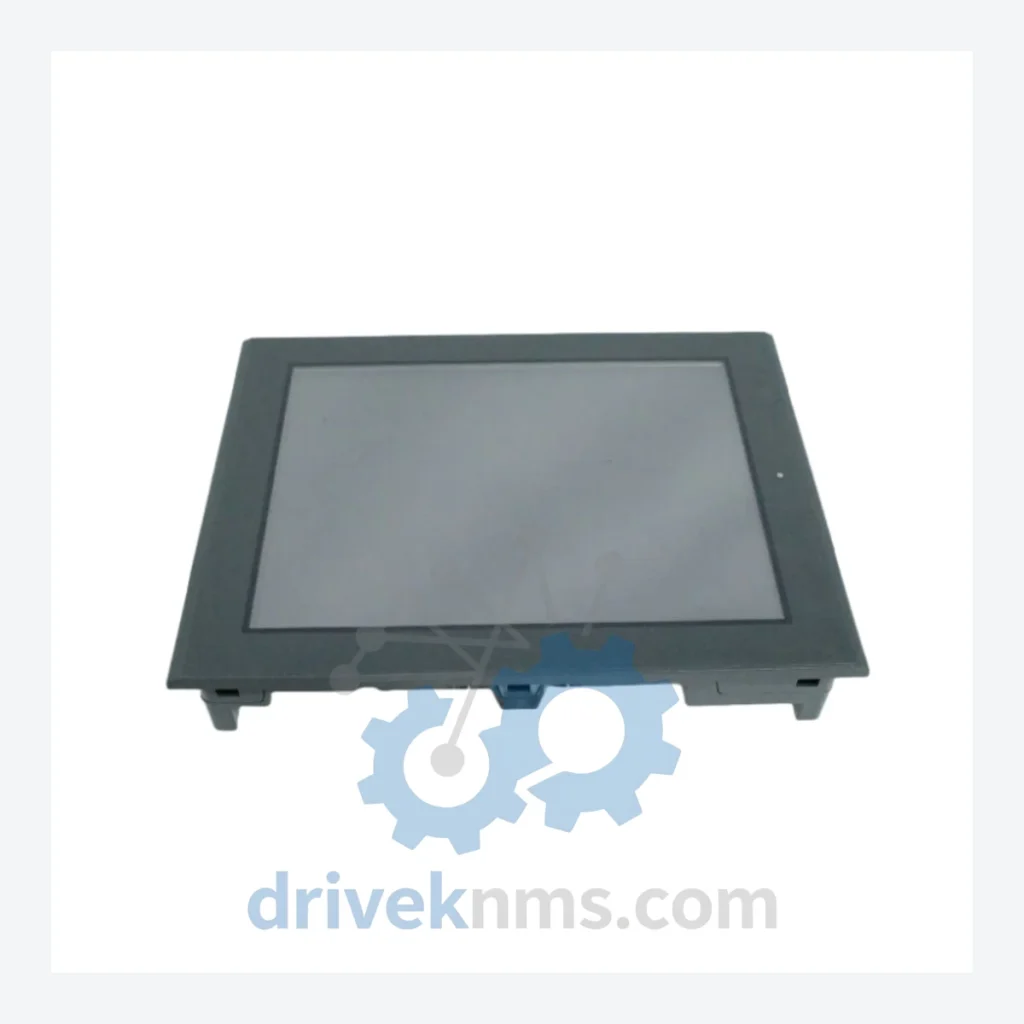
Product Overview
Commercial availability is handled through direct RFQ, model verification and export-oriented follow-up rather than public cart checkout.
Datasheet Preview
Use attached product manuals when available. If the manual is not public yet, request the full file directly through RFQ.
Commercial Path
Product pages on DRIVEKNMS are designed to verify model, brand and series first, then move the buyer into one clean quotation path.
Technical Dossier
When a GP2600-TC11 panel fails on an active production line, the consequences are not limited to a single screen replacement. This unit is the operator interface backbone of legacy automation architectures built around Pro-face GP2000 Series controllers, Mitsubishi MELSEC Q-series PLCs, Omron CJ/CS-series PLCs, and similar mid-2000s control platforms. A forced migration away from this HMI — driven solely by hardware unavailability — typically triggers a cascade: new HMI software licensing, PLC communication driver rewrites, operator retraining, and in many cases, a full SCADA reconfiguration. Conservative engineering estimates place that total project cost between USD $150,000 and $500,000 per line, excluding production downtime losses.
DriveKNMS maintains verified physical stock of the GP2600-TC11. For plant managers and maintenance engineers operating facilities where this panel is embedded in certified or validated processes, securing a spare unit now is a direct capital protection decision — not a procurement formality.
| Parameter | Detail |
|---|---|
| Part Number | GP2600-TC11 |
| Brand | Pro-face (Digital Electronics Corp / Schneider Electric) |
| Series | GP2000 Series |
| Display Type | TFT Color LCD Touch Panel |
| Display Size | 10.4 inch |
| Resolution | 640 × 480 (VGA) |
| Interface | RS-232C / RS-422 serial communication |
| Power Supply | 24 VDC |
| Country of Origin | Japan |
| Lifecycle Status | Discontinued / Obsolete – No longer manufactured |
| Compatible Systems | Mitsubishi MELSEC Q/A series, Omron CJ/CS series, Siemens S7-300/400, Modbus RTU devices, and other GP2000-era PLC platforms |
Note: Electrical parameters listed above are based on published Pro-face GP2000 Series documentation. Parameters not confirmed by official documentation are intentionally omitted to protect equipment safety.
The GP2600-TC11 was designed for an era when industrial HMIs were purpose-built for specific communication protocols and PLC ecosystems. Its RS-232C/RS-422 serial architecture, combined with GP-PRO/PBIII or GP-Pro EX project files, creates a tightly coupled system that cannot be replaced by a modern HMI without significant software re-engineering.
Facilities running validated or certified processes — pharmaceutical batch control, food-grade CIP systems, chemical dosing lines — face a compounded problem: replacing the HMI may trigger a full process revalidation under GMP, FDA 21 CFR Part 11, or equivalent frameworks. The regulatory and engineering cost of that revalidation frequently exceeds the cost of maintaining the original hardware for another decade.
The practical strategy adopted by experienced maintenance teams is straightforward: source verified spare units of the GP2600-TC11 now, while they remain available on the secondary market, and hold them as insurance against unplanned downtime. A single spare unit, properly stored, can extend the operational life of an entire production cell by 5 to 10 years — deferring a capital upgrade project that may cost 20 to 100 times more than the spare part itself.
DriveKNMS specializes in locating, verifying, and supplying exactly this category of hardware. Our inventory is sourced from decommissioned facilities, authorized surplus channels, and long-term storage partners — not from unverified grey-market sources.
Every GP2600-TC11 unit shipped by DriveKNMS passes a structured 5-step inspection protocol before dispatch:
Step 1 – Electrolytic Capacitor Assessment: Aging electrolytic capacitors are the primary failure mode in HMI panels of this generation. Each unit is inspected for capacitor bulging, leakage, and ESR deviation. Units with degraded capacitors are either reconditioned or rejected.
Step 2 – Firmware Version Verification: The installed firmware version is documented and cross-referenced against known compatibility matrices for GP-Pro EX and GP-PRO/PBIII project files. Firmware version mismatches that could cause communication failures are flagged before shipment.
Step 3 – Pin and Connector Corrosion Inspection: All serial communication connectors, power terminals, and expansion ports are inspected under magnification for oxidation, pin deformation, and contact resistance anomalies.
Step 4 – Display and Touch Calibration Test: The LCD backlight, touch panel linearity, and display uniformity are tested under powered conditions. Units with dead pixels exceeding manufacturer tolerance or touch drift are excluded from sale stock.
Step 5 – Functional Communication Test: Where test equipment permits, units are connected to a compatible PLC simulator to verify serial communication handshake and screen rendering integrity.
Units are classified as New (factory-sealed), Refurbished (reconditioned to functional specification), or Tested Used (verified operational, cosmetic wear acceptable). Condition is stated explicitly on every order confirmation.
Drop-in Replacement: The GP2600-TC11 is a direct hardware replacement for failed units within the same GP2000 Series installation. Existing GP-Pro EX or GP-PRO/PBIII project files transfer to the replacement unit without modification, provided firmware versions are matched — eliminating the need for software re-engineering.
No PLC Reprogramming Required: Communication parameters, tag databases, and screen logic reside in the HMI project file, not in the PLC. A verified replacement unit restores full operator interface functionality without touching PLC ladder logic or function block programs.
Avoids Engineering Reconstruction Costs: Substituting a modern HMI for the GP2600-TC11 requires driver development, protocol conversion, and in many cases physical panel modifications. The cost of that engineering work — typically 40 to 120 engineering hours — is entirely avoided when a verified spare unit is available.
Long-Term Spare Holding: Units stored in original packaging under controlled humidity (30–70% RH, non-condensing) and temperature (0–50°C) conditions retain operational integrity for extended periods. DriveKNMS can advise on proper long-term storage protocols for customers building multi-unit spare banks.
Q: What warranty applies to an obsolete part like the GP2600-TC11?
A: DriveKNMS provides a 90-day functional warranty on all tested and refurbished units. New factory-sealed units carry a 180-day warranty. Warranty covers failure under normal operating conditions and excludes physical damage caused after receipt.
Q: How do I confirm the unit is genuine and not a counterfeit?
A: All units are supplied with photographic documentation of serial number plates, firmware version screens, and physical condition prior to shipment. Customers may request pre-shipment inspection reports. We do not source from unverified third-party aggregators.
Q: Should I buy more than one unit as a long-term reserve?
A: For facilities with more than two GP2600-TC11 panels in active service, holding a minimum of one spare unit per three installed panels is a standard maintenance engineering recommendation. Given the declining availability of this model on the secondary market, procurement decisions made today carry significantly lower cost and risk than emergency sourcing during an unplanned failure event.
Related Paths
Pro-face PFXGP4501TAD HMI Touch Panel – Obsolete GP4000 Series Spare Part When a Pro-face PFXGP4501TAD fails on the production floor,…
Pro-face GP570 Series: Comprehensive Module Range and Technical Overview The Pro-face GP570 series is a line of industrial Human-Machine Interface…
Pro-face GP4000 Series: Comprehensive Module Range and Technical Overview The Pro-face GP4000 Series is a line of industrial programmable operator…