
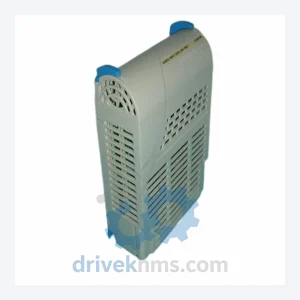
Westinghouse 5X00357G05 Programmable Controller – Ovation Series
Westinghouse 5X00357G05 Programmable Controller: Sourcing Strategy & Asset ROI in a Constrained Supply Chain The Westinghouse 5X00357G05 is a legacy…
Model: 5X00226G02
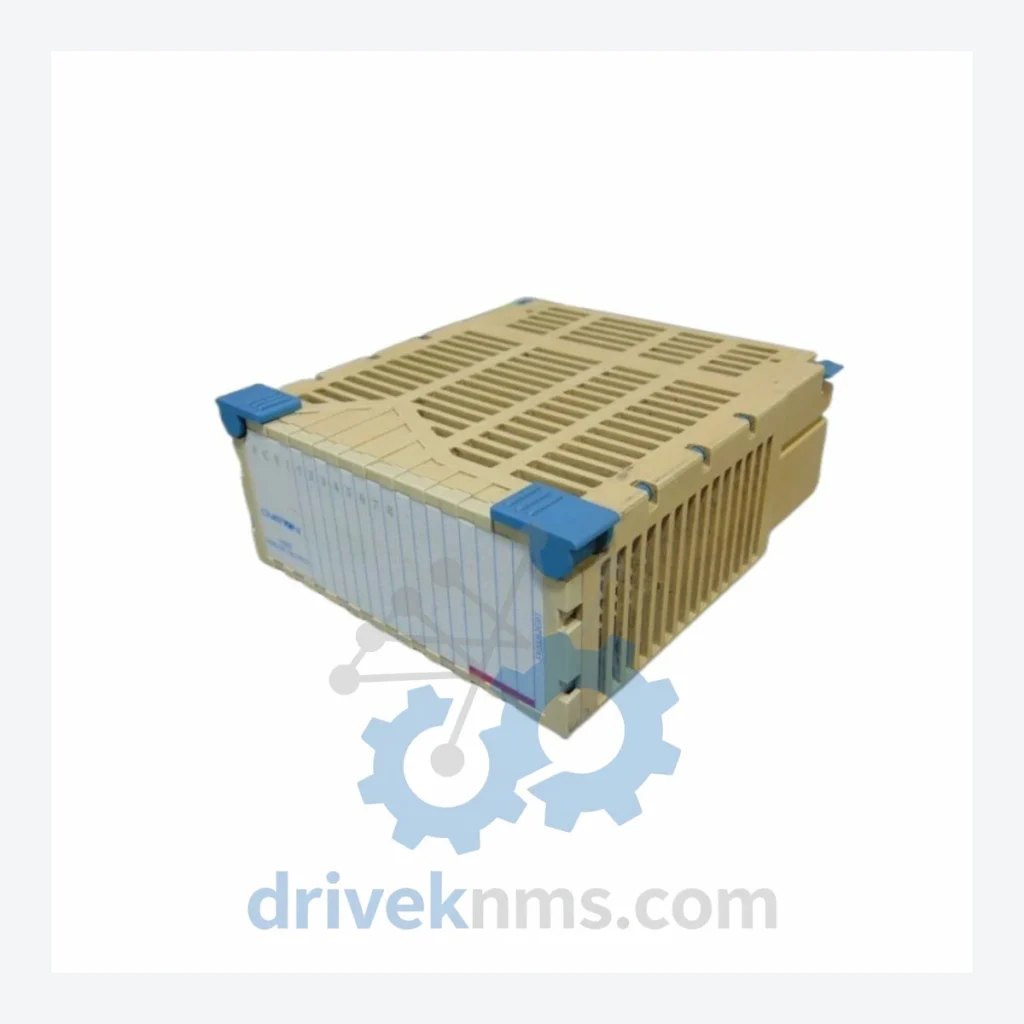
Product Overview
Commercial availability is handled through direct RFQ, model verification and export-oriented follow-up rather than public cart checkout.
Datasheet Preview
Use attached product manuals when available. If the manual is not public yet, request the full file directly through RFQ.
Commercial Path
Product pages on DRIVEKNMS are designed to verify model, brand and series first, then move the buyer into one clean quotation path.
Technical Dossier
When a single I/O interface module fails in a legacy Westinghouse WDPF distributed control system, the consequences extend far beyond the cost of the part itself. A forced migration to a modern DCS platform — driven by nothing more than one unavailable module — routinely carries engineering, commissioning, and production-loss costs measured in the millions. The 5X00226G02 is no longer manufactured. Westinghouse's process automation division was absorbed and its legacy WDPF product lines discontinued. For plants still operating on this architecture, the supply window for genuine replacement modules is closing. DriveKNMS maintains verified physical stock of the 5X00226G02. This is not a catalog listing — it is confirmed, inspected inventory.
| Parameter | Detail |
|---|---|
| Part Number | 5X00226G02 |
| Manufacturer | Westinghouse Electric Corporation (Process Control Division) |
| Series | WDPF (Westinghouse Distributed Processing Family) / OCR 400 |
| Module Function | I/O Interface Module |
| Discontinuation Status | Confirmed Obsolete – No Longer Manufactured |
| Country of Origin | United States |
| Compatible Systems | Westinghouse WDPF DCS, OCR 400 Series Controllers |
| Condition Available | New Old Stock (NOS) / Professionally Refurbished |
Note: Detailed electrical parameters (voltage ratings, signal ranges, backplane pinout) are confirmed against physical unit documentation at time of sale. No parameters are published without physical verification to protect equipment safety.
The Westinghouse WDPF platform was deployed extensively across power generation, petrochemical, and heavy industrial facilities from the 1980s through the early 2000s. Many of these installations remain in active production service today — not because operators are unaware of the discontinuation, but because the capital expenditure required to replace a functioning, tuned DCS is difficult to justify against a plant's maintenance budget cycle.
The 5X00226G02 I/O interface module sits at a critical junction in the WDPF architecture. It handles the communication pathway between field instruments and the controller backplane. A failure at this node does not degrade performance gradually — it causes an abrupt loss of I/O visibility that can trigger process shutdowns. Unlike a failed power supply that can sometimes be bypassed temporarily, an I/O interface fault demands immediate hardware replacement.
The core problem facing maintenance engineers is not technical — it is logistical. The original manufacturer no longer supports this product line. Authorized distributors have exhausted their stock. What remains in the global supply chain exists in the inventories of specialist obsolete parts suppliers. Procurement teams that have not established a source before a failure event are forced into emergency spot-market purchases at significant cost premiums, or worse, face extended downtime while a replacement is located.
Establishing a verified source and holding a minimum buffer stock of critical modules like the 5X00226G02 is the single most cost-effective risk mitigation strategy available to facilities operating legacy WDPF systems.
For plant management facing pressure to retire aging DCS infrastructure, the financial case for a managed spare parts strategy is straightforward. A full WDPF-to-modern-DCS migration project — including engineering design, hardware procurement, installation, loop testing, and operator retraining — typically requires 18 to 36 months of planning and execution. The capital outlay is substantial. Against that baseline, a targeted inventory of critical obsolete modules represents a fraction of the cost and can defer the migration decision by a full operational cycle.
The practical framework for extending WDPF asset life involves three disciplines. First, conduct a criticality audit: identify every module type in the system whose failure would cause a process shutdown or safety interlock activation. The 5X00226G02 belongs in this category. Second, establish minimum stock levels for each critical module based on historical failure rates and lead time for sourcing. For confirmed obsolete parts, lead time from the spot market can exceed 90 days — a buffer stock of two to three units per critical module type is a defensible standard. Third, implement a scheduled inspection protocol for installed modules, with particular attention to electrolytic capacitor condition, connector pin integrity, and firmware version consistency across redundant nodes.
This approach does not require capital approval at the scale of a migration project. It is executable within a standard maintenance budget and can be justified on a pure risk-adjusted cost basis to plant finance teams.
Every 5X00226G02 unit supplied by DriveKNMS passes a structured 5-step quality process before shipment:
Units are shipped in anti-static packaging with individual inspection records. Condition grade (New Old Stock or Refurbished) is declared on the invoice.
What warranty applies to an obsolete part like the 5X00226G02?
DriveKNMS provides a 90-day warranty covering functional defects identified under normal operating conditions. Given the obsolete status of this part, this warranty period reflects the practical limits of post-sale support for legacy hardware. Warranty terms are confirmed in writing at time of purchase.
How do I know the unit is genuine and not a counterfeit?
All units are sourced through documented supply channels. Physical markings, board revision codes, and component configurations are cross-referenced against known-good reference units. Any unit that cannot be positively verified is not offered for sale.
Should I buy more than one unit?
For a module confirmed as obsolete with no active manufacturing source, holding a minimum of two spare units is a standard risk management practice. The cost of a second unit is negligible relative to the cost of an unplanned shutdown while a replacement is sourced from the spot market. For facilities with multiple WDPF systems, a proportionally larger buffer is warranted.
Can you source other Westinghouse WDPF modules?
Yes. DriveKNMS specializes in obsolete and hard-to-find industrial automation components across multiple legacy platforms. Contact us with your full part number list for availability and pricing.
© 2026 DriveKNMS. All trademarks belong to their respective owners. Specifications are for reference only and subject to change without notice. Verify all parameters against official documentation before installation.
Related Paths
Westinghouse 5X00357G05 Programmable Controller: Sourcing Strategy & Asset ROI in a Constrained Supply Chain The Westinghouse 5X00357G05 is a legacy…
Westinghouse SAE-KA Series: Comprehensive Module Range and Technical Overview The Westinghouse SAE-KA series is a family of analog servo amplifier…
Westinghouse F356IOE I/O Expansion Card – Obsolete WDPF DCS Spare Part When a single I/O expansion card fails inside a…