
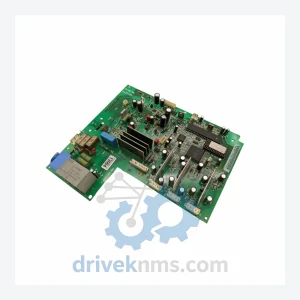
ABB SNAT-7120 Circuit Board – SNAZ7120J Series
ABB SNAT-7120 / SNAZ7120J Circuit Board: Sourcing Strategy & Asset Return Value in a Constrained Global Supply Chain The ABB…
Model: YPQ102F
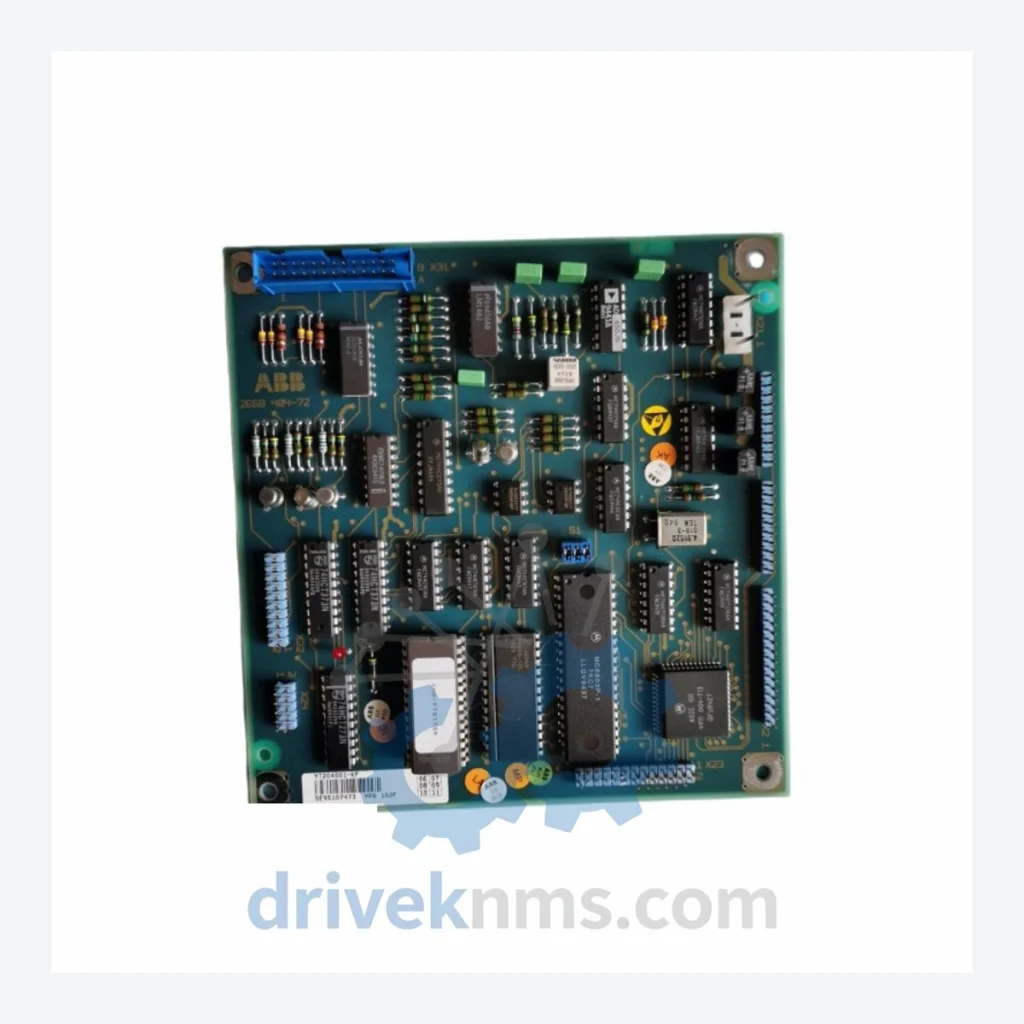
Product Overview
Commercial availability is handled through direct RFQ, model verification and export-oriented follow-up rather than public cart checkout.
Datasheet Preview
Use attached product manuals when available. If the manual is not public yet, request the full file directly through RFQ.
Commercial Path
Product pages on DRIVEKNMS are designed to verify model, brand and series first, then move the buyer into one clean quotation path.
Technical Dossier
The ABB YPQ series of Field Control Boards occupies a critical position in global heavy industry automation infrastructure. Deployed extensively across chemical processing plants, oil refineries, nuclear power facilities, and large-scale utilities, the YPQ series serves as the backbone of ABB's distributed control system (DCS) field-level architecture. These boards interface directly with field instruments — transmitters, actuators, and sensors — translating analog and digital signals into structured data for higher-level controllers. Their ruggedized design, wide operating temperature tolerance, and compatibility with ABB's INFI-90, Harmony, and System 800xA platforms have made them a long-term standard in facilities where replacement cycles span decades, not years.
The YPQ series was introduced as part of ABB's INFI-90 open distributed control system, a platform designed in the late 1980s and refined through the 1990s to address the growing complexity of process automation in continuous-operation industries. Early YPQ boards operated on a proprietary backplane bus with fixed I/O addressing, requiring manual jumper configuration for channel assignment. As the platform matured into the Harmony DCS generation, the YPQ series was updated to support semi-automatic address recognition and improved EMI shielding to meet IEC 61000-4 immunity standards.
By the mid-2000s, ABB began transitioning customers toward the System 800xA architecture, which introduced Ethernet-based field communication and redundant controller topologies. However, the YPQ series remained in active production and support due to the enormous installed base in brownfield facilities. Many plants operating YPQ-based control loops have chosen lifecycle extension over full migration, citing the cost and risk of replacing validated control logic in regulated environments such as nuclear and pharmaceutical manufacturing. ABB's Extended Lifecycle Support (ELS) program formally covers select YPQ variants, and third-party MRO suppliers such as DriveKNMS provide sourcing continuity for discontinued part numbers.
The following SKUs represent the core and extended range of the ABB YPQ series. Each module is classified by primary function. Only verified, real-world part numbers are listed.
Field Control & Analog I/O Boards
Digital I/O Modules
Communication & Interface Modules
Power Supply & Auxiliary Boards
A significant portion of the YPQ series has reached end-of-production status with ABB. Part numbers including YPQ100F, YPQ101F, YPQ110F, and YPQ120F are no longer available through standard ABB distribution channels. For facilities operating INFI-90 or early Harmony systems, this creates a critical spare parts gap — particularly for unplanned failures in continuous-process environments where downtime is measured in tens of thousands of dollars per hour.
The YPQ series presents specific testing challenges due to its backplane-dependent architecture. Boards cannot be fully validated in isolation — functional testing requires a compatible INFI-90 or Harmony backplane, a live bus controller, and appropriate field signal simulation. DriveKNMS employs a structured test protocol for all YPQ boards:
Related Paths
ABB SNAT-7120 / SNAZ7120J Circuit Board: Sourcing Strategy & Asset Return Value in a Constrained Global Supply Chain The ABB…
ABB AC500 Series: Comprehensive Module Range and Technical Overview The ABB AC500 is a scalable modular PLC platform deployed across…
ABB SCDCS-CON-4 Control Board – Obsolete DCS Spare Part When a single control board fails in a legacy distributed control…