
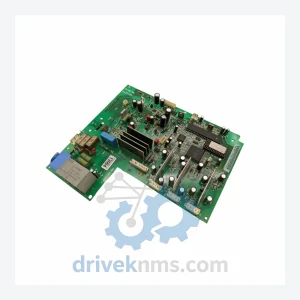
ABB SNAT-7120 Circuit Board – SNAZ7120J Series
ABB SNAT-7120 / SNAZ7120J Circuit Board: Sourcing Strategy & Asset Return Value in a Constrained Global Supply Chain The ABB…
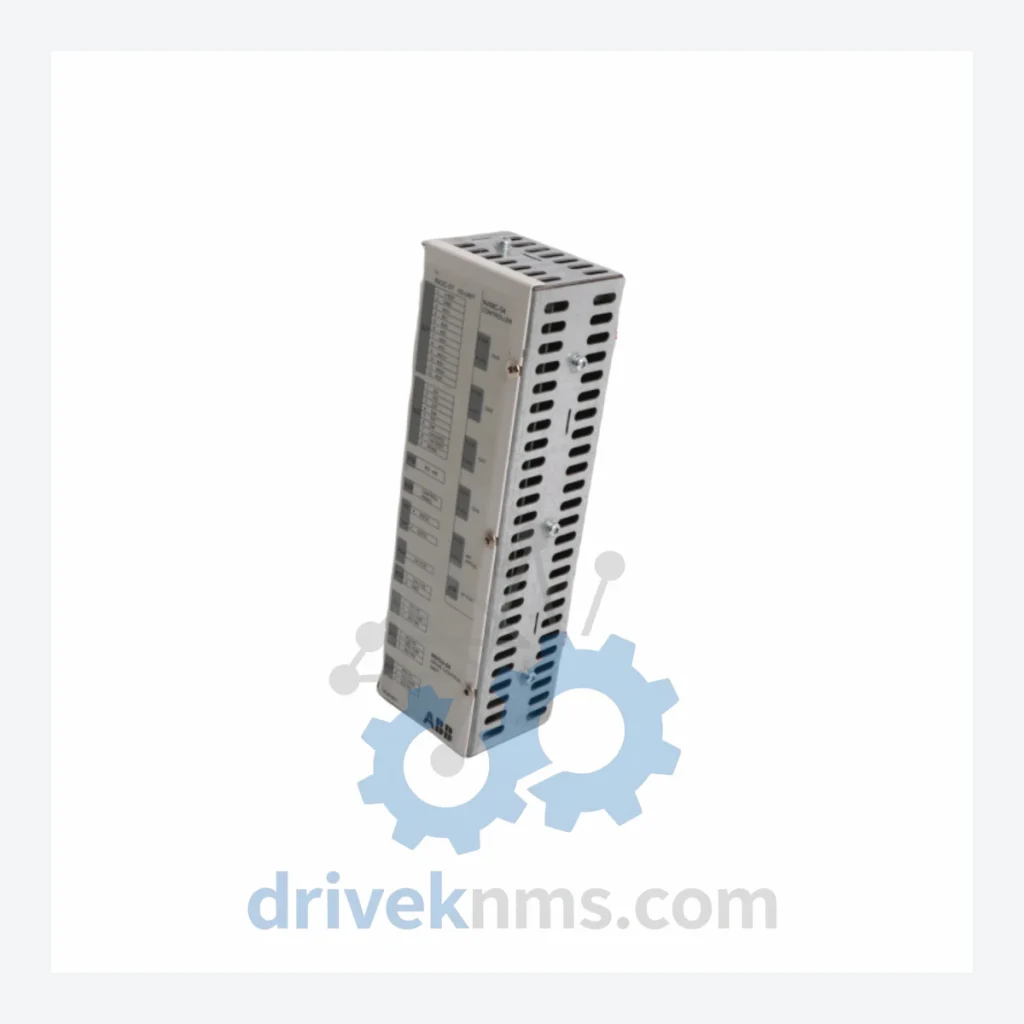
Model: NDCU-04
Product Overview
Commercial availability is handled through direct RFQ, model verification and export-oriented follow-up rather than public cart checkout.
Datasheet Preview
Use attached product manuals when available. If the manual is not public yet, request the full file directly through RFQ.
Commercial Path
Product pages on DRIVEKNMS are designed to verify model, brand and series first, then move the buyer into one clean quotation path.
Technical Dossier
The ABB NDCU (New Drive Control Unit) series represents the primary control platform for ABB's ACS880 industrial drives and ACS580 general-purpose drives. Deployed across petrochemical refineries, nuclear auxiliary systems, offshore platforms, pulp and paper mills, and large-scale water treatment facilities, the NDCU architecture provides the computational backbone for vector motor control, fieldbus communication, and I/O expansion in high-demand continuous-process environments. The series is engineered to IEC 61800-5-1 safety standards and supports ABB's Direct Torque Control (DTC) algorithm, which eliminates the need for encoder feedback in most industrial torque-control applications. Global installed base spans hundreds of thousands of drive units across more than 100 countries, making NDCU spare parts among the most strategically critical components in industrial MRO inventories.
The NDCU lineage originates from ABB's earlier RMIO and RDCU control board families used in the ACS800 platform (introduced late 1990s). When ABB launched the ACS880 series in 2013, the NDCU was introduced as a ground-up redesign: a 32-bit ARM-based processor replaced the earlier DSP architecture, onboard memory expanded to support the Drive Application Programming (DAP) environment, and the backplane interface was standardized to the DDCS (Distributed Drive Control System) fiber-optic protocol for multi-drive configurations.
The NDCU-01 was the initial release variant, followed by the NDCU-02 with expanded I/O mapping. The NDCU-04 introduced support for the Safe Torque Off (STO) function per IEC 62061 SIL 2 / EN ISO 13849-1 PLd, making it the dominant variant in safety-critical installations. The NDCU-11 and NDCU-12 extended the platform to support the ACS580 and ACQ580 product lines with cost-optimized hardware. As of 2024, the NDCU-04 and NDCU-12 are the primary active variants; earlier revisions (NDCU-01, NDCU-02) are in the end-of-active-support phase, with spare parts availability dependent on secondary market channels.
The following SKUs represent the verified NDCU series module range, classified by function and target platform:
Drive Control Units (Main CPU / Control Board)
NDCU-04: ACS880 main control unit with STO SIL 2 support, 32-bit ARM CPU, DDCS fiber interface, onboard 8DI/3DO/2AI/2AO, firmware slot for DAP applications.
NDCU-01: First-generation ACS880 control unit, no integrated STO; used in pre-2016 drive builds; end of active support.
NDCU-02: Revised NDCU-01 with corrected I/O addressing firmware; functionally equivalent, hardware-compatible with NDCU-01 mounting.
NDCU-11: ACS580/ACQ580 platform control unit; reduced DDCS port count vs. NDCU-04; supports standard vector and scalar control modes.
NDCU-12: Current-generation ACS580 control unit; replaces NDCU-11; adds enhanced fieldbus option slot compatibility.
I/O Extension Modules (Compatible with NDCU Backplane)
AIAO-01: Analog I/O extension, 4AI + 2AO, ±10V / 0–20mA, mounts on NDCU option slot B.
ADIO-01: Digital I/O extension, 8DI + 4DO, 24VDC logic, relay output option; used for external interlock expansion.
AITC-01: Thermocouple input module, 6-channel, K/J/T type, for motor winding temperature monitoring.
AITC-02: RTD/PT100 input module, 3-channel, 3-wire configuration, direct motor bearing temperature input.
Fieldbus Adapter Modules (NDCU Option Slot A)
FPBA-01: PROFIBUS-DP adapter, up to 12 Mbit/s, supports PPO types 1–5; standard in European process industries.
FENA-21: EtherNet/IP + Modbus TCP dual-protocol adapter; single RJ45 port; replaces FENA-11 in current builds.
FDNA-01: DeviceNet adapter, Group 2 Only slave; used in North American automotive and material handling installations.
FCNA-01: ControlNet adapter, NUT-based scheduling; used in legacy Rockwell-integrated ABB drive systems.
FCAN-01: CANopen adapter, DS402 drive profile; used in mobile machinery and crane control applications.
FSCA-01: Modbus RTU/ASCII adapter, RS-485 interface, up to 115.2 kbps; used in SCADA-connected legacy installations.
Memory & Firmware Modules
MFDT-01: Flash memory module for NDCU parameter backup and firmware storage; required for drive cloning in multi-unit installations.
NETA-21: Remote monitoring adapter; Ethernet-based; enables ABB Ability cloud connectivity for NDCU-equipped drives.
DriveKNMS maintains a dedicated inventory channel for NDCU series components, with particular focus on end-of-life variants including the NDCU-01 and NDCU-02. These units are no longer manufactured by ABB and are not available through standard distribution. DriveKNMS sources tested surplus units from decommissioned plant equipment, factory overstock, and authorized secondary market channels. All units are inspected against ABB's published hardware revision documentation prior to listing. For customers operating ACS880 drives in long-lifecycle environments (15+ years), DriveKNMS provides multi-unit buffer stock procurement to reduce unplanned downtime risk. Customers requiring cross-reference verification between NDCU hardware revisions (e.g., NDCU-01 Rev D vs. Rev F firmware compatibility) can submit technical queries directly to the sales team.
NDCU control units undergo a structured functional verification process at DriveKNMS prior to dispatch. Each unit is powered via a calibrated 24VDC bench supply and subjected to a full boot sequence verification, confirming firmware version readout, I/O channel continuity (all digital inputs, digital outputs, analog inputs, and analog outputs tested against reference values), and DDCS fiber port optical power output measurement. Units with onboard STO circuitry (NDCU-04, NDCU-12) are tested for STO channel 1 and channel 2 independent activation and cross-monitoring response. Backplane connector pins are inspected under magnification for fretting corrosion, a known failure mode in units removed from high-vibration environments. Units that pass all test stages are assigned a DriveKNMS QC reference number, which is included in the shipment documentation.
Related Paths
ABB SNAT-7120 / SNAZ7120J Circuit Board: Sourcing Strategy & Asset Return Value in a Constrained Global Supply Chain The ABB…
ABB AC500 Series: Comprehensive Module Range and Technical Overview The ABB AC500 is a scalable modular PLC platform deployed across…
ABB SCDCS-CON-4 Control Board – Obsolete DCS Spare Part When a single control board fails in a legacy distributed control…