
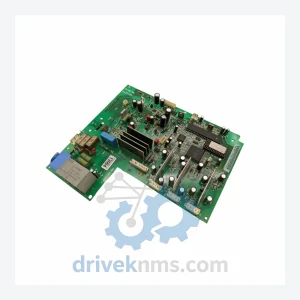
ABB SNAT-7120 Circuit Board – SNAZ7120J Series
ABB SNAT-7120 / SNAZ7120J Circuit Board: Sourcing Strategy & Asset Return Value in a Constrained Global Supply Chain The ABB…
Model: SNAT7901 DFD
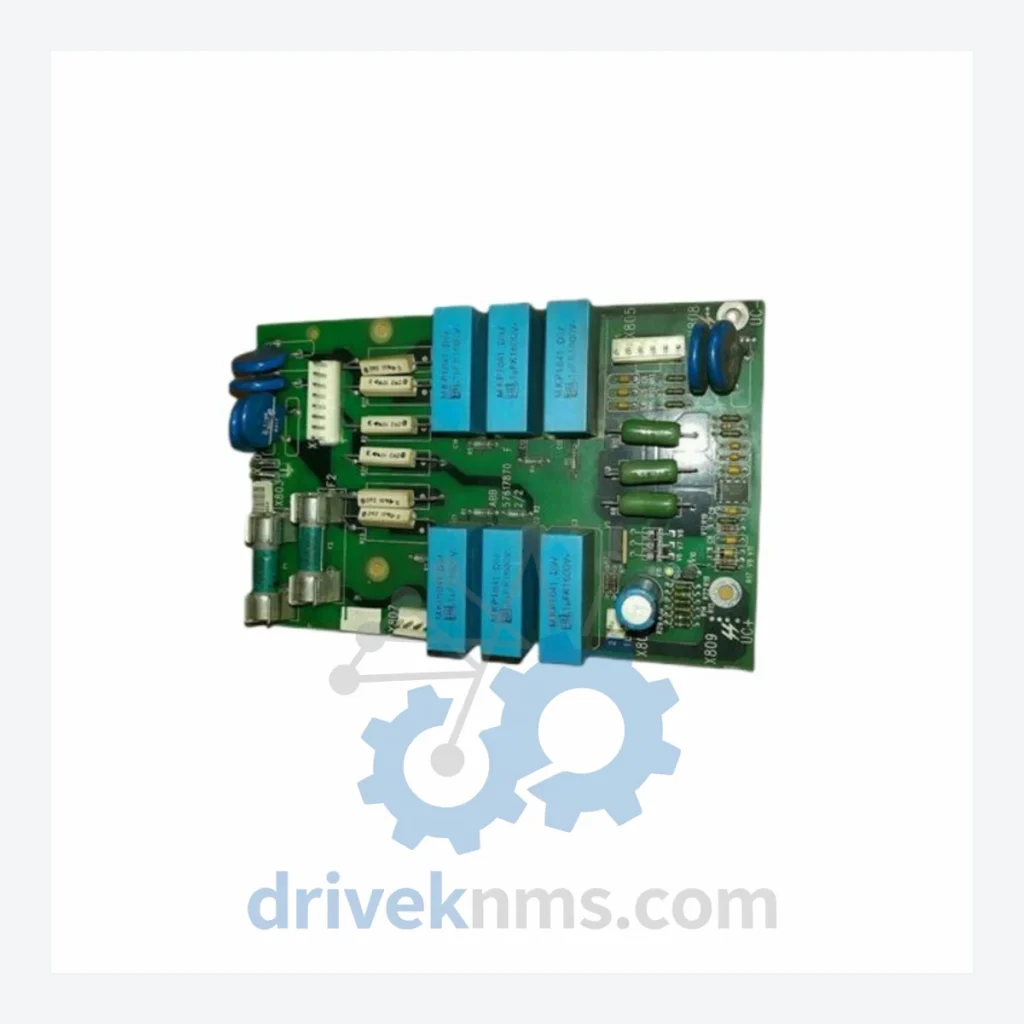
Product Overview
Commercial availability is handled through direct RFQ, model verification and export-oriented follow-up rather than public cart checkout.
Datasheet Preview
Use attached product manuals when available. If the manual is not public yet, request the full file directly through RFQ.
Commercial Path
Product pages on DRIVEKNMS are designed to verify model, brand and series first, then move the buyer into one clean quotation path.
Technical Dossier
The ABB SNAT7901 DFD (Drive Function Diagnostics) circuit board is a core component within ABB's industrial drive and DCS control architecture, deployed extensively across heavy-process industries including petrochemical refineries, nuclear power auxiliary systems, pulp and paper mills, and offshore oil & gas platforms. The SNAT7901 series occupies a critical position in ABB's ACS/DCS drive control hierarchy, functioning as the primary diagnostic and function interface board within ACS600, ACS800, and related drive families. Its global installed base spans tens of thousands of units, making long-term spare parts availability a strategic concern for plant maintenance engineers worldwide.
The SNAT7901 DFD board was introduced as part of ABB's second-generation drive control platform in the mid-1990s, designed to replace discrete relay-logic diagnostic circuits with a unified, bus-communicating PCB assembly. Early revisions (Rev A–C) operated exclusively with parallel backplane communication and were compatible with ACS600 firmware versions up to 5.x. Subsequent hardware revisions (Rev D onward) introduced enhanced IGBT gate-drive diagnostics and expanded fault-code memory buffers, aligning with ACS800 platform requirements.
By the mid-2000s, the SNAT7901 DFD had become the standard diagnostic board across ABB's medium-voltage drive lineup. Compatibility challenges arise when mixing early-revision boards with later firmware stacks — specifically, Rev A/B boards are incompatible with ACS800 firmware 7.x and above without a co-processor daughterboard upgrade. The series entered its end-of-active-production phase circa 2015, with ABB transitioning new installations to the SDCS-CON-4 and AINT-02C platforms. However, the SNAT7901 DFD remains the only serviceable option for legacy ACS600 installations that cannot undergo full drive replacement.
The following SKUs represent the verified, commonly stocked models within the SNAT7901 and directly associated ABB drive control board family. Each entry reflects a distinct hardware function within the drive control architecture.
SNAT7901 DFD: Primary drive function diagnostics circuit board for ACS600/ACS800 series.
SNAT7901 CHC: Chopper control interface board; manages braking chopper gate signals.
SNAT7901 CHA: Charging control board; governs DC bus pre-charge sequencing.
SNAT7901 POW: Internal power supply distribution board for SNAT7901 chassis.
SNAT7902 DFD: Successor diagnostic board with extended fault-log capacity (ACS800 R7+).
SNAT7903 DFD: High-power variant diagnostic board for ACS800 frame R8–R11.
AINT-02C: Application interface board; direct functional replacement path for SNAT7901 DFD in retrofit applications.
SDCS-CON-4: DC drive control board; cross-platform successor for DC drive diagnostic functions.
SDCS-IOB-3: I/O extension board compatible with SDCS-CON-4 retrofit configurations.
NAMC-11: Motor control platform board; used in ACS800 multidrive configurations alongside SNAT7901.
NAMC-03: Earlier motor control board; direct predecessor to NAMC-11 in ACS600 systems.
NBIO-21C: Digital I/O extension module for ACS800; interfaces with SNAT7901 DFD via backplane.
NINT-41C: Inverter control interface board; operates in conjunction with SNAT7901 DFD for gate-drive coordination.
NINT-72C: High-current inverter interface board for R8–R11 frame ACS800 drives.
NPOW-41C: Auxiliary power supply board; provides regulated voltages to SNAT7901 and associated control boards.
NXPP-02C: Panel bus communication board; enables SNAT7901 integration with ABB panel bus topology.
RMIO-11C: Motor control I/O board for ACS550/ACS800; functionally adjacent to SNAT7901 in multi-axis configurations.
DriveKNMS maintains a dedicated inventory program for end-of-life ABB drive control boards, with specific focus on the SNAT7901 DFD and its associated chassis components. As ABB has formally discontinued active production of the SNAT7901 series, procurement through standard distribution channels is no longer viable. DriveKNMS sources verified units through decommissioned plant buybacks, controlled OEM surplus channels, and direct factory-refurbishment partnerships.
For plant operators running ACS600 or early ACS800 installations where full drive replacement is cost-prohibitive or operationally disruptive, board-level replacement of the SNAT7901 DFD represents the most economical path to restoring drive availability. DriveKNMS provides cross-reference verification to confirm hardware revision compatibility before shipment, eliminating the risk of receiving an incompatible board revision.
Each SNAT7901 DFD unit processed by DriveKNMS undergoes a structured inspection and functional verification protocol specific to the board's architecture. The backplane edge connector is inspected under magnification for pin corrosion, mechanical deformation, and solder joint integrity — a common failure point in boards removed from high-vibration environments. The IGBT gate-drive signal outputs are verified under load using a dedicated ACS-series drive test rig, confirming correct pulse-width modulation signal integrity across all six gate channels.
Electrolytic capacitors on the internal power rails are measured for capacitance and ESR (equivalent series resistance) against ABB factory specifications. Boards exhibiting capacitor degradation are recapped using industrial-grade components rated to 105°C. Firmware revision is read and documented for each unit. All tested units are shipped with a test report identifying the hardware revision, firmware version confirmed, and test date.
Related Paths
ABB SNAT-7120 / SNAZ7120J Circuit Board: Sourcing Strategy & Asset Return Value in a Constrained Global Supply Chain The ABB…
ABB AC500 Series: Comprehensive Module Range and Technical Overview The ABB AC500 is a scalable modular PLC platform deployed across…
ABB SCDCS-CON-4 Control Board – Obsolete DCS Spare Part When a single control board fails in a legacy distributed control…