
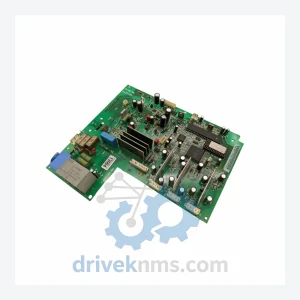
ABB SNAT-7120 Circuit Board – SNAZ7120J Series
ABB SNAT-7120 / SNAZ7120J Circuit Board: Sourcing Strategy & Asset Return Value in a Constrained Global Supply Chain The ABB…
Model: SDCS-PIN-205 3ADT310500R1
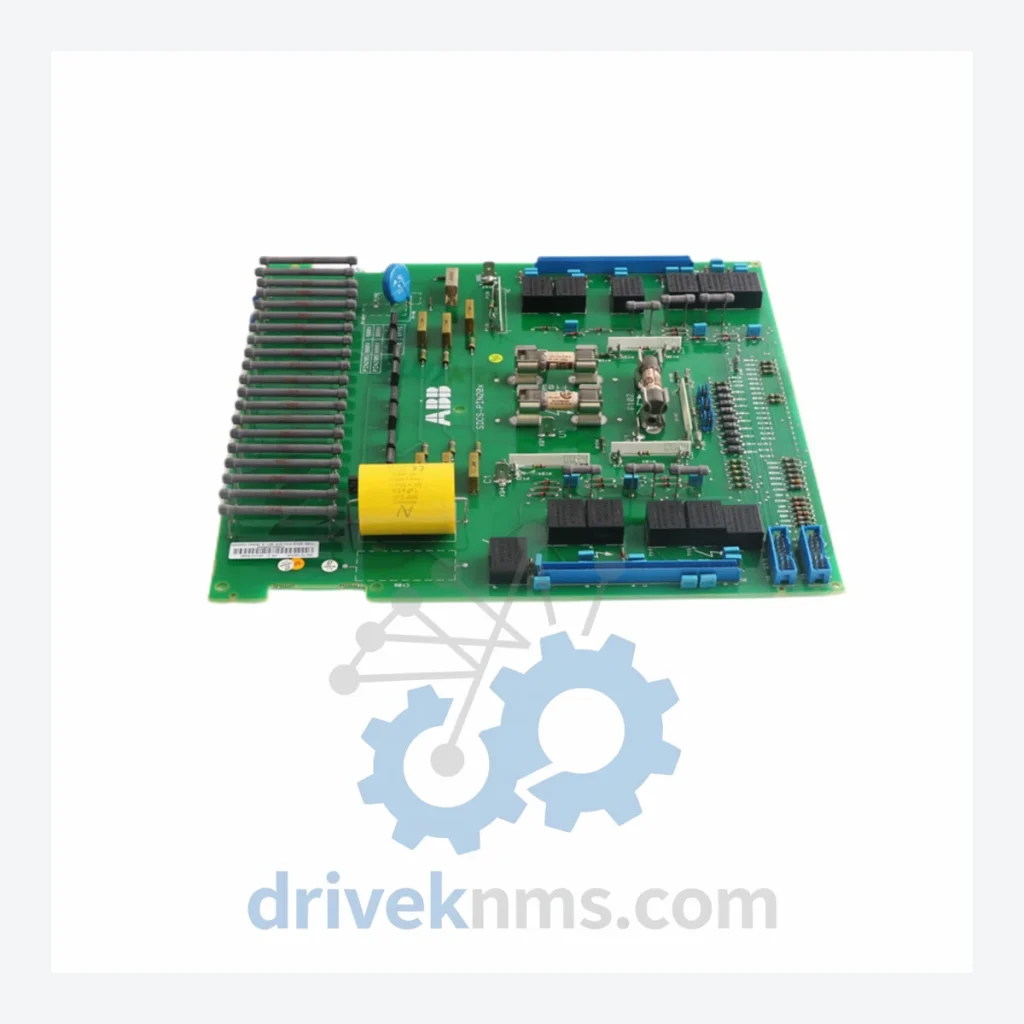
Product Overview
Commercial availability is handled through direct RFQ, model verification and export-oriented follow-up rather than public cart checkout.
Datasheet Preview
Use attached product manuals when available. If the manual is not public yet, request the full file directly through RFQ.
Commercial Path
Product pages on DRIVEKNMS are designed to verify model, brand and series first, then move the buyer into one clean quotation path.
Technical Dossier
The ABB SDCS (Scalable DC Control System) series is a purpose-engineered control platform for DC drive systems, deployed across heavy industrial sectors including petrochemical refineries, nuclear power auxiliary systems, pulp and paper mills, steel rolling mills, and offshore platforms. The SDCS architecture underpins ABB's DCS 400, DCS 500, and DCS 600 DC drive families, providing modular control, power interface, and feedback functions that are field-replaceable without full drive replacement. Installed base spans several hundred thousand units globally, with active deployments dating to the early 1990s. The platform's longevity makes spare parts availability a critical operational concern for plant maintenance engineers worldwide.
The SDCS platform was introduced by ABB in the early 1990s as a modular successor to proprietary single-board DC drive controllers. The first-generation SDCS boards (circa 1992–1998) used parallel backplane communication with discrete analog signal conditioning. The second generation (1998–2006) introduced SDCS-CON-2 and SDCS-CON-4 controller boards with onboard DSP processing, enabling closed-loop current and speed regulation at higher bandwidths. The third generation integrated fieldbus adapters (SDCS-FEX, SDCS-AMC) and expanded I/O density via the SDCS-IOB range.
Compatibility across generations is constrained by firmware versioning and backplane connector pinouts. SDCS-CON-2 and SDCS-CON-4 are not directly interchangeable without parameter migration. SDCS-PIN boards (power interface) are generation-specific and must match the thyristor bridge configuration of the host drive. As of 2026, the SDCS platform is in its end-of-active-production phase; ABB continues to supply selected modules through its spare parts program, but lead times for new manufacture are 16–52 weeks. Third-party certified refurbished stock from distributors such as DriveKNMS represents the primary sourcing channel for unplanned maintenance events.
The following SKUs represent verified, commonly stocked modules within the ABB SDCS platform. Each entry reflects the module's primary functional role within the drive control architecture.
Controller Boards
Power Interface Boards
I/O Expansion Boards
Fieldbus & Communication Adapters
Power Supply & Auxiliary Boards
DriveKNMS maintains a dedicated inventory program for end-of-life and long-lead ABB SDCS modules. For plant operators running DCS 400, DCS 500, or DCS 600 drives beyond their original design life, unplanned board failures represent a critical production risk. ABB's official spare parts channel may quote 16–52 week lead times for low-volume SDCS modules; in many cases, new manufacture has been discontinued entirely.
DriveKNMS sources SDCS modules through three channels: (1) decommissioned drive panels from plant shutdowns and upgrades, (2) certified refurbished boards tested to original ABB functional specifications, and (3) new-old-stock (NOS) units from authorized distributor liquidations. All sourced units are cataloged by part number, revision level, and firmware version where applicable. For modules such as SDCS-CON-2, SDCS-PIN-205, and SDCS-IOB-1, DriveKNMS typically maintains buffer stock to support same-week dispatch for emergency maintenance requirements.
SDCS modules present specific test challenges due to their mixed analog/digital architecture and backplane-dependent signal routing. DriveKNMS applies the following test protocol to all SDCS units prior to dispatch:
Related Paths
ABB SNAT-7120 / SNAZ7120J Circuit Board: Sourcing Strategy & Asset Return Value in a Constrained Global Supply Chain The ABB…
ABB AC500 Series: Comprehensive Module Range and Technical Overview The ABB AC500 is a scalable modular PLC platform deployed across…
ABB SCDCS-CON-4 Control Board – Obsolete DCS Spare Part When a single control board fails in a legacy distributed control…