
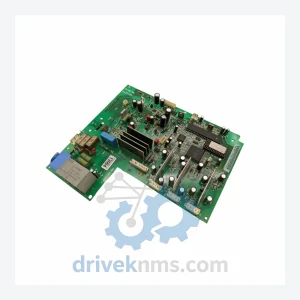
ABB SNAT-7120 Circuit Board – SNAZ7120J Series
ABB SNAT-7120 / SNAZ7120J Circuit Board: Sourcing Strategy & Asset Return Value in a Constrained Global Supply Chain The ABB…
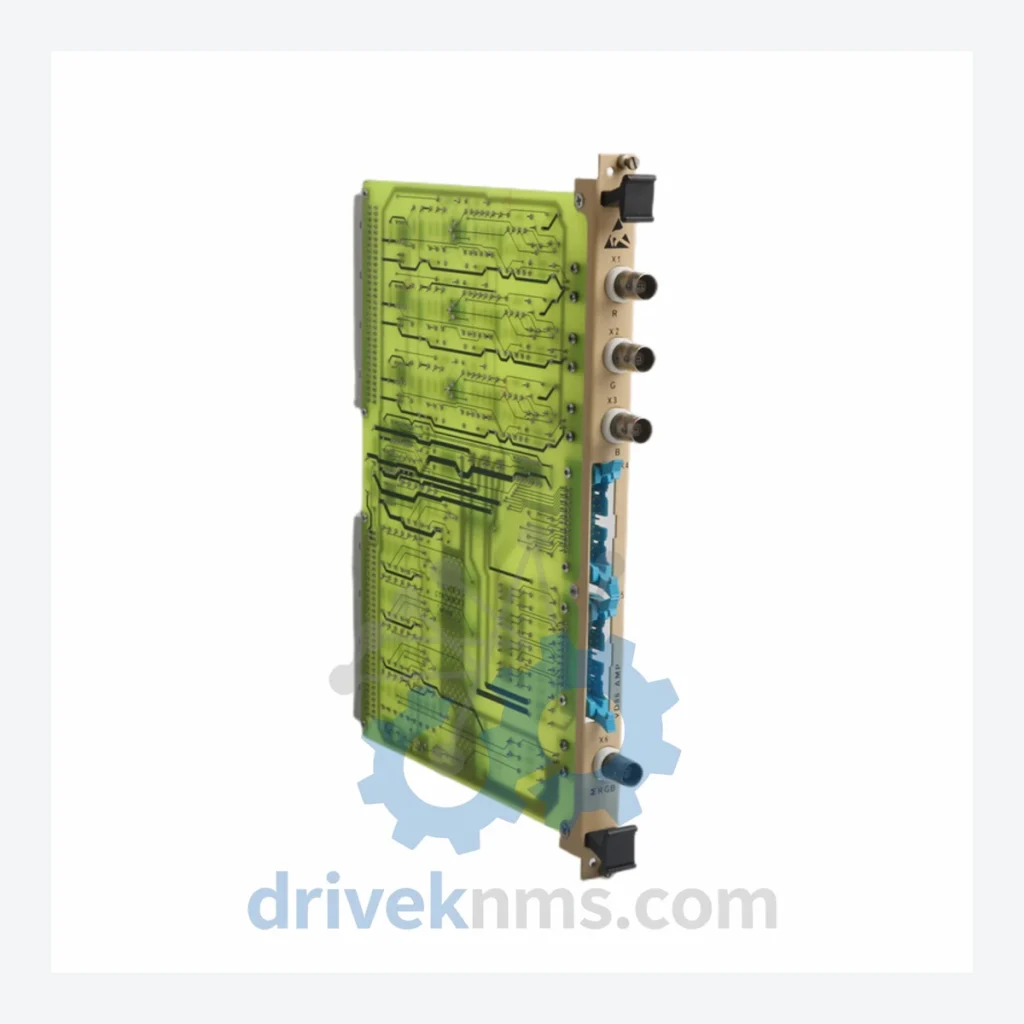
Model: VD86-AMP 572B8001
Product Overview
Commercial availability is handled through direct RFQ, model verification and export-oriented follow-up rather than public cart checkout.
Datasheet Preview
Use attached product manuals when available. If the manual is not public yet, request the full file directly through RFQ.
Commercial Path
Product pages on DRIVEKNMS are designed to verify model, brand and series first, then move the buyer into one clean quotation path.
Technical Dossier
When a Video Amplifier Card fails inside an ABB PROCONTIC control system, the consequences extend far beyond a single module. The entire HMI display chain — operator workstations, process visualization, and alarm monitoring — can go dark. For a plant running continuous processes, that failure triggers an unplanned shutdown. Replacing the surrounding legacy infrastructure to accommodate a modern substitute can cost hundreds of thousands to several million dollars in engineering, commissioning, and lost production time. The ABB VD86-AMP 572B8001 is a direct, drop-in replacement that eliminates that risk entirely. DriveKNMS holds verified physical stock of this discontinued card — one of the few sources globally that can ship without a lead time measured in months.
| Part Number | VD86-AMP 572B8001 |
| Manufacturer | ABB |
| Series | PROCONTIC |
| Function | Video Amplifier Card |
| Country of Origin | Germany |
| Discontinuation Status | Obsolete – No longer manufactured by ABB. Replacement sourcing required from authorized aftermarket suppliers. |
| Compatible Systems | ABB PROCONTIC T200 / T300 series DCS platforms |
| Form Factor | Plug-in PCB card module |
Note: Electrical parameters not listed here are not independently verified. DriveKNMS does not publish unconfirmed specifications. Contact us for datasheet support.
The ABB PROCONTIC platform was widely deployed across European and Asian process industries through the 1980s and 1990s. Many of these systems remain in active service today — not because operators are unaware of their age, but because the cost and risk of migration outweigh the cost of maintenance. A full DCS migration project for a mid-size plant typically runs USD 2–8 million, requires 12–36 months of engineering, and carries significant process risk during cutover.
The VD86-AMP 572B8001 sits at a critical junction in the PROCONTIC display architecture. It amplifies and conditions video signals between the central processing unit and operator display terminals. Without a functioning card, operators lose real-time process visibility — a condition that is unacceptable in any regulated or safety-critical environment. Because ABB ceased production of this card, procurement teams face a narrowing window: each year, fewer units remain in the global aftermarket. Plants that have not secured buffer stock are one failure away from a forced, unplanned migration.
Sourcing this card from DriveKNMS allows maintenance teams to restore full system function within days rather than months, at a fraction of the cost of any alternative.
For plant managers facing pressure to retire aging PROCONTIC or similar legacy DCS platforms, the financial case for continued maintenance is often stronger than it appears. The following strategy has been applied successfully across petrochemical, power generation, and water treatment facilities:
1. Conduct a criticality-weighted spare parts audit. Identify every card type in your PROCONTIC rack that has no modern equivalent and no active manufacturer support. Rank them by failure consequence — cards that cause full system shutdowns rank highest. The VD86-AMP 572B8001 is a Tier 1 critical component under this framework.
2. Establish a minimum buffer stock of 1–2 units per critical card type. Mean time between failures for cards of this era, when operated within rated conditions, is typically measured in years. A single spare unit provides adequate coverage for most facilities. Two units provide coverage through a planned migration window.
3. Negotiate long-term supply agreements with verified aftermarket suppliers. Spot-market sourcing of obsolete parts carries counterfeit risk and price volatility. Establishing a relationship with a supplier who holds physical, tested inventory — and can provide traceability documentation — reduces both risks.
4. Implement a scheduled preventive inspection cycle. Legacy cards are susceptible to electrolytic capacitor degradation, contact oxidation, and firmware drift. Annual inspection and cleaning, combined with functional testing, can identify failing components before they cause unplanned downtime.
5. Document your installed firmware versions. PROCONTIC cards are firmware-specific. A replacement card with a mismatched firmware version may not initialize correctly. Maintaining a firmware register for all installed cards ensures that any replacement sourced from the aftermarket can be verified before installation.
Executed consistently, this approach extends the operational life of a PROCONTIC-based system by 5–10 years — deferring a multi-million dollar migration until it can be planned, budgeted, and executed on the plant's terms rather than under emergency conditions.
DriveKNMS applies a 5-step quality assurance process to all obsolete cards before shipment:
Step 1 – Visual Inspection: Full board examination for physical damage, burnt components, cracked solder joints, and corrosion on edge connectors and pin headers.
Step 2 – Electrolytic Capacitor Assessment: Capacitors are the primary failure point in cards of this vintage. Each unit is inspected for bulging, leakage, and ESR deviation. Units with degraded capacitors are either recapped or rejected.
Step 3 – Firmware Version Verification: Where firmware is readable, the version is logged and disclosed to the buyer. This allows the receiving engineer to confirm compatibility before installation.
Step 4 – Pin and Connector Integrity Check: All edge connectors and backplane pins are inspected for oxidation, bending, and mechanical wear. Contact surfaces are cleaned where required.
Step 5 – Functional Bench Test: Where test equipment is available for the specific card type, a powered functional test is performed. Test results are documented and available upon request.
Units that do not pass all applicable steps are not offered for sale. Condition grade (New, Refurbished-Tested, or Surplus-Untested) is disclosed on every order confirmation.
Drop-in replacement: The VD86-AMP 572B8001 installs directly into the existing PROCONTIC rack slot. No backplane modification, no wiring change, no software reconfiguration is required.
No reprogramming required: Unlike modern substitute modules that require engineering adaptation, this card operates identically to the original factory-installed unit. Maintenance technicians familiar with the PROCONTIC platform can complete the swap without specialist support.
Avoids engineering reconstruction costs: A forced migration triggered by an unavailable spare part carries costs that dwarf the price of aftermarket sourcing. Procurement of a verified spare eliminates the risk of that scenario entirely.
Immediate dispatch: Stock is held at DriveKNMS facilities. Orders confirmed before cutoff ship the same or next business day. Export documentation for international shipments is prepared as standard.
Q: What warranty applies to an obsolete card like the VD86-AMP 572B8001?
A: DriveKNMS provides a 90-day warranty against DOA (dead on arrival) and functional failure under normal operating conditions. Extended warranty terms are available for volume orders — contact us to discuss.
Q: How do I confirm the unit is genuine ABB and not a counterfeit?
A: All units sourced by DriveKNMS are inspected for manufacturer markings, PCB layer consistency, and component dating. We provide photographic documentation of the specific unit prior to shipment upon request. Traceability records are maintained internally.
Q: Should I buy more than one unit?
A: For a card that is no longer manufactured, holding at least one spare is standard practice. If your facility runs multiple PROCONTIC racks or operates in a region where import lead times exceed 30 days, two units is the recommended minimum. Global aftermarket supply of this card is finite and declining.
Related Paths
ABB SNAT-7120 / SNAZ7120J Circuit Board: Sourcing Strategy & Asset Return Value in a Constrained Global Supply Chain The ABB…
ABB AC500 Series: Comprehensive Module Range and Technical Overview The ABB AC500 is a scalable modular PLC platform deployed across…
ABB SCDCS-CON-4 Control Board – Obsolete DCS Spare Part When a single control board fails in a legacy distributed control…