
ABB SNAT-7120 Circuit Board – SNAZ7120J Series
ABB SNAT-7120 / SNAZ7120J Circuit Board: Sourcing Strategy & Asset Return Value in a Constrained Global Supply Chain The ABB…
Model: SAMC11POW SAMC 11 POW 57171847
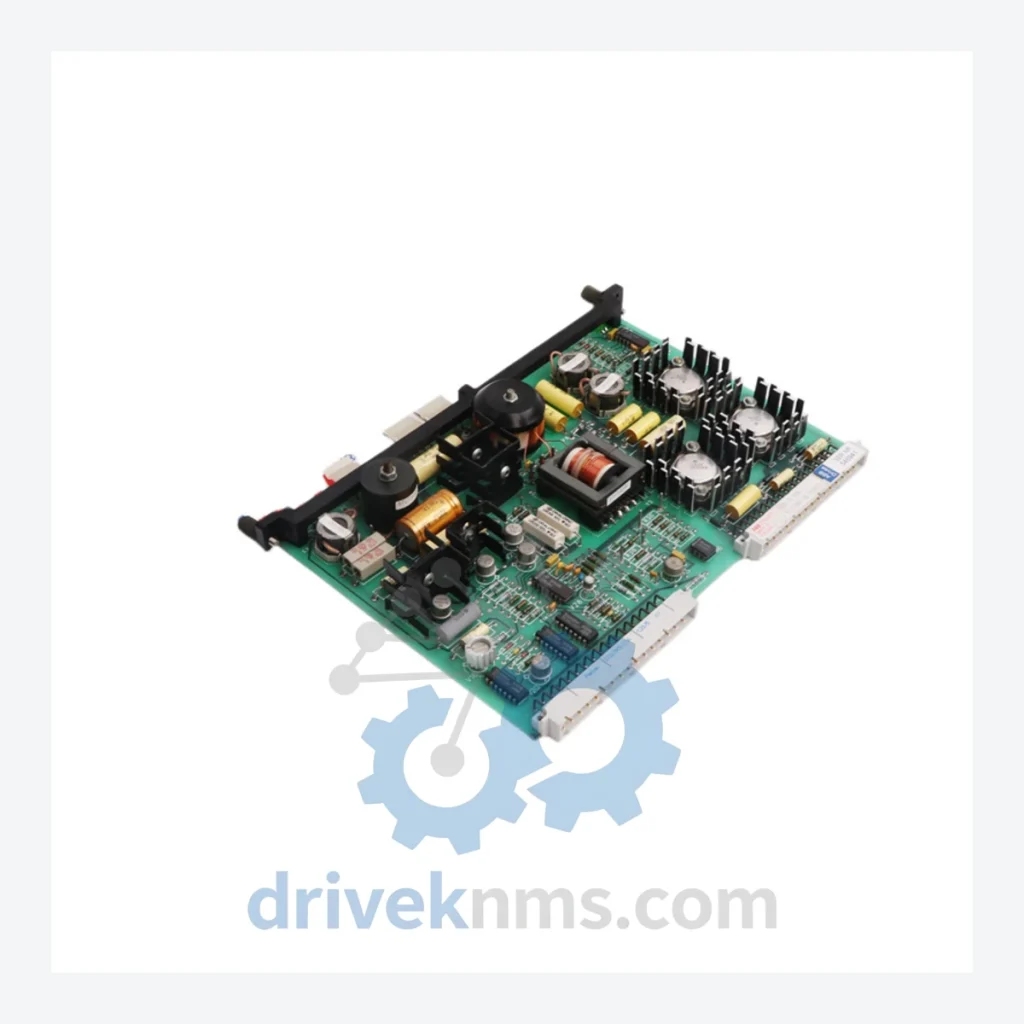
Product Overview
Commercial availability is handled through direct RFQ, model verification and export-oriented follow-up rather than public cart checkout.
Datasheet Preview
Use attached product manuals when available. If the manual is not public yet, request the full file directly through RFQ.
Commercial Path
Product pages on DRIVEKNMS are designed to verify model, brand and series first, then move the buyer into one clean quotation path.
Technical Dossier
The ABB SAMC11 series is a core hardware family within ABB's Symphony Plus (formerly Harmony) Distributed Control System (DCS) platform. Deployed extensively across global heavy industries — including petrochemical refineries, nuclear power stations, pulp and paper mills, and offshore oil and gas platforms — the SAMC11 architecture represents one of the most widely installed DCS controller families in continuous-process environments. Its modular backplane design, deterministic scan cycle, and redundancy support have made it a reference standard for long-lifecycle industrial automation projects where uptime requirements exceed 99.9%.
The SAMC11 series operates within ABB's broader Symphony Plus ecosystem, interfacing with the S+ Operations HMI layer, S+ Engineering toolset, and the Harmony fieldbus infrastructure. Installations dating from the mid-1990s through the 2010s remain operational at major industrial sites, creating sustained demand for original spare parts, tested replacements, and lifecycle extension services.
The SAMC11 lineage traces to ABB's Bailey Controls heritage, specifically the Network 90 and INFI 90 platforms introduced in the 1980s. The SAMC designation (Symphony Advanced Multifunction Controller) emerged as ABB consolidated its global DCS portfolio following the acquisition of Bailey Controls in 1989 and Elsag Bailey in 1996.
Generation 1 (INFI 90 / Network 90 era, 1985–1995): Early controller modules used proprietary backplane buses with limited inter-module bandwidth. I/O was tightly coupled to controller scan cycles, and redundancy required dedicated hardware pairs.
Generation 2 (Harmony era, 1995–2005): The SAMC11 family was introduced with enhanced processing capacity, expanded memory addressing, and support for the Harmony Control Bus (HCB). This generation introduced the modular I/O philosophy that separates controller logic from field termination, enabling hot-swap capability on select modules.
Generation 3 (Symphony Plus era, 2005–present): Integration with Ethernet-based supervisory networks, OPC-UA data publishing, and compatibility with ABB's System 800xA overlays. The SAMC21 and SAMC31 sub-families extended processing throughput while maintaining backward compatibility with SAMC11 I/O modules and termination assemblies.
Compatibility note: SAMC11 I/O modules (AI, DI, AO, DO) are generally interoperable with SAMC21 controller backplanes, but firmware version alignment must be verified. Mixed-generation installations require careful revision management during maintenance windows.
The following SKUs represent verified, commonly sourced components within the SAMC11 series. Each entry includes the module's primary functional classification and a concise technical descriptor.
Power Supply Modules (POW)
CPU / Controller Modules (CPU)
Analog Input Modules (AI)
Digital Input Modules (DI)
Digital Output Modules (DO)
Communication & Adapter Modules (COM)
ABB formally transitioned the SAMC11 series to a limited-support lifecycle status as Symphony Plus adoption expanded. While ABB continues to provide software support for Symphony Plus integrations, original SAMC11 hardware — particularly first- and second-generation CPU and power supply modules — is no longer manufactured. Lead times through standard distribution channels can exceed 26 weeks, and in many cases, parts are simply unavailable through OEM channels.
DriveKNMS maintains a dedicated inventory of SAMC11 series modules sourced from decommissioned plant equipment, controlled-environment storage, and verified secondary-market channels. All units undergo provenance verification before entering stock. For end-users operating SAMC11-based DCS installations with 10–20 year remaining plant lifecycles, DriveKNMS provides:
SAMC11 modules present specific testing challenges due to their proprietary backplane bus protocol and the absence of standard bench-test interfaces. DriveKNMS employs a structured verification process for all SAMC11 inventory:
Related Paths
ABB SNAT-7120 / SNAZ7120J Circuit Board: Sourcing Strategy & Asset Return Value in a Constrained Global Supply Chain The ABB…
ABB AC500 Series: Comprehensive Module Range and Technical Overview The ABB AC500 is a scalable modular PLC platform deployed across…
ABB SCDCS-CON-4 Control Board – Obsolete DCS Spare Part When a single control board fails in a legacy distributed control…