
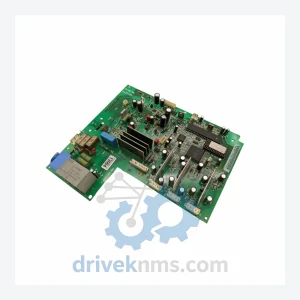
ABB SNAT-7120 Circuit Board – SNAZ7120J Series
ABB SNAT-7120 / SNAZ7120J Circuit Board: Sourcing Strategy & Asset Return Value in a Constrained Global Supply Chain The ABB…
Model: MB21
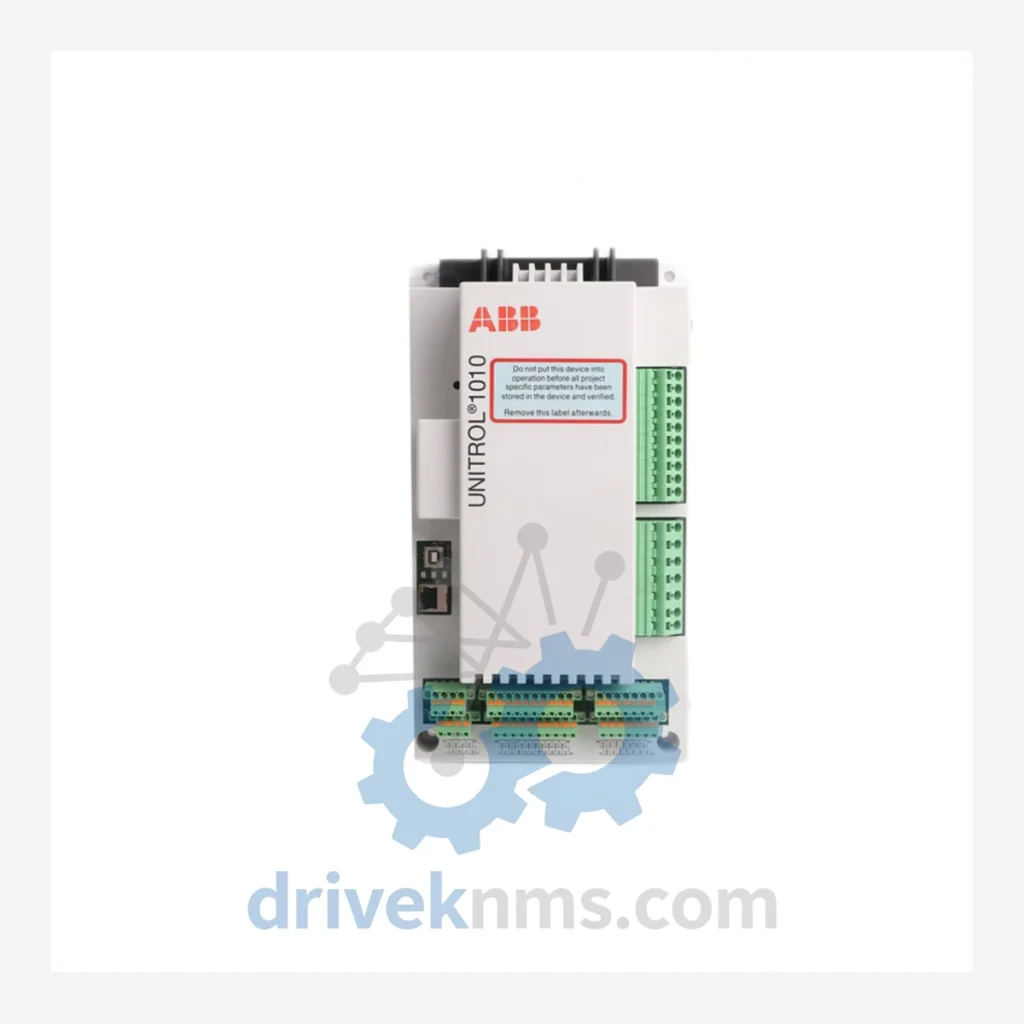
Product Overview
Commercial availability is handled through direct RFQ, model verification and export-oriented follow-up rather than public cart checkout.
Datasheet Preview
Use attached product manuals when available. If the manual is not public yet, request the full file directly through RFQ.
Commercial Path
Product pages on DRIVEKNMS are designed to verify model, brand and series first, then move the buyer into one clean quotation path.
Technical Dossier
The H&B Contronic system — developed by Hartmann & Braun and subsequently integrated into ABB's process automation portfolio — represents one of the most widely deployed distributed control system (DCS) platforms in continuous-process heavy industry. Installations span petrochemical complexes, nuclear power generation facilities, crude oil refineries, and large-scale chemical manufacturing plants across Europe, the Middle East, and Asia-Pacific. The Contronic platform's modular backplane architecture enabled phased expansion without full system replacement, making it the preferred choice for facilities with 20–40 year operational lifecycles. As of 2026, a significant installed base remains in active service, with maintenance and spare parts procurement representing the primary operational challenge for plant engineers and reliability teams.
The Contronic platform evolved through three distinct architectural generations. The first generation, introduced in the late 1970s under Hartmann & Braun, established the foundational backplane bus topology and analog I/O signal conditioning standards that defined the series. Modules from this era operated on proprietary parallel bus protocols with fixed-address slot assignment. The second generation, developed through the 1980s, introduced the Contronic E and Contronic P sub-families, expanding digital I/O density and introducing early fieldbus compatibility via PROFIBUS-DP adapters. The third generation, following ABB's acquisition of Hartmann & Braun in 1999, saw integration with ABB's System 800xA supervisory layer, enabling Contronic hardware to function as a managed subsystem within a broader ABB DCS environment. Compatibility between generations requires careful attention to backplane bus voltage levels, module addressing schemes, and firmware revision alignment. Cross-generation substitution without engineering validation is not recommended.
The following SKUs represent verified, commonly sourced modules within the ABB H&B Contronic platform. Each entry reflects the module's primary functional classification and role within the system architecture.
Controller & CPU Modules
Analog Input (AI) Modules
Analog Output (AO) Modules
Digital Input (DI) Modules
Digital Output (DO) Modules
Communication & Fieldbus Adapters
Power Supply Modules
The Contronic platform entered end-of-active-production status following ABB's consolidation of its DCS portfolio around the System 800xA and AC500 product lines. ABB's official spare parts support for many Contronic modules has been formally discontinued, with last-time-buy windows having closed for the majority of the catalog. DriveKNMS maintains a dedicated inventory of new-surplus, refurbished, and tested-serviceable Contronic modules sourced through authorized decommissioning channels and long-term storage facilities. For plant operators committed to maintaining Contronic-based control systems through the next scheduled turnaround cycle — typically 3–5 years — DriveKNMS provides lifecycle extension support including module-level testing, firmware version documentation, and cross-reference validation against current ABB replacement recommendations. Procurement inquiries for discontinued SKUs, including MB21, MB11, PU01, AI11, and CI01, are handled directly by our technical sales team.
Contronic modules present specific testing challenges due to their proprietary backplane bus protocol and the absence of standardized self-diagnostic output on older firmware revisions. DriveKNMS applies a multi-stage verification process to all Contronic inventory. Stage one involves visual inspection and component-level assessment of known failure points: electrolytic capacitor condition on power supply rails, EPROM data retention verification on controller modules, and relay contact resistance measurement on digital output modules. Stage two involves functional testing using a dedicated Contronic backplane test rig that replicates the original rack environment, allowing module-level I/O verification under simulated process conditions. Stage three applies thermal cycling to identify latent failures in solder joints and connector contacts — a common failure mode in modules that have experienced extended storage or high-humidity environments. All modules shipped by DriveKNMS include a test report with measured parameters and a 12-month functional warranty.
Related Paths
ABB SNAT-7120 / SNAZ7120J Circuit Board: Sourcing Strategy & Asset Return Value in a Constrained Global Supply Chain The ABB…
ABB AC500 Series: Comprehensive Module Range and Technical Overview The ABB AC500 is a scalable modular PLC platform deployed across…
ABB SCDCS-CON-4 Control Board – Obsolete DCS Spare Part When a single control board fails in a legacy distributed control…