
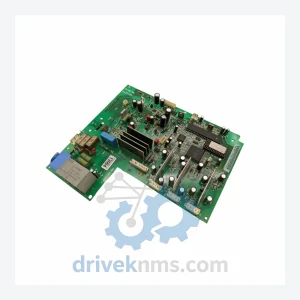
ABB SNAT-7120 Circuit Board – SNAZ7120J Series
ABB SNAT-7120 / SNAZ7120J Circuit Board: Sourcing Strategy & Asset Return Value in a Constrained Global Supply Chain The ABB…
Model: MM21
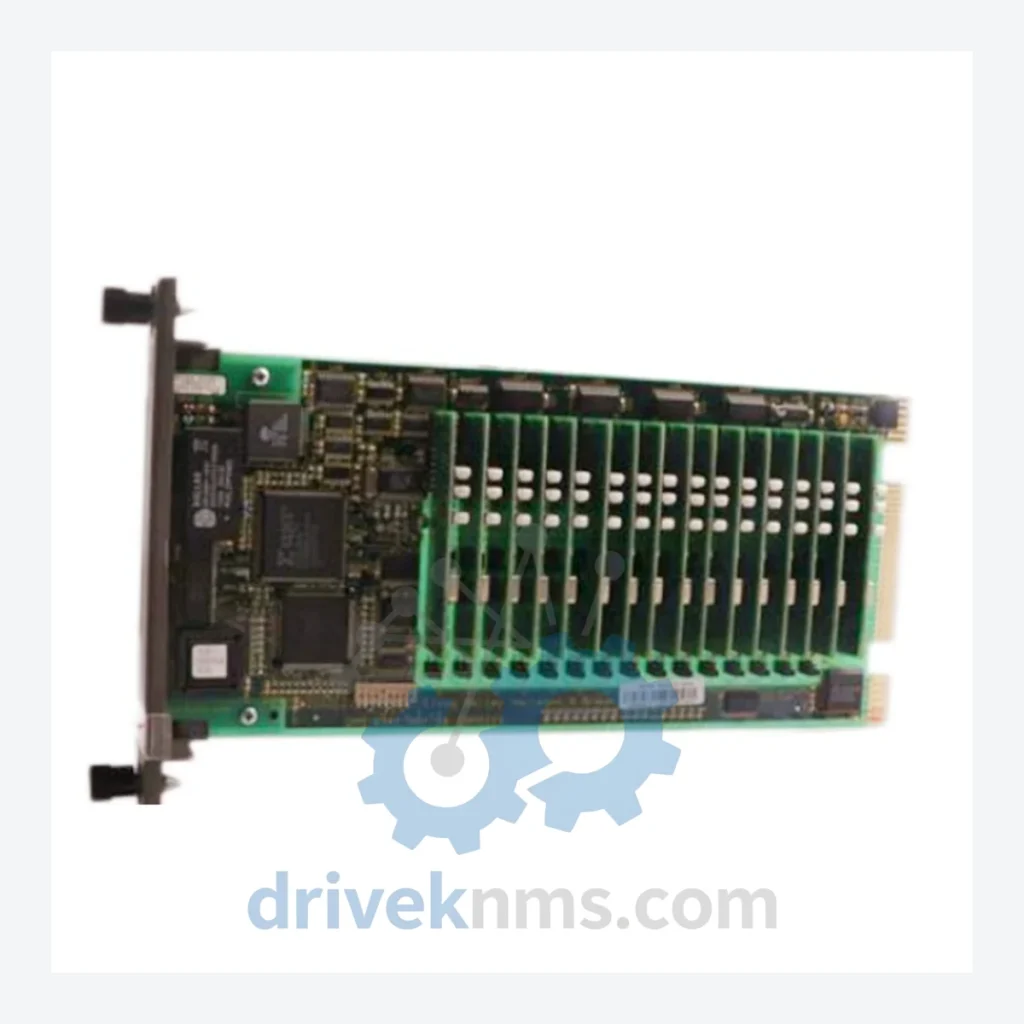
Product Overview
Commercial availability is handled through direct RFQ, model verification and export-oriented follow-up rather than public cart checkout.
Datasheet Preview
Use attached product manuals when available. If the manual is not public yet, request the full file directly through RFQ.
Commercial Path
Product pages on DRIVEKNMS are designed to verify model, brand and series first, then move the buyer into one clean quotation path.
Technical Dossier
The H&B Contronic MM series, developed under the Hartmann & Braun (H&B) brand — subsequently integrated into ABB's process automation portfolio — represents a foundational distributed control system (DCS) platform deployed extensively across global heavy industry. Installations span petrochemical complexes, nuclear power generation facilities, crude oil refineries, pulp and paper mills, and large-scale chemical processing plants. The Contronic MM architecture was engineered for high-availability continuous process control, with a modular backplane design that allows individual function modules to be replaced without full system shutdown. Its installed base remains substantial in facilities operating legacy DCS infrastructure, making spare parts availability a critical operational concern for plant maintenance engineers worldwide.
The Contronic MM series emerged in the late 1970s and early 1980s as H&B's response to the growing demand for modular, rack-based process control in continuous manufacturing environments. The original architecture relied on a proprietary parallel backplane bus for inter-module communication, with analog signal conditioning performed at the module level. Early variants used discrete component logic; later revisions incorporated CMOS-based microprocessors for improved noise immunity and self-diagnostics.
Following ABB's acquisition of Hartmann & Braun in 1996, the Contronic MM series was maintained as a supported legacy platform while ABB transitioned new projects toward the Contronic P and subsequently the Symphony Plus (800xA) architecture. This transition created a long-tail installed base: thousands of Contronic MM systems remain in service at facilities where full DCS migration is economically or operationally impractical. Compatibility between early MM modules and later revisions is generally maintained at the backplane level, though firmware and calibration differences require verification during module substitution. Cross-compatibility with Contronic E and Contronic P subsystems is limited and must be confirmed against site-specific engineering documentation.
The following SKUs represent verified, commonly sourced modules within the H&B Contronic MM series. Modules are classified by primary function:
Controllers & Processors
Analog Input (AI) Modules
Analog Output (AO) Modules
Digital Input (DI) / Digital Output (DO) Modules
Communication & Bus Adapters
Power Supply Modules
ABB formally discontinued active production of Contronic MM series modules following the consolidation of its DCS portfolio around the Symphony Plus platform. However, the operational lifespan of installed Contronic MM systems routinely extends 20–30 years beyond initial commissioning, creating sustained demand for replacement modules that are no longer available through standard OEM channels.
Contronic MM modules present specific testing challenges due to their proprietary backplane bus architecture and analog signal path complexity. DriveKNMS applies a structured verification protocol to all MM series units prior to dispatch:
Test records are retained and available upon request for traceability purposes.
Related Paths
ABB SNAT-7120 / SNAZ7120J Circuit Board: Sourcing Strategy & Asset Return Value in a Constrained Global Supply Chain The ABB…
ABB AC500 Series: Comprehensive Module Range and Technical Overview The ABB AC500 is a scalable modular PLC platform deployed across…
ABB SCDCS-CON-4 Control Board – Obsolete DCS Spare Part When a single control board fails in a legacy distributed control…