
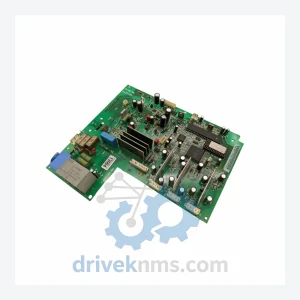
ABB SNAT-7120 Circuit Board – SNAZ7120J Series
ABB SNAT-7120 / SNAZ7120J Circuit Board: Sourcing Strategy & Asset Return Value in a Constrained Global Supply Chain The ABB…
Model: NAOM01
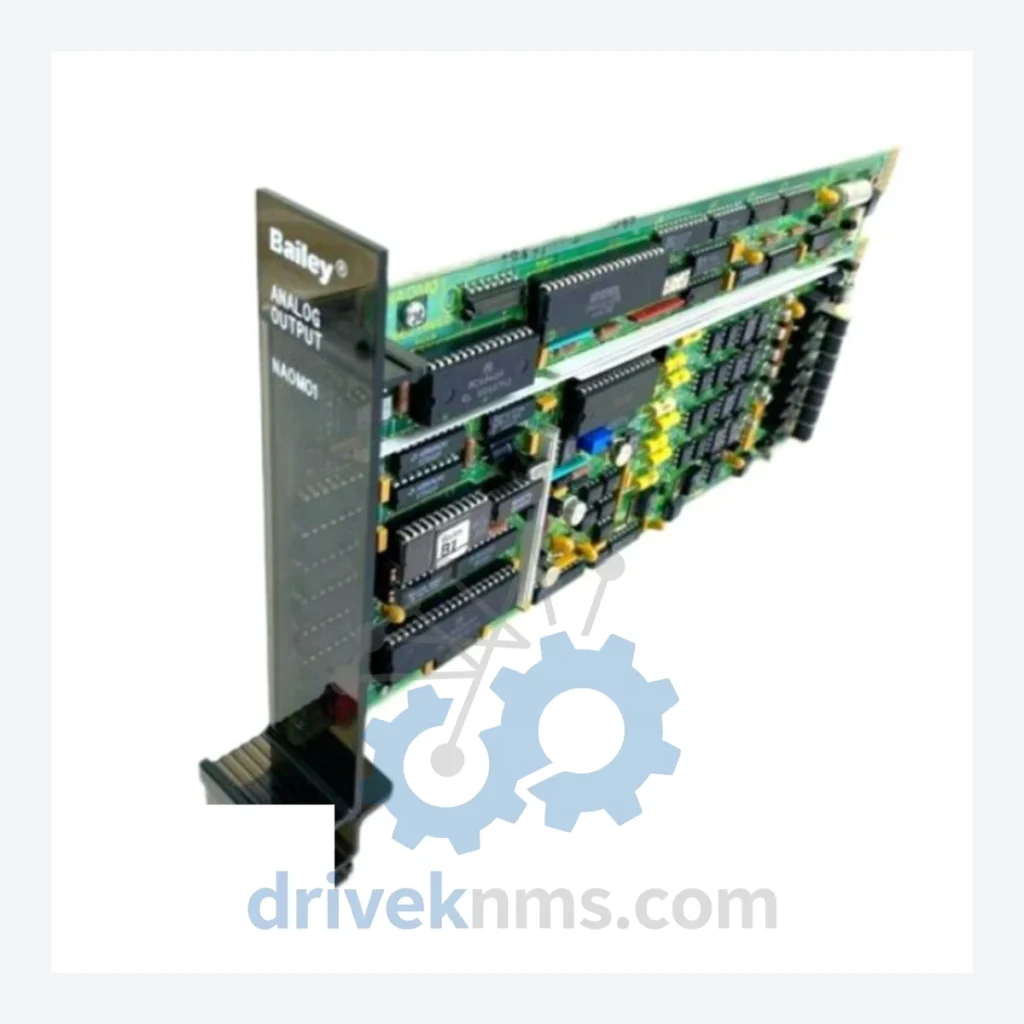
Product Overview
Commercial availability is handled through direct RFQ, model verification and export-oriented follow-up rather than public cart checkout.
Datasheet Preview
Use attached product manuals when available. If the manual is not public yet, request the full file directly through RFQ.
Commercial Path
Product pages on DRIVEKNMS are designed to verify model, brand and series first, then move the buyer into one clean quotation path.
Technical Dossier
The ABB S500 I/O system is a modular, distributed I/O platform engineered for integration with ABB's AC500 PLC family. It is deployed across heavy industrial sectors including petrochemical refineries, nuclear power auxiliary systems, offshore platforms, pulp and paper mills, and large-scale water treatment facilities. The S500 system supports both local and distributed configurations via fieldbus communication, making it a standard reference architecture in process automation projects requiring high channel density, deterministic scan cycles, and IEC 61131-3 compliant programming environments. The NAOM01 is a core analog output module within this ecosystem, providing precision signal conditioning for final control elements such as control valves, variable speed drives, and positioners.
The S500 I/O platform was introduced alongside the AC500 PLC generation in the mid-2000s as ABB's successor to the earlier Advant and Masterpiece DCS I/O architectures. The original S500 modules communicated via the CS31 fieldbus, a proprietary ABB protocol operating at 187.5 kbps over twisted-pair cabling. As industrial Ethernet adoption accelerated, ABB extended the S500 platform with PROFIBUS DP and PROFINET coupler modules, allowing legacy S500 I/O racks to be retained while migrating the controller layer. The second-generation S500-eCo sub-family introduced cost-optimized variants with reduced channel counts for smaller machine-level applications. Compatibility between S500 and S500-eCo modules within the same rack is constrained by the coupler type; mixed configurations require firmware validation. Modules from the original S500 generation, including the NAOM01, remain in active spare parts demand due to the long operational lifecycles typical of process industry installations — commonly 15 to 25 years.
Analog Output Modules
Analog Input Modules
Digital Output Modules
Digital Input Modules
Communication & Coupler Modules
DriveKNMS maintains a dedicated inventory program for ABB S500 modules that have reached end-of-active-production status. The NAOM01 and related analog I/O modules from the first-generation S500 platform are classified as mature lifecycle products. ABB's standard spare parts support window for these modules extends to 10 years post-discontinuation, but installed base demand frequently exceeds this window in refinery and power generation applications where full DCS migration is deferred due to capital expenditure constraints.
DriveKNMS sources NAOM01 units through verified decommissioning channels, OEM surplus stock, and authorized distributor networks. Each unit is catalogued with its firmware revision, hardware revision marking, and physical condition grade prior to listing. Customers requiring batch quantities for multi-year maintenance contracts are accommodated with reserved stock agreements. Cross-reference to successor modules (e.g., NAOM02 for HART-capable replacements) is provided upon request to support engineering evaluation of drop-in versus re-engineered substitutions.
S500 analog output modules including the NAOM01 undergo a structured test protocol at DriveKNMS prior to dispatch. The backplane bus connector is inspected under magnification for pin deformation, oxidation, and mechanical wear — the primary failure mode for modules removed from long-running installations. Each analog output channel is exercised across its full output range (0–20 mA and 0–10 V) using calibrated reference loads, with output accuracy verified against the module's published specification of ±0.1% full scale. Channel isolation is tested at 500 VDC to confirm inter-channel and channel-to-bus dielectric integrity. Modules with HART capability are tested for FSK signal superposition at 1200 baud. Firmware version is read and documented. Units that fail any parameter are quarantined and not listed for sale. Test records are retained and available to customers upon request for traceability in regulated industries.
Related Paths
ABB SNAT-7120 / SNAZ7120J Circuit Board: Sourcing Strategy & Asset Return Value in a Constrained Global Supply Chain The ABB…
ABB AC500 Series: Comprehensive Module Range and Technical Overview The ABB AC500 is a scalable modular PLC platform deployed across…
ABB SCDCS-CON-4 Control Board – Obsolete DCS Spare Part When a single control board fails in a legacy distributed control…