
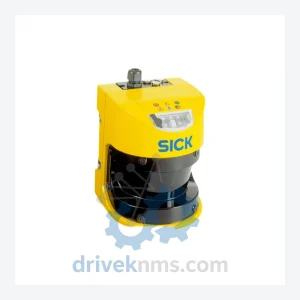
SICK S30A-6011BA Safety Laser Scanner – Obsolete S30A Series Spare Part
SICK S30A-6011BA Safety Laser Scanner – Obsolete S30A Series Spare Part When a SICK S30A-6011BA fails on an active production…
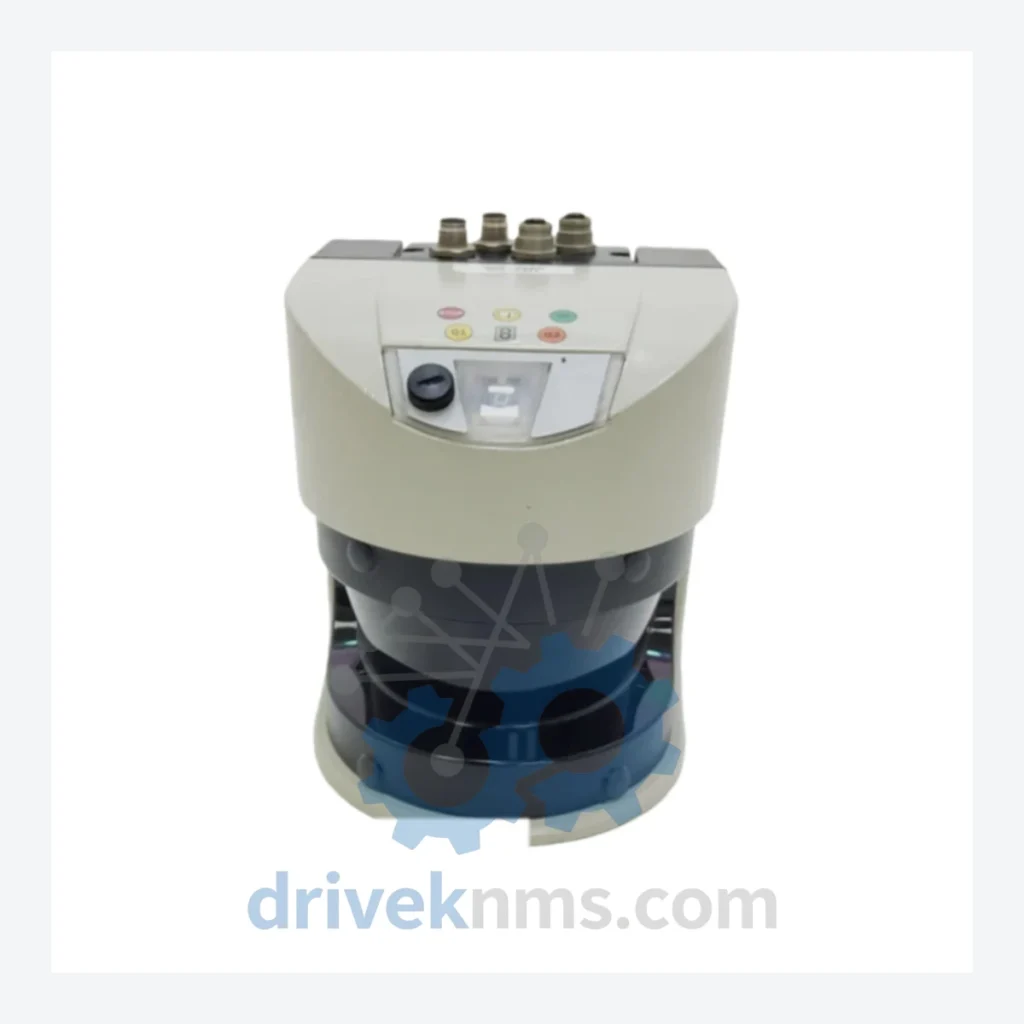
Model: LMS511-10100 ID. NUMBER 1046135
Product Overview
Commercial availability is handled through direct RFQ, model verification and export-oriented follow-up rather than public cart checkout.
Datasheet Preview
Use attached product manuals when available. If the manual is not public yet, request the full file directly through RFQ.
Commercial Path
Product pages on DRIVEKNMS are designed to verify model, brand and series first, then move the buyer into one clean quotation path.
Technical Dossier
The SICK LMS511 is a long-range 2D LiDAR (Light Detection and Ranging) sensor platform deployed across global heavy industry verticals including chemical processing plants, nuclear facility perimeter monitoring, oil refineries, port logistics, and large-scale automated warehousing. Operating on the SICK SOPAS engineering toolchain, the LMS511 delivers a 190° scanning angle with a range of up to 80 meters and a systematic error of ±25 mm, making it a reference-class sensor for safety-rated area monitoring and industrial automation guidance. Its IP67-rated enclosure and -30°C to +50°C operating range qualify it for outdoor and harsh-environment deployment without supplementary housing. The LMS511 family has accumulated significant installed base across European and Asian industrial infrastructure, and replacement units and spare modules remain in active demand for lifecycle maintenance programs.
The SICK LMS5xx platform succeeded the LMS2xx and LMS4xx generations, which used older RS-232/RS-422 serial interfaces and offered narrower scanning angles (100°–180°) with shorter detection ranges. The LMS511 introduced Ethernet (TCP/IP) as the primary communication interface alongside CAN and RS-422, enabling direct integration into modern industrial Ethernet topologies without protocol converters. Firmware revisions across the LMS511 lifecycle introduced enhanced object tracking algorithms, multi-echo processing for rain/dust rejection, and expanded SOPAS ET compatibility. The LMS511 is now in a mature/end-of-active-development phase; SICK has positioned the multiScan100 and LMS1xx/LMS4xx families as forward migration paths for new installations. However, the LMS511 remains the only drop-in replacement for existing LMS511-based safety and guidance systems, and no firmware-compatible successor exists for installed base retrofits without full system re-engineering. DriveKNMS maintains stock of both new and refurbished LMS511 units to support long-term maintenance contracts.
The following SKUs represent the verified LMS511 product range. Each unit is a self-contained 2D scanning sensor; functional differentiation is by scanning frequency, output interface, and approval class.
LMS511-10100: Standard outdoor 2D LiDAR, 25 Hz scan rate, Ethernet/CAN/RS-422, IP67
LMS511-10100 PRO: Extended diagnostics firmware, enhanced multi-echo, SOPAS ET advanced mode
LMS511-10106: 50 Hz high-frequency scan variant for fast-moving target tracking
LMS511-10100S01: Special order variant with modified cable exit for panel-mount integration
LMS511-10100S02: Variant with pre-configured PROFINET IO adapter interface
LMS511-10100S05: Low-temperature rated variant, operational to -40°C for arctic/cold-store environments
LMS511-10100S06: High-ambient-light rejection variant for outdoor solar-exposed installations
LMS511-20100: 2D scanner with integrated heating element for sub-zero ambient operation
LMS511-20106: Heated enclosure + 50 Hz scan rate combined variant
LMS511-10100 ID.1046135: Factory-serialized production batch, standard 25 Hz outdoor unit
LMS511-10100 ID.1046136: Sequential serial batch, identical specification to ID.1046135
LMS511-10100 ID.1046137: Sequential serial batch unit, standard outdoor specification
LMS511-10100 ID.1046138: Sequential serial batch unit, standard outdoor specification
LMS511-10100 ID.1046139: Sequential serial batch unit, standard outdoor specification
LMS511-10100 ID.1046140: Sequential serial batch unit, standard outdoor specification
LMS511-10100 ID.1046141: Sequential serial batch unit, standard outdoor specification
LMS511-10100 ID.1046142: Sequential serial batch unit, standard outdoor specification
LMS511-10100 ID.1046143: Sequential serial batch unit, standard outdoor specification
As the LMS511 series transitions into the maintenance-only phase of its product lifecycle, procurement of replacement units through standard distribution channels becomes progressively unreliable. Lead times from authorized SICK distributors for non-stocked LMS511 variants routinely exceed 16–24 weeks, and certain S0x special variants have been formally discontinued with no new production runs scheduled. DriveKNMS operates a dedicated obsolete and hard-to-find industrial sensor inventory program specifically addressing this gap. Our LMS511 stock is sourced through verified industrial decommissioning programs, factory-surplus channels, and authorized secondary market networks. All units are catalogued by serial number, firmware version, and physical condition grade prior to listing. For customers operating fleets of LMS511-equipped systems — particularly in port automation, tunnel monitoring, or refinery perimeter security — DriveKNMS can provide blanket purchase agreements and reserved stock allocations to eliminate unplanned downtime risk.
The LMS511 sensor integrates a rotating polygon mirror assembly, laser diode module, and FPGA-based signal processing board within a sealed IP67 enclosure. Standard visual inspection and power-on testing are insufficient to validate sensor accuracy after storage or transit. DriveKNMS applies a structured test protocol to every LMS511 unit processed through our facility. Each unit undergoes powered functional verification using SICK SOPAS ET software to confirm laser output, scan angle calibration, and Ethernet/CAN communication integrity. Range accuracy is validated against a calibrated flat-panel target at 10 m and 30 m distances, with systematic error required to remain within the factory specification of ±25 mm. Multi-echo processing is verified using a semi-transparent test screen to confirm rain/dust rejection algorithm function. Units exhibiting mirror motor irregularities, laser power degradation below threshold, or communication faults are quarantined and not listed for sale. Test records including SOPAS ET screenshots and range measurement logs are available upon request for any unit.
Related Paths
SICK S30A-6011BA Safety Laser Scanner – Obsolete S30A Series Spare Part When a SICK S30A-6011BA fails on an active production…
SICK VL180-2P42436 Photoelectric Sensor – Obsolete W180 Spare Part When a SICK VL180-2P42436 fails on an active production line, the…
SICK WE18-3P430 Photoelectric Sensor – Obsolete W18 Series Spare Part When a SICK WE18-3P430 fails on a production line, the…