
MOTOROLA MVME2304 64-W5206C01B Processor Module – VMEbus Series
MOTOROLA MVME2304 64-W5206C01B Processor Module: Global Sourcing Strategy & Asset Return Value Under Supply Chain Constraints The MOTOROLA MVME2304 64-W5206C01B…
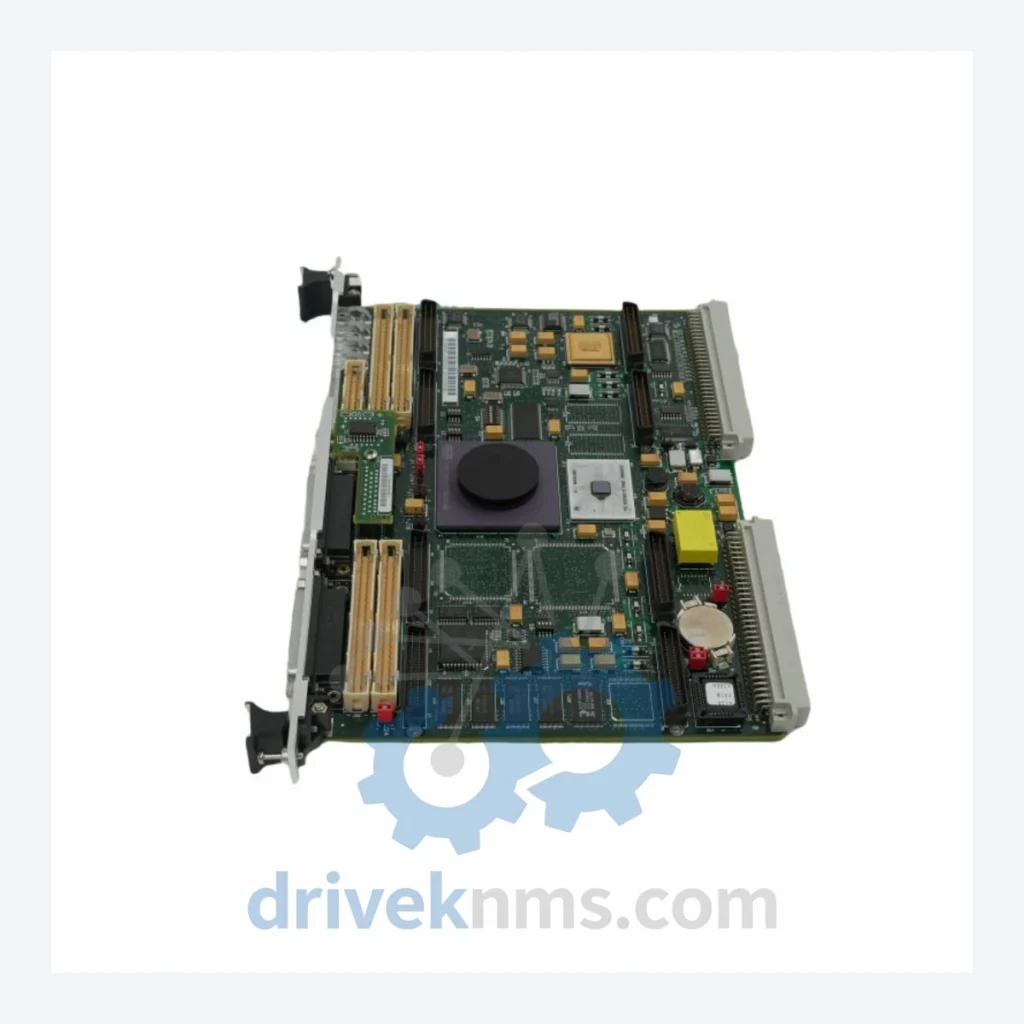
Model: MVME162P-244L
Product Overview
Commercial availability is handled through direct RFQ, model verification and export-oriented follow-up rather than public cart checkout.
Datasheet Preview
Use attached product manuals when available. If the manual is not public yet, request the full file directly through RFQ.
Commercial Path
Product pages on DRIVEKNMS are designed to verify model, brand and series first, then move the buyer into one clean quotation path.
Technical Dossier
The Motorola MVME162 is a single-board computer (SBC) built to the VMEbus (IEEE 1014) standard, designed for embedded real-time control in demanding industrial environments. From the early 1990s through the 2000s, the MVME162 series was deployed across chemical processing plants, nuclear power facilities, oil refineries, and large-scale manufacturing automation systems worldwide. Its Motorola 68040 processor architecture, combined with the deterministic VMEbus backplane, made it a preferred platform for applications where response latency and long-term hardware stability were non-negotiable requirements.
The MVME162 family encompasses a broad range of variants differentiated by processor speed, memory configuration, I/O options, and communication interfaces. Many installations built around this platform remain in active production today, supported by a global aftermarket parts ecosystem rather than OEM supply chains — Motorola's embedded computing division was acquired by Emerson Network Power (later Artesyn Embedded Technologies), and the MVME162 line has been formally discontinued.
The MVME162 series was introduced as a successor to the MVME147 and MVME167 platforms, consolidating the Motorola 68040 CPU into a more compact, thermally efficient single-slot VME form factor. The architecture evolved through several distinct generations:
Early Generation (MVME162-0xx): Initial releases featured the 68040 at 25 MHz with limited onboard DRAM (typically 4–16 MB). These boards targeted real-time operating systems such as VxWorks and OS-9, which were standard in process control and SCADA infrastructure of the era. Onboard SCSI and Ethernet (10BASE-T) were integrated, reducing the need for additional VME expansion cards.
Mid Generation (MVME162-2xx / 3xx): Clock speeds increased to 32–40 MHz. Memory configurations expanded to 32 MB and beyond. Enhanced serial communication options (four-channel asynchronous serial) were added to support legacy field device connectivity. The MVME162P sub-series introduced a revised PCB layout with improved EMI shielding, targeting nuclear and petrochemical environments with stricter electromagnetic compliance requirements.
Late Generation / P-Series (MVME162P-xxx): The MVME162P variants represent the final production iteration. These boards incorporated revised memory controllers, updated SCSI-2 interfaces, and in some configurations, dual Ethernet ports. The MVME162P-244L (the subject SKU of this listing) is a representative late-generation unit with 4 MB Flash, 4 MB DRAM, and a 32 MHz 68040 processor.
Transition and Discontinuation: As x86-based VME SBCs and CompactPCI platforms matured in the mid-2000s, the 68040-based MVME162 series was phased out. Migration paths to MVME5500 (PowerPC) or MVME7100 were recommended by Motorola/Emerson, but these require OS porting, driver rewrites, and application revalidation — a process that can take 12–24 months and cost $500,000 or more for a validated industrial system. As a result, a significant installed base continues to operate on MVME162 hardware.
The following models represent the core MVME162 production range. All are VMEbus single-slot SBCs based on the Motorola 68040 processor family. Functional classifications are based on primary configuration differences.
Processor & Base Controller Variants:
MVME162P (Revised PCB / Enhanced EMC) Variants:
Note: Specifications above are based on published Motorola documentation and verified field data. Confirm exact configuration of any specific unit with DriveKNMS prior to order placement.
The MVME162 series has been out of OEM production for over a decade. Motorola's embedded computing assets passed through Emerson Network Power and subsequently Artesyn Embedded Technologies; none of these successors manufacture or support the 68040-based MVME162 line. Authorized repair centers have progressively closed as component availability for the 68040 processor and associated chipset has declined.
DriveKNMS maintains a dedicated inventory of MVME162 and MVME162P boards sourced through verified industrial decommissioning channels. Our procurement process excludes boards from unverified brokers or gray-market sources. Each unit is traceable to a documented origin — typically decommissioned process control systems from chemical, power generation, or manufacturing facilities undergoing controlled upgrades.
For plant managers operating MVME162-based systems, the strategic case for maintaining a spare board inventory is straightforward: the cost of a verified spare MVME162 board is measured in hundreds to low thousands of dollars. The cost of an unplanned system outage — including emergency engineering, expedited sourcing, and lost production — is measured in tens to hundreds of thousands of dollars per day in continuous-process industries. A structured spare parts reserve, reviewed annually, is the lowest-cost risk mitigation available for legacy VMEbus infrastructure.
DriveKNMS can assess full bill-of-materials requirements for MVME162-based systems and provide availability reports across the complete module range. Contact us with your system configuration for a structured sourcing assessment.
VMEbus SBCs present specific inspection challenges due to their complex backplane interface, multi-layer PCB construction, and age-related component degradation. DriveKNMS applies the following test protocol to all MVME162 units:
Related Paths
MOTOROLA MVME2304 64-W5206C01B Processor Module: Global Sourcing Strategy & Asset Return Value Under Supply Chain Constraints The MOTOROLA MVME2304 64-W5206C01B…
Motorola FRN1420A CPU Module – Obsolete MVME Spare Part When a CPU module fails in a legacy VMEbus-based control system,…
Motorola MVME162-010A Embedded Controller – Obsolete MVME162 Spare Part When a Motorola MVME162-010A fails on the production floor, the consequences…