
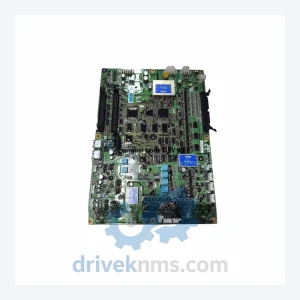
Sanyo PQM0A150EXXYST0 Servo Driver – SANMOTION Series
Sanyo PQM0A150EXXYST0 Servo Driver: Strategic Sourcing in a Constrained Supply Chain The Sanyo PQM0A150EXXYST0 is a precision servo driver from…
Model: PQM1A100A5HKSSA
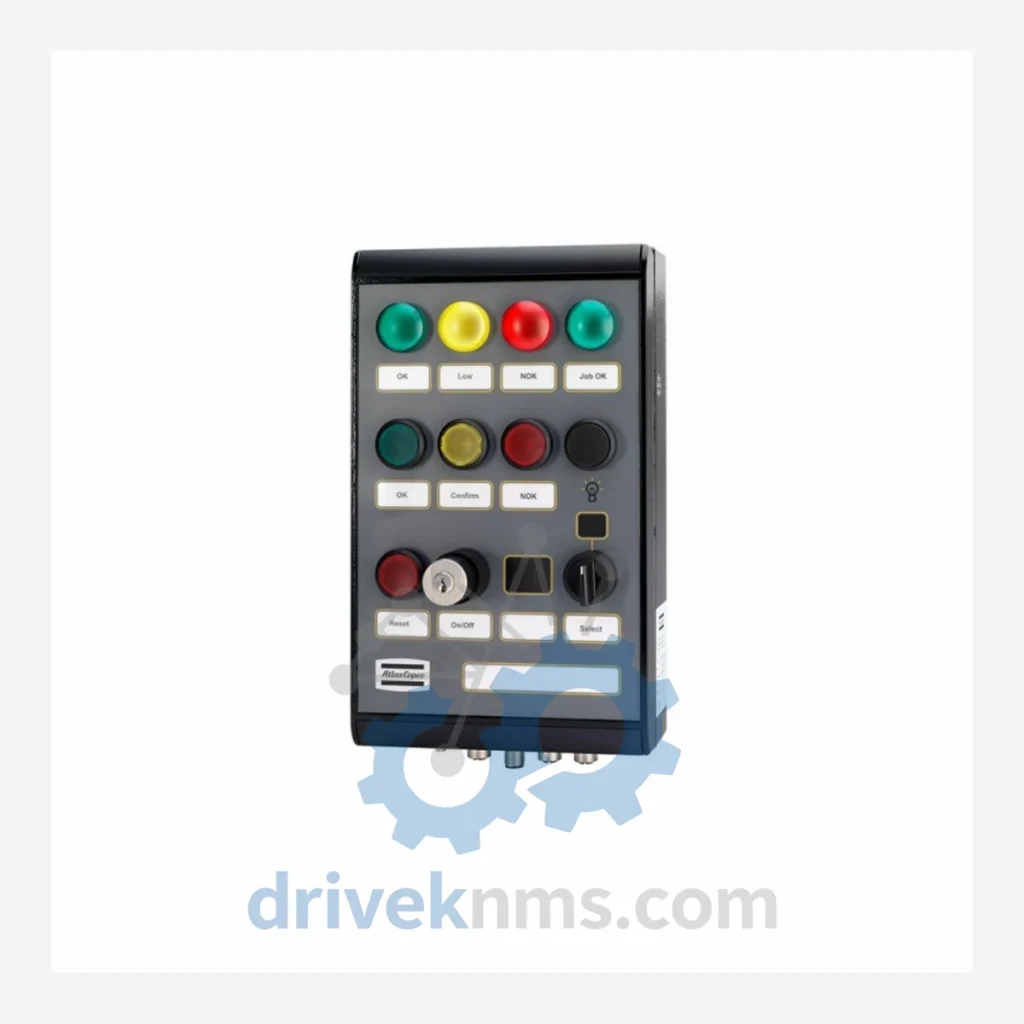
Product Overview
Commercial availability is handled through direct RFQ, model verification and export-oriented follow-up rather than public cart checkout.
Datasheet Preview
Use attached product manuals when available. If the manual is not public yet, request the full file directly through RFQ.
Commercial Path
Product pages on DRIVEKNMS are designed to verify model, brand and series first, then move the buyer into one clean quotation path.
Technical Dossier
When a SANYO PQM1A100A5HKSSA operator panel fails on an active production line, the decision facing plant management is rarely simple. Sourcing a direct replacement for a discontinued HMI panel is the only path that avoids a forced system migration — a project that routinely carries engineering, integration, and downtime costs well into the hundreds of thousands of dollars, and in complex multi-axis or process-control environments, into the millions. DriveKNMS holds verified physical stock of the PQM1A100A5HKSSA. This is not a catalog listing. Availability is finite.
| Parameter | Detail |
|---|---|
| Manufacturer | SANYO |
| Part Number / SKU | PQM1A100A5HKSSA |
| Product Category | Operator Panel (HMI) |
| Series | PQM Series |
| Country of Origin | Japan |
| Discontinuation Status | Obsolete – No longer in production by SANYO |
| Condition Available | New Old Stock (NOS) / Refurbished – Grade A |
Note: Electrical parameters such as supply voltage, display resolution, and communication protocol are confirmed only upon physical inspection of the unit. No unverified specifications are listed here. Contact us for a full datasheet or inspection report.
The SANYO PQM Series operator panels were deployed extensively in discrete manufacturing and process automation environments throughout the 1990s and 2000s. These panels served as the primary human-machine interface layer in systems where the underlying PLC or motion controller — often a SANYO DENKI Sanmotion platform or equivalent legacy architecture — remains fully functional and economically productive.
The core problem is asymmetric: the mechanical and electrical backbone of these systems can operate reliably for decades, but the HMI layer — subject to display degradation, membrane switch wear, and internal power supply stress — becomes the single point of failure that forces an otherwise unnecessary system retirement.
Replacing the PQM1A100A5HKSSA with an original-specification unit eliminates that forced retirement. There is no software migration, no re-commissioning of field devices, no retraining of operators on a new interface. The production asset continues generating return on the capital already invested in it.
For plant managers operating under capital expenditure constraints, this is not a minor maintenance decision. A single avoided system upgrade can represent a deferral of USD 200,000 to USD 2,000,000 in project spend, depending on system complexity and integration depth. The cost of a verified spare part is not a maintenance expense — it is asset protection.
The following strategy applies directly to facilities running legacy SANYO PQM-based systems, and more broadly to any plant managing automation infrastructure beyond its original design lifecycle:
1. Identify single-point-of-failure components. Operator panels, power supply modules, and communication interface cards are the components most likely to cause unplanned downtime. They are also the components most likely to be discontinued first. Audit your installed base and map which components have no current-production equivalent.
2. Establish a minimum strategic stock level. For critical HMI panels like the PQM1A100A5HKSSA, a minimum of two units per production line is a defensible standard. One unit in service, one unit in controlled storage. The carrying cost of a spare panel is a fraction of one hour of unplanned line stoppage.
3. Source before the crisis, not during it. Obsolete part availability follows a predictable decay curve. Stock held by specialist distributors like DriveKNMS diminishes over time and is not replenished. Procurement decisions made under emergency conditions — when a line is already down — result in premium pricing, extended lead times, and increased risk of counterfeit exposure.
4. Implement controlled storage protocols. Electromechanical components in long-term storage require temperature and humidity control, anti-static packaging, and periodic inspection. A spare part stored incorrectly for five years may not perform reliably when needed.
5. Document your legacy system architecture. Maintain current wiring diagrams, firmware version records, and configuration backups for all legacy control systems. When a component is replaced, this documentation eliminates the risk of configuration loss and reduces commissioning time to hours rather than days.
Facilities that implement this approach consistently report the ability to extend productive asset life by five to ten years beyond the point at which reactive maintenance would have forced a system replacement.
Every PQM1A100A5HKSSA unit processed by DriveKNMS passes a structured five-stage quality verification protocol before it is offered for sale:
Stage 1 – Electrolytic Capacitor Assessment. Capacitor aging is the primary failure mode in legacy HMI power supply circuits. Each unit undergoes ESR (Equivalent Series Resistance) measurement on all electrolytic capacitors. Units with out-of-specification readings are either recapped with equivalent-specification components or rejected.
Stage 2 – Firmware Version Verification. Where applicable, firmware version is confirmed and documented. Compatibility with the target system's PLC or controller firmware is verified against known compatibility matrices.
Stage 3 – Pin and Connector Inspection. All connector pins, edge connectors, and terminal blocks are inspected under magnification for oxidation, corrosion, mechanical deformation, and solder joint integrity. Affected contacts are cleaned or the unit is rejected.
Stage 4 – Functional Power-On Test. The unit is powered and subjected to a functional test covering display output, input response, and communication interface activity. Test results are logged.
Stage 5 – Final Cosmetic and Packaging Inspection. Units are graded, labeled with condition status, and packaged in anti-static materials with desiccant for storage and shipping.
Q: What warranty applies to an obsolete part like the PQM1A100A5HKSSA?
A: DriveKNMS provides a 90-day warranty covering functional defects on all refurbished units. New Old Stock units carry a 30-day DOA (Dead on Arrival) guarantee. Warranty terms are confirmed in writing prior to shipment.
Q: How do I know the unit is genuine and not counterfeit?
A: All units are sourced through documented supply chains. Physical inspection includes verification of manufacturer markings, PCB revision codes, and component date codes consistent with the original production period. We do not source from unverified secondary markets.
Q: Should I purchase more than one unit?
A: For any production-critical system running a discontinued HMI panel, holding a minimum of one additional spare unit is a standard risk management practice. Given the declining availability of PQM1A100A5HKSSA stock globally, procurement of multiple units at the time of initial purchase is advisable. We can discuss volume pricing.
Q: Can you source this part if it is not currently in stock?
A: DriveKNMS maintains active sourcing relationships across the global obsolete parts market. If current stock is depleted, we can initiate a sourcing request. Lead times for sourced units vary and are quoted on a case-by-case basis.
Related Paths
Sanyo PQM0A150EXXYST0 Servo Driver: Strategic Sourcing in a Constrained Supply Chain The Sanyo PQM0A150EXXYST0 is a precision servo driver from…
SANYO PQM0A100EXXYST0 Power Supply – Obsolete SANYO Industrial Spare Part When a power supply module fails on a legacy production…
SANYO PQM0A030EXXYST0 PQM0PA7R801 Servo Driver: Sourcing Strategy & Asset Return Value in a Constrained Global Supply Chain The SANYO PQM0A030EXXYST0…