
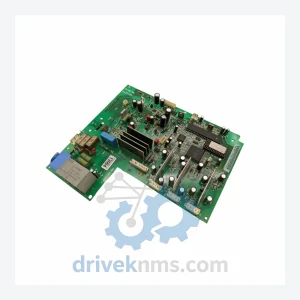
ABB SNAT-7120 Circuit Board – SNAZ7120J Series
ABB SNAT-7120 / SNAZ7120J Circuit Board: Sourcing Strategy & Asset Return Value in a Constrained Global Supply Chain The ABB…
Model: LD LPTR-01
Product Overview
Commercial availability is handled through direct RFQ, model verification and export-oriented follow-up rather than public cart checkout.
Datasheet Preview
Use attached product manuals when available. If the manual is not public yet, request the full file directly through RFQ.
Commercial Path
Product pages on DRIVEKNMS are designed to verify model, brand and series first, then move the buyer into one clean quotation path.
Technical Dossier
When an ABB LD LPTR-01 pulse transformer fails in a legacy drive system, the consequences extend far beyond a single component. This module sits at the heart of gate firing circuits in ABB's LD-series DC drives and converter units. Its failure disables the entire drive, halting production lines that may have operated continuously for 15 to 25 years. Replacing the surrounding system — drives, cabinets, cabling, PLC integration, and recommissioning — routinely costs manufacturers between USD 200,000 and USD 1,500,000, depending on system complexity and production downtime. A verified spare LD LPTR-01 on hand eliminates that risk entirely.
DriveKNMS maintains sourced inventory of discontinued ABB components specifically for facilities that cannot afford unplanned capital expenditure on system upgrades. The LD LPTR-01 is confirmed discontinued by ABB. New old stock and professionally refurbished units are available while supplies last.
| Parameter | Detail |
|---|---|
| Manufacturer | ABB |
| Part Number | LD LPTR-01 |
| Series | ABB LD Series |
| Component Type | Pulse Transformer (Gate Firing) |
| Application | Thyristor / SCR gate drive isolation in DC drive converter boards |
| Discontinuation Status | Confirmed Discontinued – No longer manufactured by ABB |
| Compatible Systems | ABB LD-series DC drives; ABB DCS400 / DCS500 series (verify board revision before ordering) |
| Country of Origin | Sweden |
| Condition Available | New Old Stock (NOS) / Professionally Refurbished |
Note: Electrical parameters such as turns ratio, inductance, and insulation voltage are board-specific. DriveKNMS technical staff will confirm compatibility with your exact board revision upon inquiry. No parameters are published here that cannot be independently verified.
ABB's LD-series DC drive platforms were deployed extensively across steel mills, paper mills, mining hoists, and heavy process industries from the 1980s through the early 2000s. Many of these installations remain in active production service today — not because operators are unaware of their age, but because the cost and risk of replacing a functioning, tuned drive system with modern alternatives is prohibitive.
The LD LPTR-01 pulse transformer is a board-level component responsible for isolating and transmitting gate trigger pulses to thyristor (SCR) stacks. Without it, the converter cannot fire, and the drive produces no output. Because this component is embedded within the firing board assembly, there is no field workaround — the part must be replaced like-for-like.
ABB ceased production of LD-series components years ago. Authorized service channels no longer carry this part number. The only viable procurement path is the secondary market, where verified inventory is finite and diminishing. Facilities that have not yet secured a spare unit are operating with a single point of failure that carries no recovery path through standard channels.
How to extend your ABB LD-series drive asset life by 5 to 10 years — without a capital project:
A single avoided production stoppage on a high-throughput line typically recovers the cost of a multi-year spare parts program many times over. The LD LPTR-01 is not a consumable — it is insurance against a capital event.
DriveKNMS applies a 5-step quality assurance process to all refurbished obsolete components before dispatch:
New old stock (NOS) units undergo steps 1, 3, and 4 as a minimum. Full test reports are available for units where bench testing was performed.
What warranty applies to obsolete parts?
DriveKNMS provides a 90-day warranty against defects in materials and workmanship on all refurbished units. New old stock units carry a 30-day warranty. Warranty terms are confirmed in writing at the time of order.
How do I know the unit is genuine and not counterfeit?
All units sourced by DriveKNMS are inspected for authenticity markers including manufacturer markings, date codes, and construction characteristics consistent with genuine ABB production. We do not knowingly source from markets with documented counterfeit activity. Provenance documentation is provided where available.
Should I buy more than one unit?
For any drive controlling a critical production asset, holding a minimum of two spare units is advisable. The LD LPTR-01 is confirmed discontinued. Once current secondary market inventory is exhausted, no further supply can be guaranteed at any price. Procurement now, at planned cost, is materially less expensive than emergency procurement — if stock can be located at all — during a production stoppage.
Can you hold stock for future delivery?
Yes. DriveKNMS can arrange reserved inventory agreements for customers requiring guaranteed future access to specific part numbers. Contact us to discuss terms.
What information do I need to provide when ordering?
Please provide your drive model number, board part number, and board revision if visible. This allows our technical team to confirm compatibility before shipment and reduces the risk of a mismatch.
Related Paths
ABB SNAT-7120 / SNAZ7120J Circuit Board: Sourcing Strategy & Asset Return Value in a Constrained Global Supply Chain The ABB…
ABB AC500 Series: Comprehensive Module Range and Technical Overview The ABB AC500 is a scalable modular PLC platform deployed across…
ABB SCDCS-CON-4 Control Board – Obsolete DCS Spare Part When a single control board fails in a legacy distributed control…