
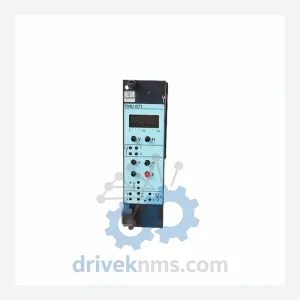
Endress+Hauser FMU671 Ultrasonic Level Transmitter – Obsolete Nivosonic Spare Part
Endress+Hauser FMU671 Ultrasonic Level Transmitter – Obsolete Nivosonic Spare Part When the FMU671 fails on your production line, the clock…
Model: CM442-AAM1A2F010A
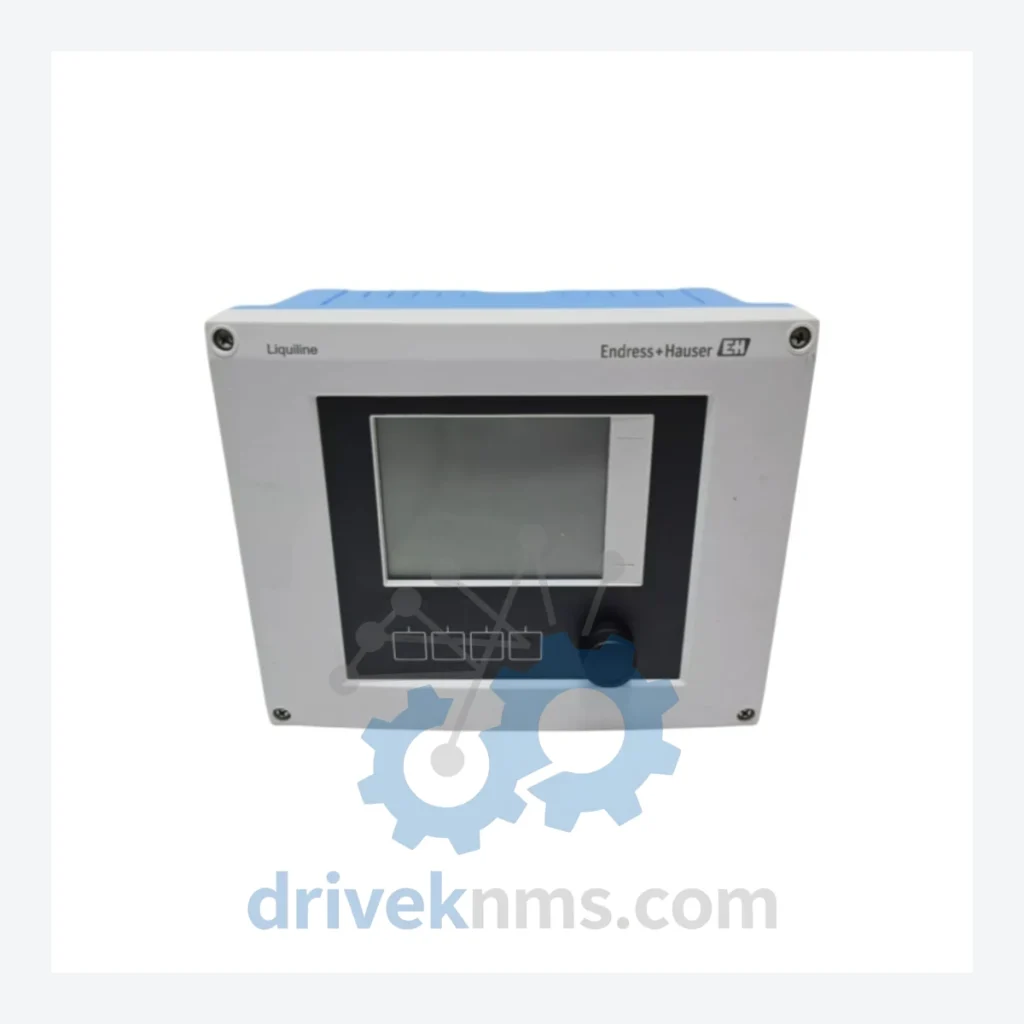
Product Overview
Commercial availability is handled through direct RFQ, model verification and export-oriented follow-up rather than public cart checkout.
Datasheet Preview
Use attached product manuals when available. If the manual is not public yet, request the full file directly through RFQ.
Commercial Path
Product pages on DRIVEKNMS are designed to verify model, brand and series first, then move the buyer into one clean quotation path.
Technical Dossier
Process plants running continuous liquid analysis cannot afford unplanned downtime. The CM442-AAM1A2F010A is the field-proven control node for multi-sensor measurement loops — pH, conductivity, dissolved oxygen, turbidity — across water treatment, pharmaceutical, food & beverage, and chemical processing facilities. When this transmitter fails without a replacement on hand, the consequence is not a simple repair ticket. It is a production halt, a compliance gap, and in regulated industries, a potential shutdown notice. A single day of lost output on a mid-scale chemical line routinely exceeds the cost of stocking five spare units. DriveKNMS maintains verified inventory of the CM442-AAM1A2F010A to eliminate that exposure.
| Parameter | Detail |
|---|---|
| Manufacturer | Endress+Hauser |
| Series | Liquiline CM442 |
| Model / Order Code | CM442-AAM1A2F010A |
| Product Type | Multiparameter Liquid Analysis Transmitter |
| Inputs | 2 sensor inputs (Memosens digital protocol) |
| Display | Graphic display with backlight |
| Outputs | 4–20 mA HART, relay outputs (configuration per order code) |
| Power Supply | 100–230 V AC, 50/60 Hz (per order code suffix) |
| Protection Rating | IP66 / IP67 (NEMA 4X) |
| Ambient Temperature | –20 to +60 °C |
| Country of Origin | Germany |
| Production Status | Active – stocked as critical emergency spare |
Note: Electrical parameters are stated based on published Endress+Hauser documentation for the CM442 platform. Confirm exact configuration against your plant's order records before installation.
The CM442 platform is the measurement backbone in thousands of facilities running Endress+Hauser Memosens sensor networks. Its role is not peripheral — it is the data acquisition and signal conditioning layer between field sensors and the DCS or SCADA layer above. Common host systems include Siemens PCS 7, Honeywell Experion PKS, ABB System 800xA, and Yokogawa CENTUM VP. In each of these environments, the CM442 transmitter communicates calibration data, sensor diagnostics, and process values upstream. A failed transmitter does not merely lose one measurement point; it blinds the control system to an entire measurement loop, triggering interlock conditions and forcing manual sampling — a resource-intensive fallback that cannot be sustained beyond hours in a regulated process.
Plant engineers who have experienced this failure mode understand the calculus: the cost of holding one or two CM442 spare units in the instrument store is negligible against the cost of a 12–72 hour procurement lead time during an unplanned outage. DriveKNMS exists to close that gap for facilities that did not pre-position stock, or that need to replenish their spare inventory after a recent failure event.
The CM442 transmitter is designed for a long service life, but the surrounding infrastructure — field junction boxes, cable glands, sensor adapters, and the sensors themselves — ages at a different rate. A structured asset protection strategy for a CM442-based measurement loop includes the following steps:
1. Sensor rotation and calibration logging. Memosens sensors carry calibration history in their digital chip. Rotating sensors on a documented schedule and archiving calibration data extends sensor service life and provides audit-ready records for regulated processes.
2. Transmitter firmware version control. Endress+Hauser releases firmware updates for the CM442 platform. Maintaining a record of the firmware version installed in each field unit prevents compatibility issues when replacing sensors or integrating new measurement parameters.
3. Pre-positioned spare inventory. For any measurement loop that is critical to production continuity or regulatory compliance, holding a minimum of one spare CM442 transmitter at site eliminates the lead-time risk entirely. The unit cost is a fraction of one hour of lost production on most process lines.
4. Periodic enclosure inspection. IP66/IP67 ratings are tested at manufacture. Field exposure to cleaning agents, temperature cycling, and mechanical vibration degrades gasket integrity over time. Annual inspection of the enclosure seal and cable entry points prevents moisture ingress — the most common cause of premature transmitter failure in wet process environments.
5. Documentation of wiring and configuration. When a transmitter is replaced, the replacement unit must be configured to match the original: output ranges, relay setpoints, HART address, and sensor type assignments. Maintaining a site-specific configuration record reduces replacement time from hours to minutes and eliminates the risk of misconfiguration-driven process upsets.
Facilities that implement these five practices consistently report instrument asset lifespans of 10–15 years on CM442-class hardware — well beyond the typical 7-year planning horizon used in capital budgeting.
Every CM442-AAM1A2F010A unit shipped by DriveKNMS passes a structured 5-step inspection protocol before dispatch:
Step 1 – Visual and mechanical inspection. Enclosure integrity, terminal block condition, display glass, and keypad function are checked against factory acceptance criteria.
Step 2 – Electrolytic capacitor assessment. Power supply and signal conditioning boards are inspected for capacitor bulge, electrolyte leakage, and ESR deviation — the primary aging failure mode in transmitter electronics.
Step 3 – Firmware version verification. The installed firmware version is recorded and cross-referenced against the Endress+Hauser compatibility matrix for the sensor types specified in the order code.
Step 4 – Terminal and connector inspection. All I/O terminals, sensor input connectors, and power terminals are inspected for oxidation, corrosion, and mechanical damage. Affected contacts are cleaned or flagged for replacement.
Step 5 – Functional power-on test. The unit is powered and verified to reach normal operating state, display initialization, and self-diagnostic pass before packaging.
Units that do not pass all five steps are not shipped. Condition grade (new, tested surplus, or certified refurbished) is declared on the shipping documentation.
Q: What warranty applies to CM442-AAM1A2F010A units from DriveKNMS?
A: DriveKNMS provides a 12-month warranty on all units shipped, covering functional failure under normal operating conditions. Warranty terms are confirmed in writing at the time of order.
Q: How do I confirm the unit is new or certified refurbished?
A: Condition grade is declared on the invoice and shipping documentation. New units are supplied in original or equivalent packaging. Certified refurbished units are supplied with a DriveKNMS inspection report documenting the 5-step QA process.
Q: Can DriveKNMS supply multiple units for long-term spare inventory?
A: Yes. DriveKNMS supports bulk spare procurement for facilities building strategic instrument reserves. Contact us to discuss quantity pricing and staggered delivery schedules.
Q: What is the lead time for dispatch?
A: In-stock units are dispatched within 1–3 business days. Lead time for international freight depends on destination and shipping method selected at order.
Q: Is the CM442-AAM1A2F010A compatible with all Memosens sensors?
A: The CM442 platform supports a wide range of Memosens-protocol sensors. Compatibility with specific sensor types depends on the firmware version installed. Confirm your sensor model with DriveKNMS at the time of inquiry.
© 2026 DriveKNMS. Status: DRAFT
Related Paths
Endress+Hauser FMU671 Ultrasonic Level Transmitter – Obsolete Nivosonic Spare Part When the FMU671 fails on your production line, the clock…
E+H FLOWTEC 319083-0200B Amplifier Board: Securing Supply in a Constrained Market The Endress+Hauser FLOWTEC 319083-0200B is a precision amplifier board…
Endress+Hauser AG319100-0200C / AG319100-0200D PCB Control Board: Supply Continuity Strategy for a Discontinued Industrial Component The Endress+Hauser AG319100-0200C and its…