
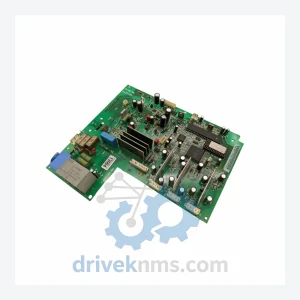
ABB SNAT-7120 Circuit Board – SNAZ7120J Series
ABB SNAT-7120 / SNAZ7120J Circuit Board: Sourcing Strategy & Asset Return Value in a Constrained Global Supply Chain The ABB…
Model: NTCF23
Product Overview
Commercial availability is handled through direct RFQ, model verification and export-oriented follow-up rather than public cart checkout.
Datasheet Preview
Use attached product manuals when available. If the manual is not public yet, request the full file directly through RFQ.
Commercial Path
Product pages on DRIVEKNMS are designed to verify model, brand and series first, then move the buyer into one clean quotation path.
Technical Dossier
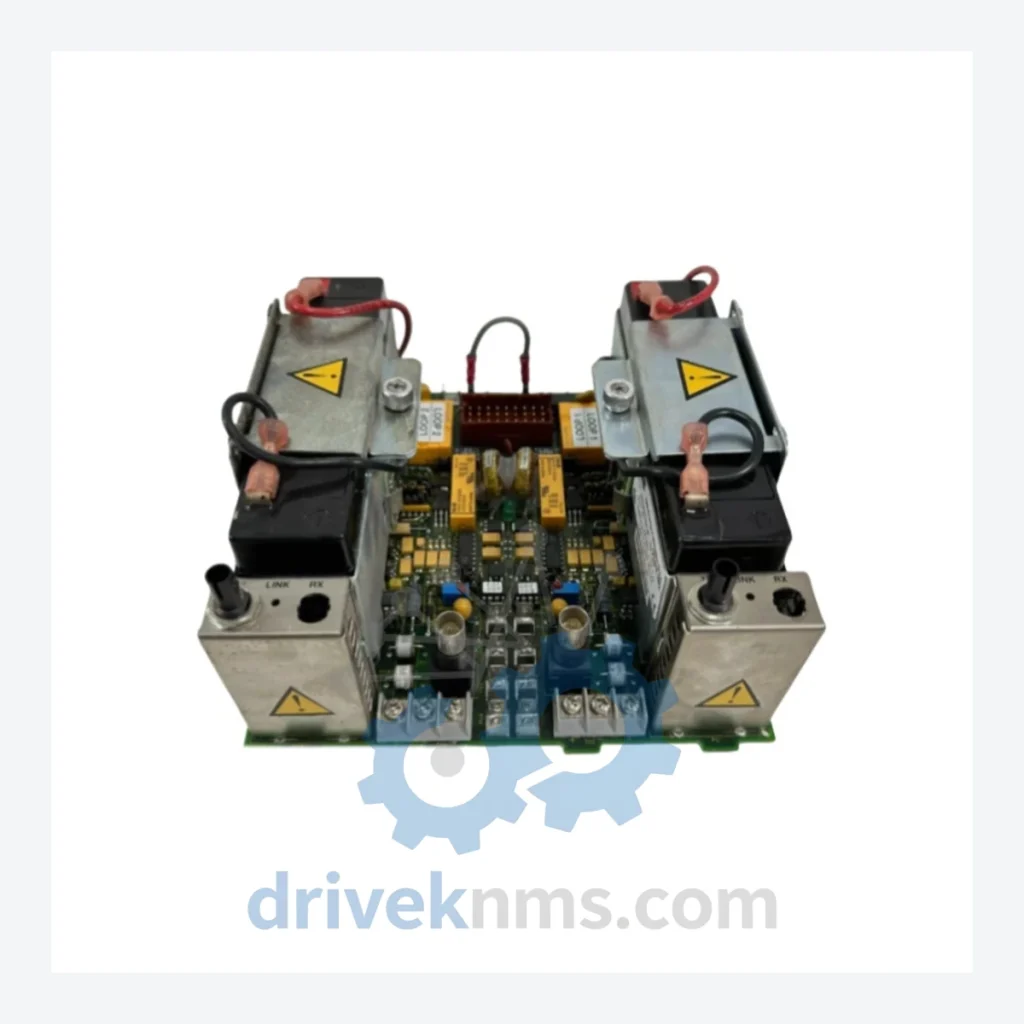
The ABB NTCF23 is a temperature sensor input module belonging to ABB's INFI 90 / Advant OCS distributed control system (DCS) platform. This series has established a significant installed base across global heavy industries including petrochemical refineries, nuclear power stations, pulp and paper mills, and offshore oil and gas platforms. The NTCF23 is designed to interface thermocouple and RTD (Resistance Temperature Detector) inputs directly to the INFI 90 process control network, providing high-accuracy analog temperature measurement with galvanic isolation and cold junction compensation. Its modular form factor and backward compatibility with the INFI 90 backplane make it a long-term fixture in facilities where control system replacement is cost-prohibitive or operationally impractical.
The NTCF23 belongs to ABB's INFI 90 module family, introduced in the mid-1980s as part of ABB's (then Asea Brown Boveri) strategy to deliver a fully distributed, peer-to-peer process control architecture. Early INFI 90 modules communicated over the Plant Loop and Module Bus using proprietary token-passing protocols. The NTCF23 was engineered to accept up to 16 thermocouple or RTD inputs per module, with onboard signal conditioning and analog-to-digital conversion, offloading processing from the central controller.
As ABB transitioned through successive DCS generations — from INFI 90 to Advant OCS (AC 450/AC 460) and subsequently to System 800xA — the NTCF23 retained compatibility through the INFI 90 backplane standard. However, it is not natively compatible with 800xA without the use of legacy gateway modules (e.g., NINT-01 or CI858 connectivity interfaces). Facilities running INFI 90 vintage hardware face a well-documented compatibility boundary: NTCF23 modules cannot be hot-swapped into 800xA I/O clusters without engineering intervention. This architectural boundary defines the primary obsolescence challenge for end users today.
The NTCF23 is classified as a mature/end-of-life product. ABB ceased active manufacturing of INFI 90 modules, including the NTCF23, and spare parts are sourced exclusively through the secondary market, authorized repair centers, or specialist distributors such as DriveKNMS.
The following SKUs represent verified modules within the ABB INFI 90 / Advant temperature and analog I/O ecosystem. Each entry reflects a distinct functional role within the control architecture:
NTCF23: 16-channel thermocouple/RTD temperature input module, INFI 90 bus compatible
NTCF01: 8-channel thermocouple input module, early INFI 90 generation, J/K/T/E type support
NTCF02: 8-channel RTD input module, 2/3/4-wire PT100 configuration
NTCF03: 16-channel thermocouple input, enhanced cold junction compensation
NTCF04: 16-channel RTD input module, PT100/PT1000 selectable
NTAI23: 16-channel analog input module, 4–20 mA / 0–10 V, INFI 90 backplane
NTAI22: 8-channel analog input module, 4–20 mA, single-ended configuration
NTAO21: 8-channel analog output module, 4–20 mA, INFI 90 compatible
NTAO22: 16-channel analog output module, 4–20 mA, isolated outputs
NDIO01: 32-channel digital I/O module, 24 VDC, INFI 90 bus
NDIO02: 16-channel digital input / 16-channel digital output, mixed I/O
NKTU01: Termination unit for NTCF series, field wiring interface panel
NKTU02: Extended termination unit, 32-point field wiring, NTCF23 compatible
NCPU01: INFI 90 controller module, Module Bus master, coordinates NTCF I/O
NCPU02: Enhanced INFI 90 controller, expanded memory, peer-to-peer loop support
NPSM01: Power supply module, 24 VDC regulated, INFI 90 rack
NPSM02: Redundant power supply module, hot-standby configuration
NCOM01: Communication adapter, Plant Loop interface for INFI 90 nodes
NCOM02: Dual-port Plant Loop communication module, redundant network paths
DriveKNMS maintains a dedicated inventory program for end-of-life ABB INFI 90 components, including the NTCF23 and its associated termination units, communication adapters, and power supply modules. As ABB has formally discontinued INFI 90 hardware support, facilities operating this platform face a finite and shrinking supply window for genuine replacement modules.
The NTCF23 presents specific quality verification challenges due to its multi-channel analog front end and INFI 90 backplane communication protocol. DriveKNMS applies a structured test protocol to each unit prior to dispatch:
Backplane Communication Verification: Each NTCF23 is installed in a live INFI 90 test rack and polled via Module Bus to confirm correct node addressing and data frame integrity. Modules that fail to enumerate on the bus are quarantined for board-level diagnosis.
Channel-by-Channel Input Accuracy Test: All 16 input channels are stimulated using a calibrated thermocouple/RTD simulator (Fluke 724 or equivalent). Measured values are compared against reference standards to verify accuracy within the module's published specification (typically ±0.1% of full scale).
Cold Junction Compensation Check: The onboard CJC circuit is validated at ambient temperatures of 10°C, 25°C, and 40°C to confirm compensation accuracy across the operating range.
Isolation Resistance Test: Channel-to-channel and channel-to-bus isolation is verified at 500 VDC using a calibrated megohmmeter. Minimum acceptable isolation resistance is 100 MΩ.
Burn-In Cycle: Units are powered continuously for 48 hours in a temperature-controlled environment (40°C) to screen for early-life component failures before shipment.
Related Paths
ABB SNAT-7120 / SNAZ7120J Circuit Board: Sourcing Strategy & Asset Return Value in a Constrained Global Supply Chain The ABB…
ABB AC500 Series: Comprehensive Module Range and Technical Overview The ABB AC500 is a scalable modular PLC platform deployed across…
ABB SCDCS-CON-4 Control Board – Obsolete DCS Spare Part When a single control board fails in a legacy distributed control…