
ABB SNAT-7120 Circuit Board – SNAZ7120J Series
ABB SNAT-7120 / SNAZ7120J Circuit Board: Sourcing Strategy & Asset Return Value in a Constrained Global Supply Chain The ABB…
Model: RVAR6612
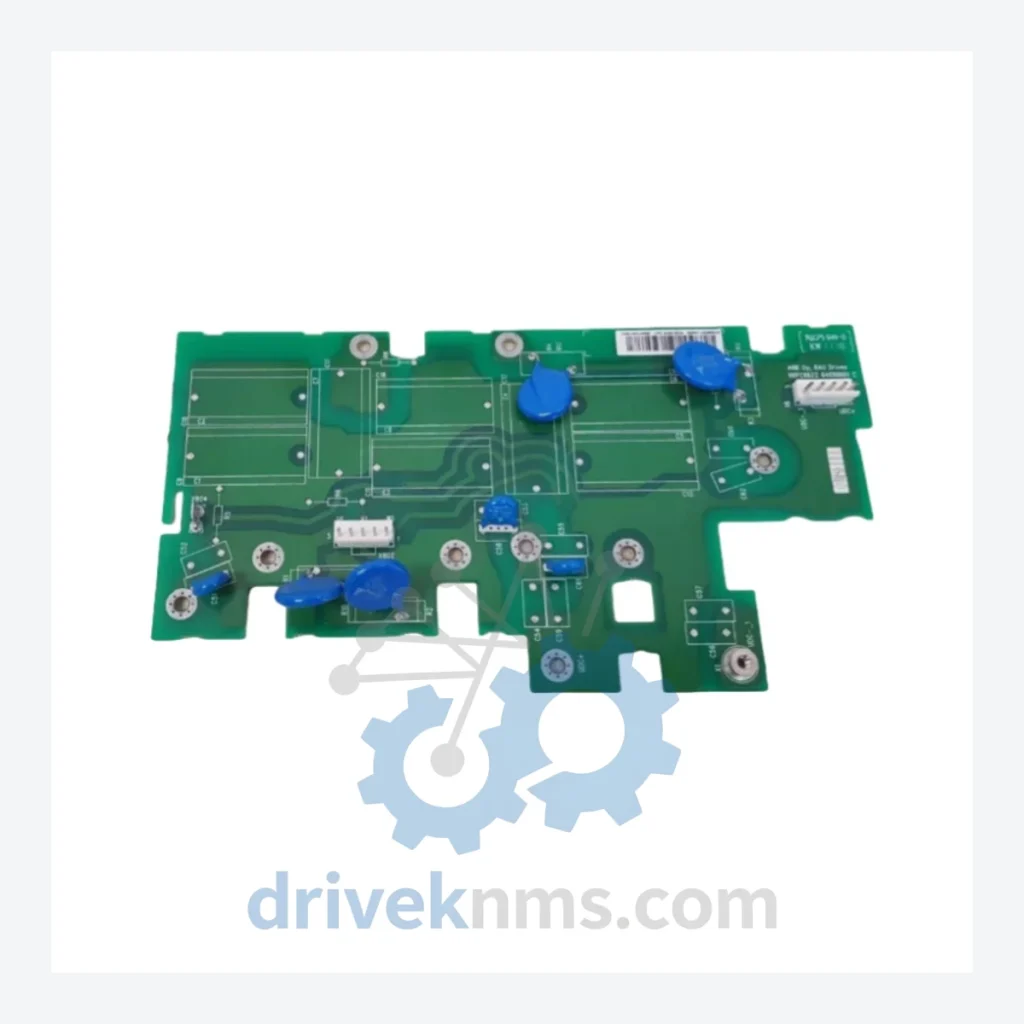
Product Overview
Commercial availability is handled through direct RFQ, model verification and export-oriented follow-up rather than public cart checkout.
Datasheet Preview
Use attached product manuals when available. If the manual is not public yet, request the full file directly through RFQ.
Commercial Path
Product pages on DRIVEKNMS are designed to verify model, brand and series first, then move the buyer into one clean quotation path.
Technical Dossier
The ABB RVAR series comprises dedicated reactive power compensation controllers designed for deployment in high-demand industrial environments including petrochemical plants, nuclear power facilities, oil refineries, steel mills, and large-scale utility substations. These units manage power factor correction by monitoring reactive power (VAr) flow and issuing switching commands to capacitor banks, thereby reducing reactive current draw, minimizing transmission losses, and maintaining grid compliance under IEC 61000-3-12 and IEEE 519 harmonic standards.
RVAR controllers are integrated into ABB's broader power quality and distribution automation ecosystem, often operating alongside ABB REF, REC, and REL protection relay families, as well as ABB MNS and UniGear switchgear lineups. Their installation base spans Europe, the Middle East, and Asia-Pacific, with particularly dense deployment in German and Scandinavian utility infrastructure where ABB's manufacturing heritage is strongest.
The RVAR product line traces its origins to ABB's early 1990s power factor correction relay platforms, which used analog measurement circuits and electromechanical relay outputs to switch fixed capacitor steps. These first-generation units operated on single-phase measurement principles and were limited to 6–12 switching steps.
By the late 1990s, ABB transitioned the RVAR family to microprocessor-based architectures, introducing three-phase true RMS measurement, configurable switching algorithms (linear, circular, and master-follower), and RS-485 Modbus RTU communication ports. This generation — including the RVAR6606 and RVAR6612 — became the dominant platform for medium-voltage capacitor bank automation through the 2000s and 2010s.
The RVAR6612 specifically introduced a 12-step switching capacity with a 96×96mm DIN panel-mount form factor, a backlit LCD display, and programmable C/K sensitivity thresholds, making it compatible with both fixed and automatic capacitor bank configurations. Communication options expanded to include optional RS-232 and IEC 60870-5-103 protocol support in later firmware revisions.
As of 2020, ABB has transitioned new installations toward the RVT and PQFI series for active harmonic filtering and dynamic VAr compensation, positioning the RVAR line in a mature/end-of-life phase. However, the installed base remains substantial, and replacement units and spare boards continue to be required for brownfield maintenance contracts through at least 2030.
The following SKUs represent verified models within the ABB RVAR reactive power compensation controller family, organized by switching capacity and communication variant:
RVAR6606: 6-step reactive power compensation relay, 96×96mm panel mount, RS-485 Modbus RTU
RVAR6612: 12-step reactive power compensation controller, backlit LCD, configurable C/K threshold, RS-485
RVAR6612-RS232: RVAR6612 variant with additional RS-232 serial communication port
RVAR6612-103: RVAR6612 with IEC 60870-5-103 protocol support for substation SCADA integration
RVAR6618: 18-step switching capacity, extended for large capacitor bank arrays, three-phase measurement
RVAR6624: 24-step high-capacity variant, designed for utility-scale power factor correction systems
RVAR6606-DIN: DIN rail-mount version of the 6-step controller for compact panel installations
RVAR6612-DIN: DIN rail-mount 12-step variant, identical firmware to panel-mount RVAR6612
RVAR6612-110V: RVAR6612 configured for 110V AC auxiliary supply (North American and legacy installations)
RVAR6612-230V: Standard 230V AC auxiliary supply version, European grid standard
RVAR6606-M: Master controller variant for multi-panel capacitor bank master-follower configurations
RVAR6612-M: 12-step master controller for distributed capacitor bank coordination
RVAR6612-S: Slave/follower unit for use with RVAR6612-M in multi-panel arrays
RVAR6618-M: 18-step master controller, extended switching for large reactive compensation systems
RVAR6624-M: 24-step master controller, utility substation grade, IEC 61850 optional
RVAR6606-LCD: 6-step variant with enhanced LCD display and extended parameter logging
RVAR6612-LCD: Enhanced display version with event log memory and USB configuration port
With the RVAR series now in its end-of-life phase, ABB has ceased volume production of several variants including the RVAR6606, RVAR6618, and early RVAR6612 board revisions. Lead times through standard distribution channels for these models now routinely exceed 26 weeks, and in many cases units are listed as permanently discontinued with no factory new stock available.
DriveKNMS maintains a dedicated inventory of tested RVAR series units sourced through certified industrial surplus channels, decommissioned plant buybacks, and authorized refurbishment programs. Our stock covers both current-production and obsolete RVAR variants, enabling same-week dispatch for emergency maintenance requirements.
For long-term maintenance contracts on installations with RVAR-based capacitor bank automation, DriveKNMS offers consignment stocking agreements, ensuring that critical spare units are pre-positioned against your site's specific model requirements. This service is particularly relevant for power utilities, EPC contractors, and industrial plant operators with multi-year O&M obligations.
Each RVAR unit processed by DriveKNMS undergoes a structured functional verification protocol before dispatch. The test sequence addresses the specific failure modes documented in the RVAR series field service history, including capacitor switching relay contact wear, LCD backlight degradation, RS-485 transceiver failure, and EEPROM parameter corruption.
Test procedures include: auxiliary supply input verification across rated voltage range (±10%); three-phase current transformer input calibration against reference signal; switching output relay contact resistance measurement (threshold: <100mΩ per contact); communication port loopback test for RS-485 and RS-232 variants; full parameter write/read cycle to verify EEPROM integrity; and 4-hour burn-in under simulated load cycling conditions.
Units exhibiting contact resistance above threshold, communication errors, or parameter retention failures are quarantined and either repaired to component level or scrapped. Only units passing all test stages are released to inventory and dispatched to customers.
Related Paths
ABB SNAT-7120 / SNAZ7120J Circuit Board: Sourcing Strategy & Asset Return Value in a Constrained Global Supply Chain The ABB…
ABB AC500 Series: Comprehensive Module Range and Technical Overview The ABB AC500 is a scalable modular PLC platform deployed across…
ABB SCDCS-CON-4 Control Board – Obsolete DCS Spare Part When a single control board fails in a legacy distributed control…